
Pullman Porter Uniform Jacket, 1940-1960
THF810068 / Pullman Porter Uniform Jacket, 1940-1960
01
Artifact Overview
For a century, Pullman was synonymous with first-class rail travel. The company not only built sleeping cars, it also operated them to ensure quality service, and porters and car attendants wore Pullman-branded uniforms. For Black Americans, jobs as Pullman porters offered a pathway into the middle class. But the work was demanding. Porters were expected to always be attentive to passengers.
Artifact Details
Artifact
Jacket (Garment)
Date Made
1940-1960
Creators
Place of Creation
Location
at Henry Ford Museum in The Gallery by GM
Object ID
2025.149.3
Credit
From the Collections of The Henry Ford.
Material
Wool (Textile)
Metal
Color
Navy blue
Gold (Color)
Beige (Color)
Dimensions
Height: 30 in (Back of neck to bottom hem)
Width: 18 in (Shoulder to shoulder)
Inscriptions
on label on inside pocket:
A. G. MEIER & Co. / MANUFACTURERS OF / UNIFORMS / CAPS / 205. W. MONROE ST. / CHICAGO
on green paper tag pinned to lining:
T / Maple Village / North Campus / 6778
on buttons:
PULLMAN
Keywords |
|---|
02
Related Artifacts
 Artifact
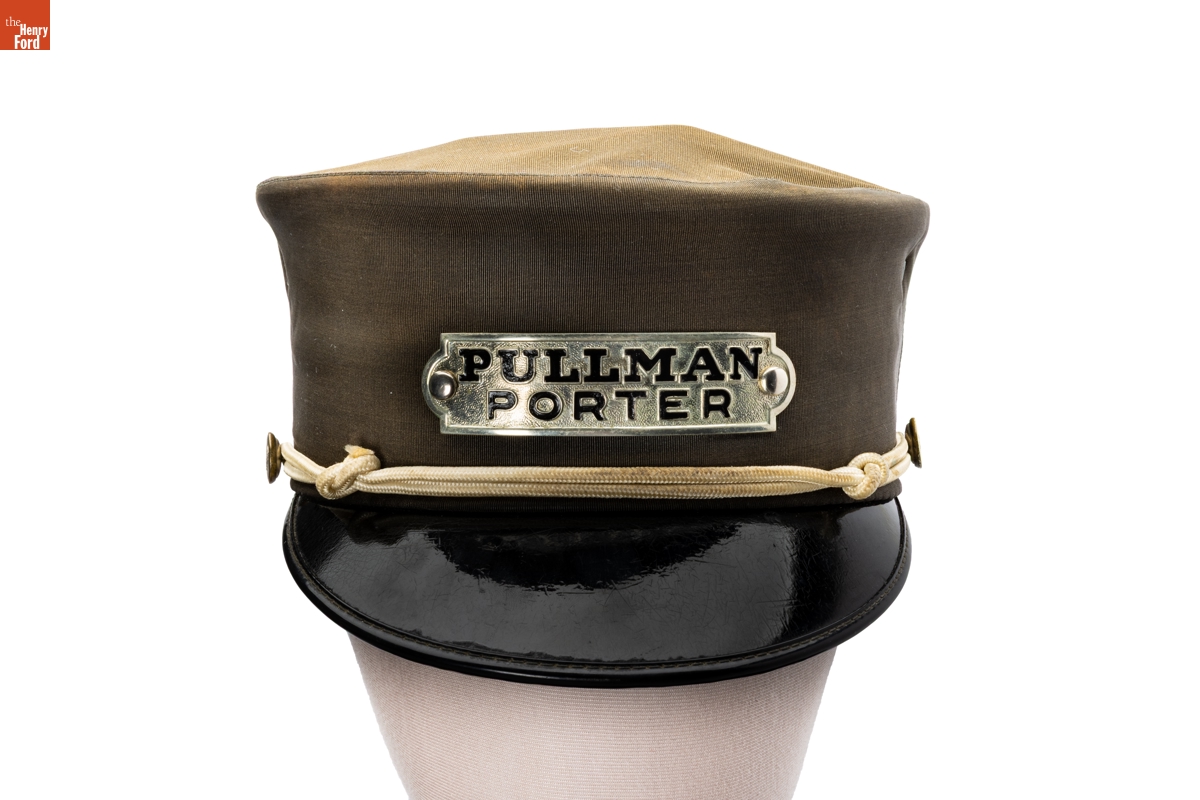
Pullman Porter Cap, 1940-1960
For a century, Pullman was synonymous with first-class rail travel. The company not only built sleeping cars, it also operated them to ensure quality service, and porters and car attendants wore Pullman-branded uniforms. For Black Americans, jobs as Pullman porters offered a pathway into the middle class. But the work was demanding. Porters were expected to always be attentive to passengers.
03
Related Content
 Set
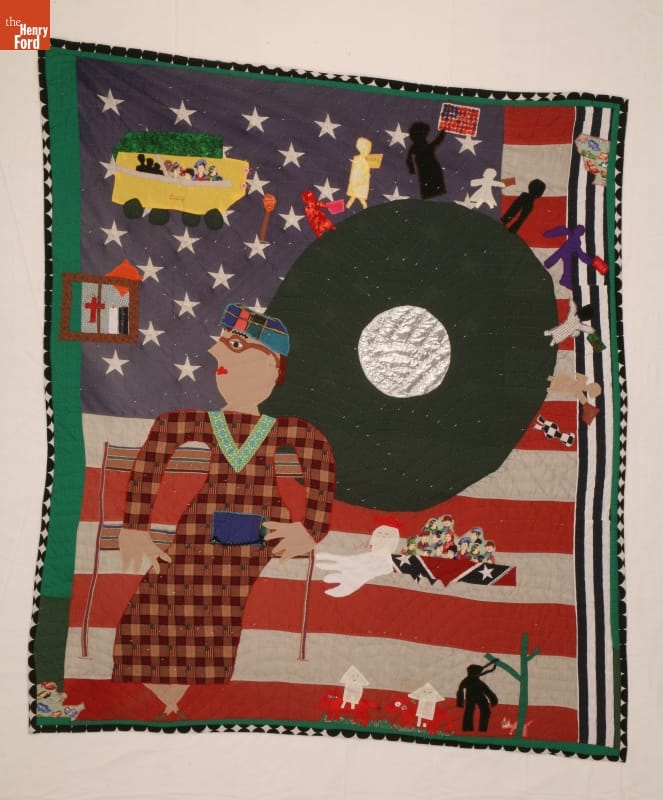
SetThe Fabric of America
- 30 Artifacts
Rosa Parks's December 1, 1955, refusal to give up her seat to a white man on a Montgomery, Alabama, bus led to such successful public action that many consider her act to be the spark that ignited the Civil Rights movement. Yvonne Wells, a self-taught artist and retired schoolteacher, created this pictorial quilt without using patterns or templates.