
Search
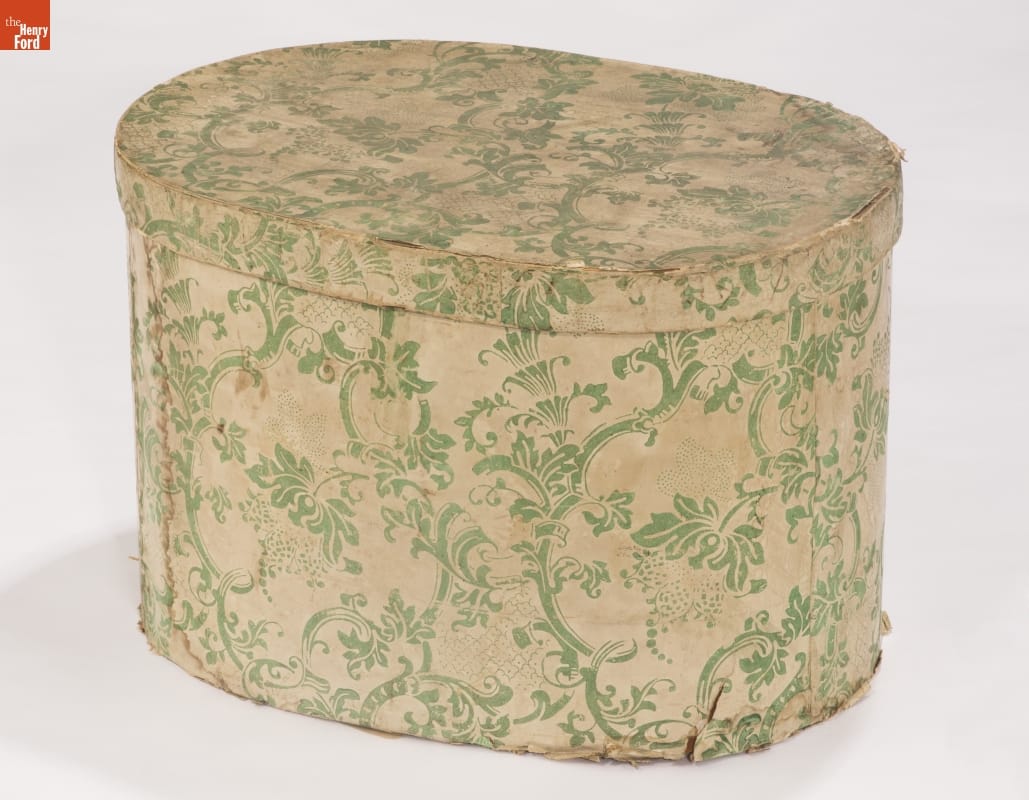
- Bandbox, 1830 - In the early 1800s, Americans used bandboxes to store clothing, accessories, and other small items. Bandboxes were handy containers in the home, or when traveling by stage, boat, or rail. Manufacturers covered these inexpensive pasteboard or wooden boxes with colorful papers. Some bandboxes were covered with papers depicting animals, places or specific scenes. Others, such as this one, were covered with decorative wallpaper of the day.
- 1830
- Collections - Artifact
Bandbox, 1830
In the early 1800s, Americans used bandboxes to store clothing, accessories, and other small items. Bandboxes were handy containers in the home, or when traveling by stage, boat, or rail. Manufacturers covered these inexpensive pasteboard or wooden boxes with colorful papers. Some bandboxes were covered with papers depicting animals, places or specific scenes. Others, such as this one, were covered with decorative wallpaper of the day.
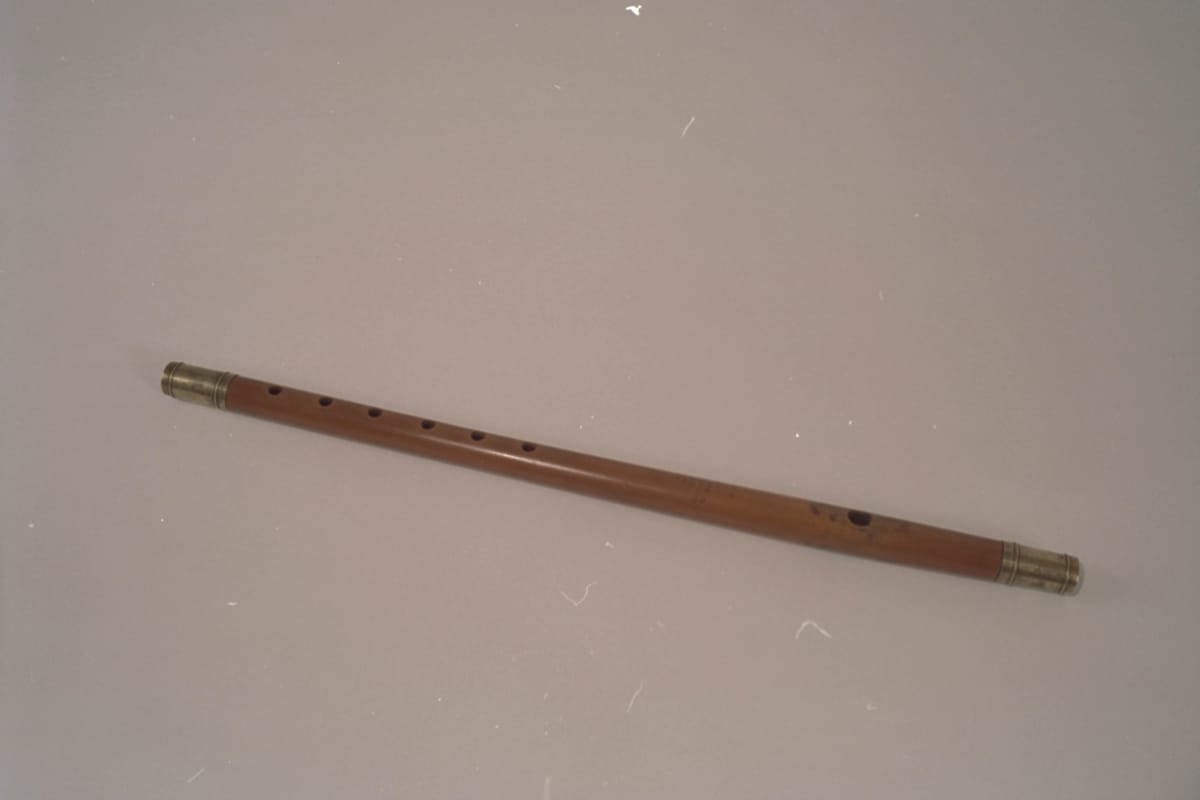
- Fife, 1830-1850 - Samuel Graves Jr. began manufacturing musical instruments in New England in the 1820s. Factory workers used lathes to shape the wood, metal, and ivory components of the woodwind instruments that were his company's mainstay in its early years. Instruments such as fifes, flutes, piccolos, and clarinets were the foundation of military and local bands before newly invented key and valve brass instrument became popular.
- 1830-1850
- Collections - Artifact
Fife, 1830-1850
Samuel Graves Jr. began manufacturing musical instruments in New England in the 1820s. Factory workers used lathes to shape the wood, metal, and ivory components of the woodwind instruments that were his company's mainstay in its early years. Instruments such as fifes, flutes, piccolos, and clarinets were the foundation of military and local bands before newly invented key and valve brass instrument became popular.
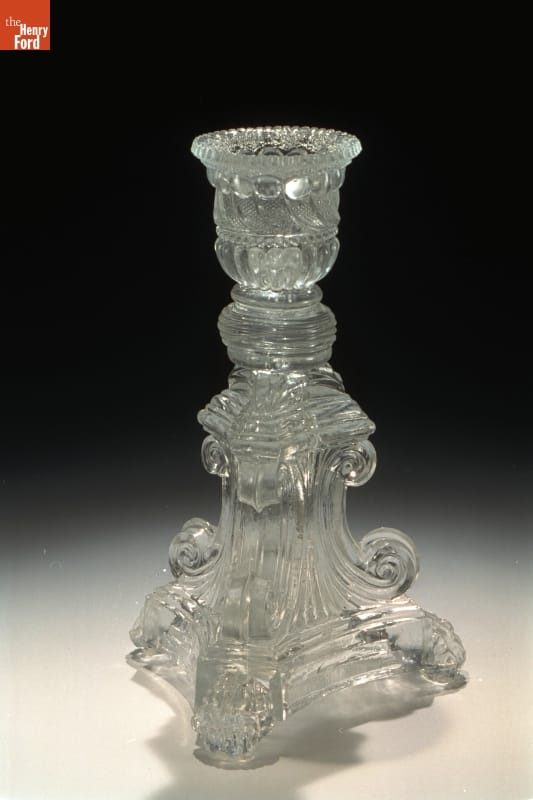
- Candlestick, 1830-1845 - Nineteenth-century American glassmakers experimented with new methods to create products for a growing consumer market. In the 1820s, pressing glass into metal molds by machine was perfected, and by the mid-1800s, manufacturers were creating a variety of inexpensive pressed glass housewares. America's middle-class consumers could now decorate their homes with attractive glass bowls, creamers, dishes, plates, vases, and even candlesticks.
- 1830-1845
- Collections - Artifact
Candlestick, 1830-1845
Nineteenth-century American glassmakers experimented with new methods to create products for a growing consumer market. In the 1820s, pressing glass into metal molds by machine was perfected, and by the mid-1800s, manufacturers were creating a variety of inexpensive pressed glass housewares. America's middle-class consumers could now decorate their homes with attractive glass bowls, creamers, dishes, plates, vases, and even candlesticks.
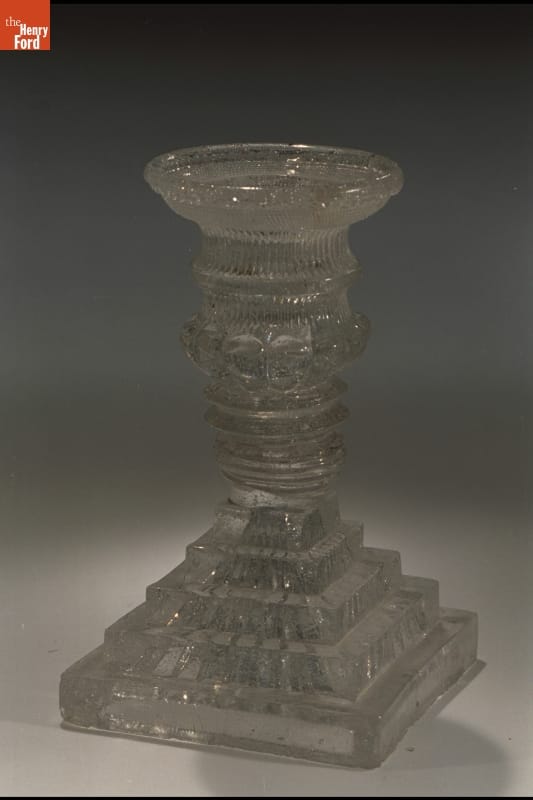
- Candlestick, 1830-1845 - Nineteenth-century American glassmakers experimented with new methods to create products for a growing consumer market. In the 1820s, pressing glass into metal molds by machine was perfected, and by the mid-1800s, manufacturers were creating a variety of inexpensive pressed glass housewares. America's middle-class consumers could now decorate their homes with attractive glass bowls, creamers, dishes, plates, vases, and even candlesticks.
- 1830-1845
- Collections - Artifact
Candlestick, 1830-1845
Nineteenth-century American glassmakers experimented with new methods to create products for a growing consumer market. In the 1820s, pressing glass into metal molds by machine was perfected, and by the mid-1800s, manufacturers were creating a variety of inexpensive pressed glass housewares. America's middle-class consumers could now decorate their homes with attractive glass bowls, creamers, dishes, plates, vases, and even candlesticks.
- Flask, 1826-1830 - Glass factories in America began producing inexpensive, mold-formed flasks in the early 1800s. These figured flasks, often decorated with symbols of national pride or political or cultural affiliation, appealed to America's common man. Many flasks, like this one, contain traditional symbols representing America -- the image of an eagle on one side and Columbia wearing a liberty cap on the other.
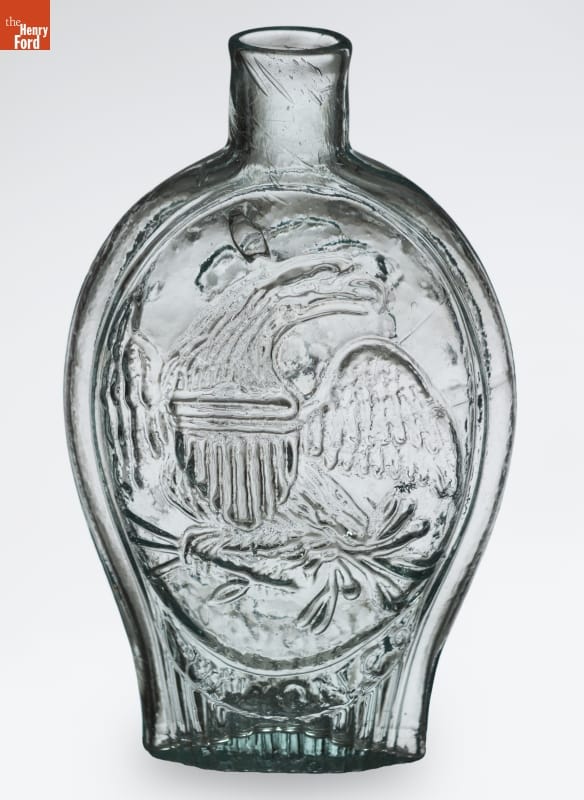
- 1826-1830
- Collections - Artifact
Flask, 1826-1830
Glass factories in America began producing inexpensive, mold-formed flasks in the early 1800s. These figured flasks, often decorated with symbols of national pride or political or cultural affiliation, appealed to America's common man. Many flasks, like this one, contain traditional symbols representing America -- the image of an eagle on one side and Columbia wearing a liberty cap on the other.
- Mug, 1815-1830 -
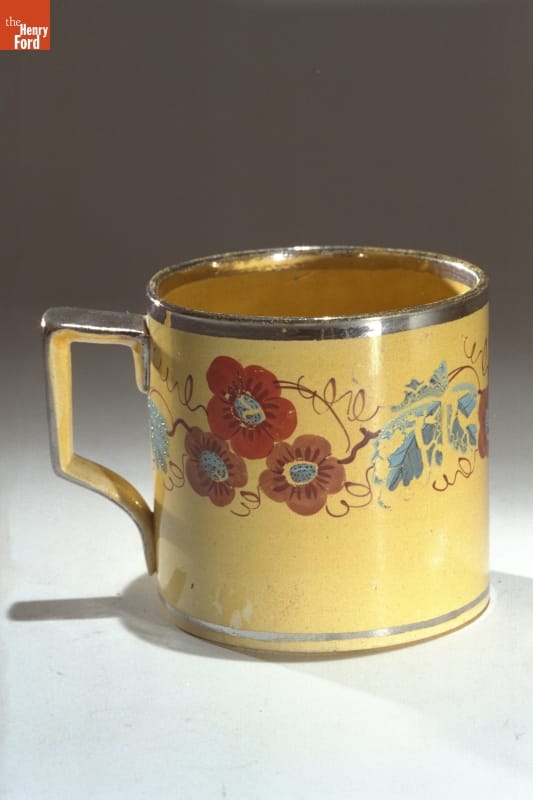
- 1815-1830
- Collections - Artifact
Mug, 1815-1830
- Compote, 1800-1830 - Compotes are all-purpose serving dishes. These usually footed bowls -- with or without lids or covers -- held special desserts, fruits, candies or sauces, jellies and other foods. Blown or pressed glass compotes provided a culinary presentation method suitable to 19th-century middle-class households.
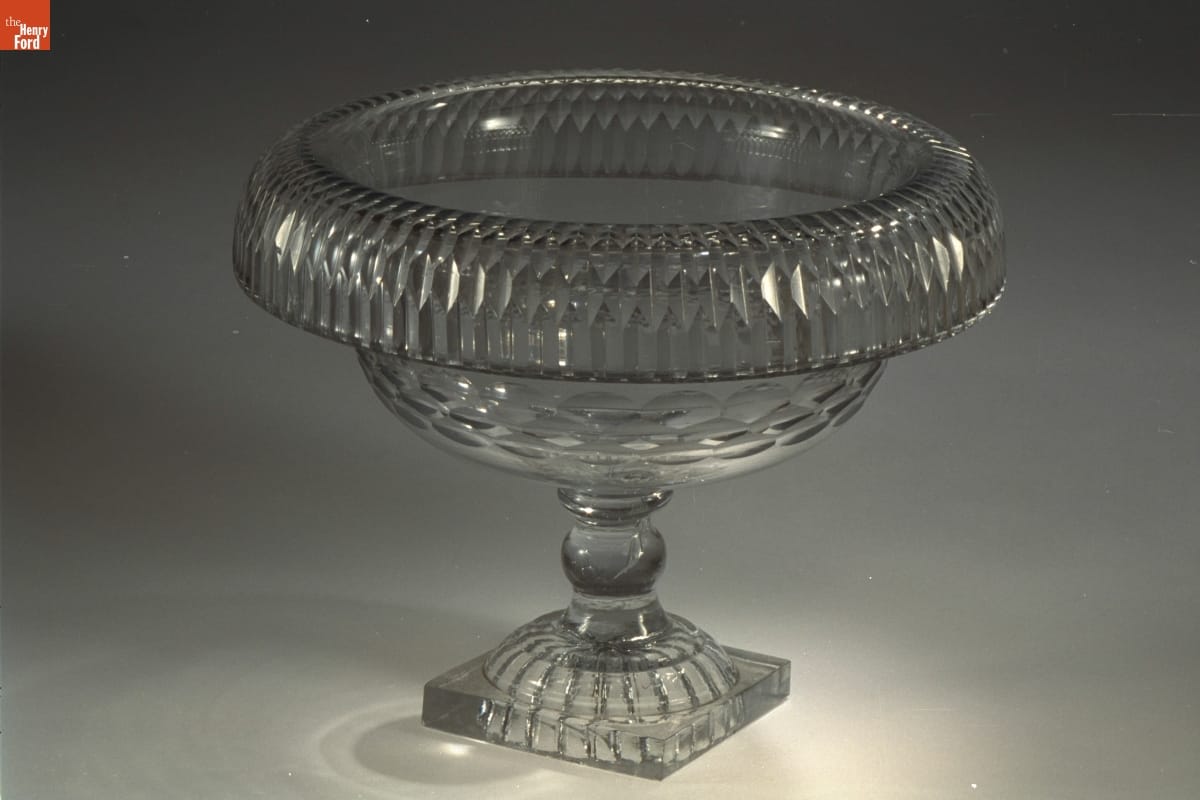
- 1800-1830
- Collections - Artifact
Compote, 1800-1830
Compotes are all-purpose serving dishes. These usually footed bowls -- with or without lids or covers -- held special desserts, fruits, candies or sauces, jellies and other foods. Blown or pressed glass compotes provided a culinary presentation method suitable to 19th-century middle-class households.
- Bandbox, 1830-1840 - In the early 1800s, Americans used bandboxes to store clothing, accessories, and other small items. Bandboxes were handy containers in the home or when traveling by stage, boat, or rail. Manufacturers covered these inexpensive pasteboard or wooden boxes with colorful papers. This bandbox's paper depicts a scene with hunters loading their catch into a coach.
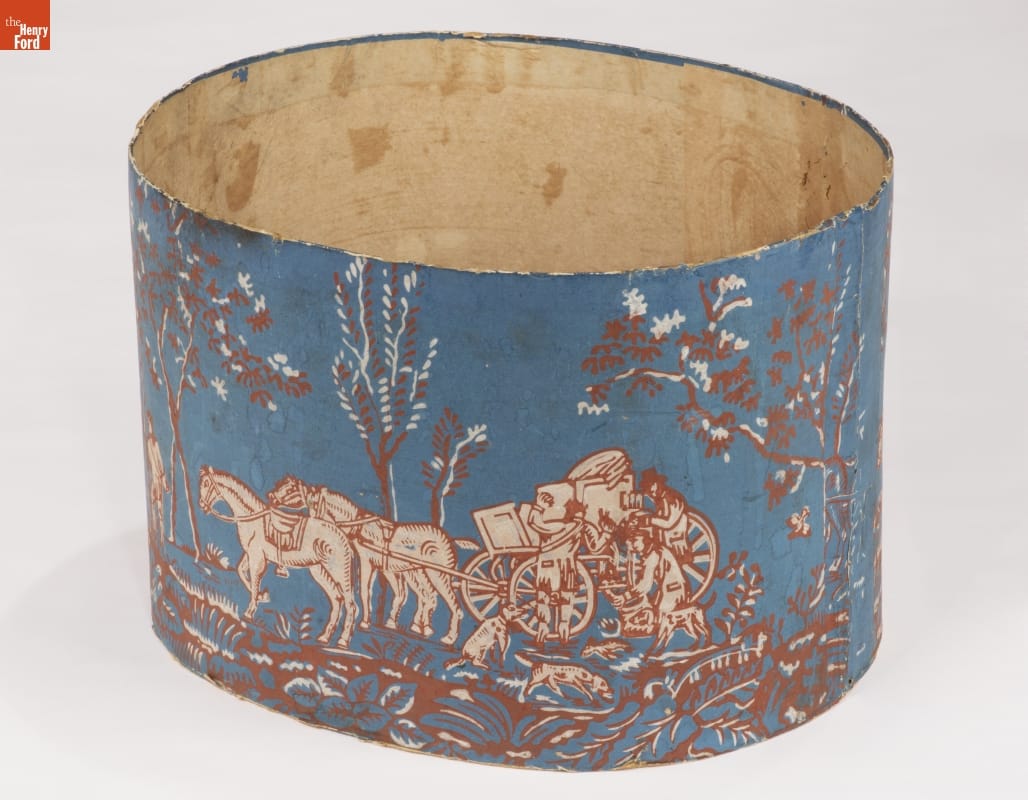
- 1830-1840
- Collections - Artifact
Bandbox, 1830-1840
In the early 1800s, Americans used bandboxes to store clothing, accessories, and other small items. Bandboxes were handy containers in the home or when traveling by stage, boat, or rail. Manufacturers covered these inexpensive pasteboard or wooden boxes with colorful papers. This bandbox's paper depicts a scene with hunters loading their catch into a coach.
- Flask, 1790-1830 - American glass factories produced flasks, like this one, from the late 1700s well into the mid-1800s. The pint-sized flask could hold water but more likely contained alcoholic beverages. Its textured decorative exterior -- formed when the hot glass was dipped into a pattern mold before it was blown -- made the flask easier to grasp. And its flattened shape fit nicely into pockets providing ready access to the liquid refreshment.
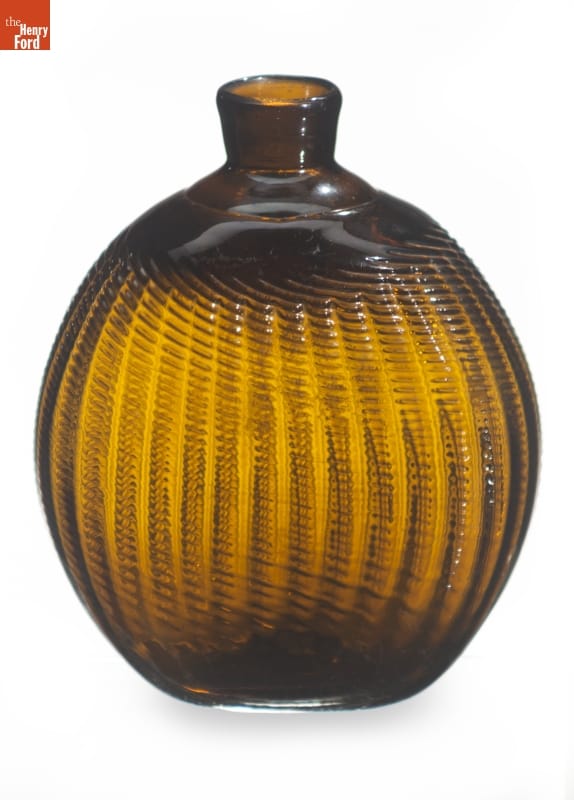
- 1790-1830
- Collections - Artifact
Flask, 1790-1830
American glass factories produced flasks, like this one, from the late 1700s well into the mid-1800s. The pint-sized flask could hold water but more likely contained alcoholic beverages. Its textured decorative exterior -- formed when the hot glass was dipped into a pattern mold before it was blown -- made the flask easier to grasp. And its flattened shape fit nicely into pockets providing ready access to the liquid refreshment.
- Cruet, 1830-1870 -
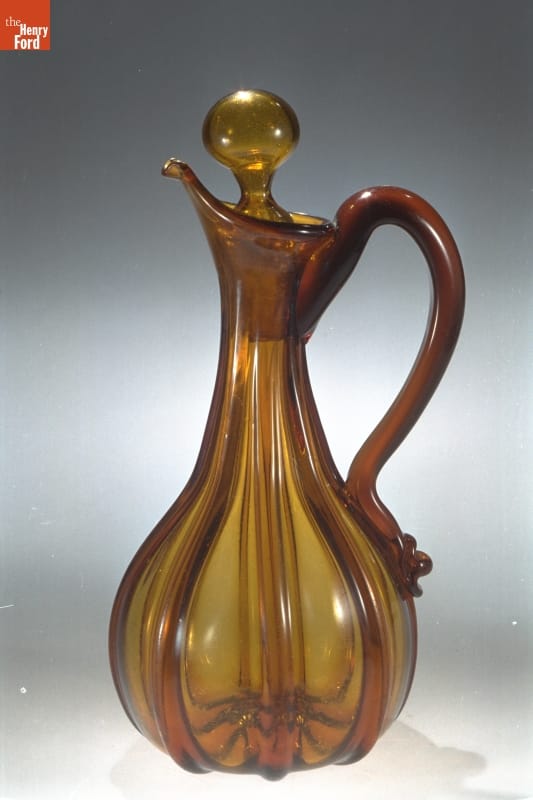
- 1830-1870
- Collections - Artifact
Cruet, 1830-1870