
Search
- "Facebook Live" Ledger Art, 2020 -
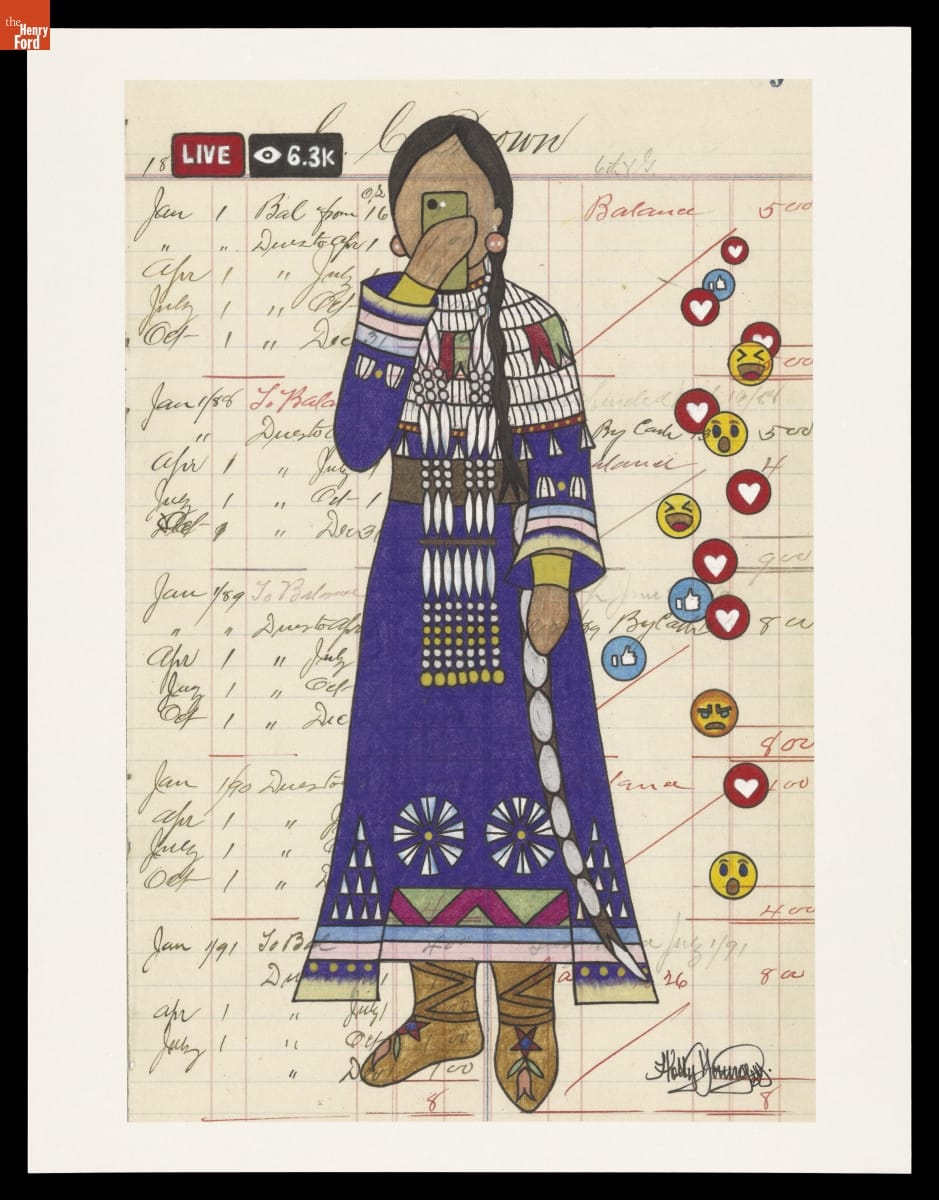
- 2020
- Collections - Artifact
"Facebook Live" Ledger Art, 2020
- "The Public Universal Friend," Linocut, circa 2020 - Public Universal Friend (1752-1819) defied societal expectations as a genderless Quaker minister. Although assigned female at birth, the Friend assumed their new identity following a 1776 religious epiphany and began preaching across the northeast United States. In 2019, 200 years after the Friend’s death, their life story was spread across social media, and they became emblematic of early American LBGTQIA+ history.
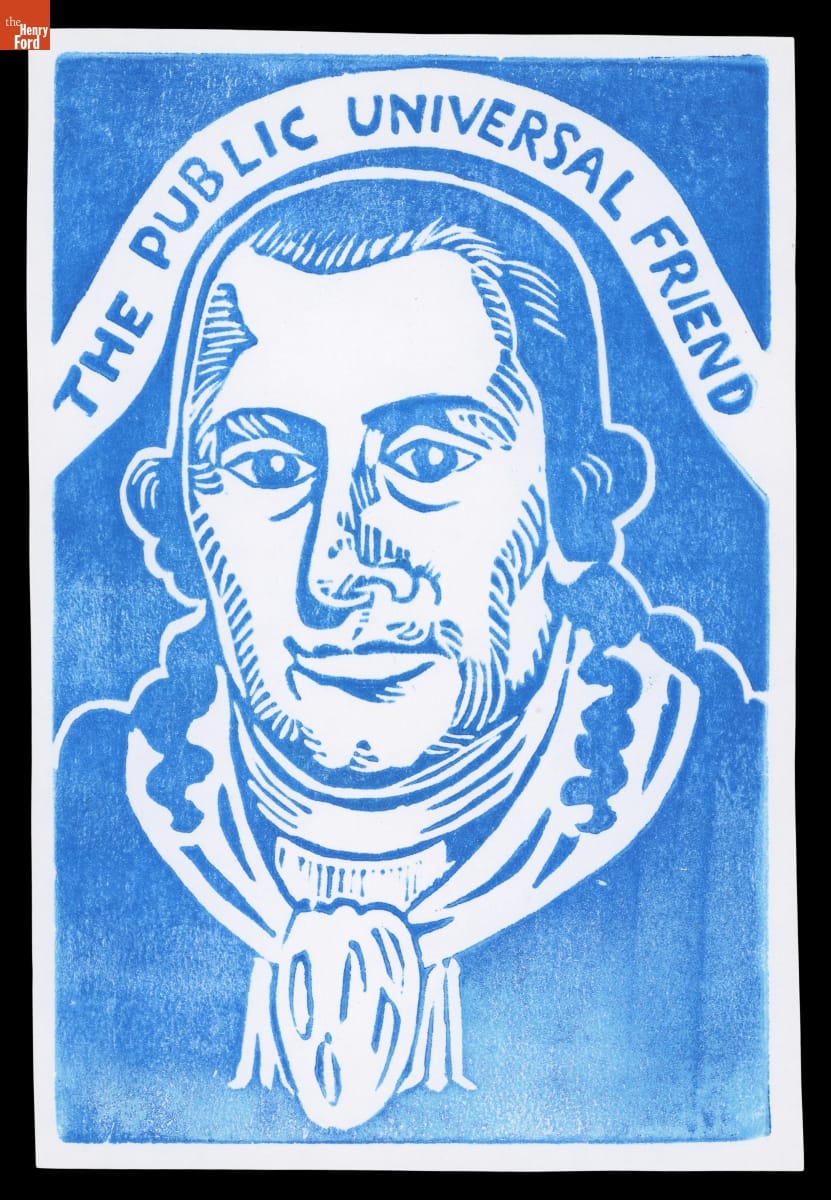
- circa 2020
- Collections - Artifact
"The Public Universal Friend," Linocut, circa 2020
Public Universal Friend (1752-1819) defied societal expectations as a genderless Quaker minister. Although assigned female at birth, the Friend assumed their new identity following a 1776 religious epiphany and began preaching across the northeast United States. In 2019, 200 years after the Friend’s death, their life story was spread across social media, and they became emblematic of early American LBGTQIA+ history.
- "The Public Universal Friend," Linocut, circa 2020 - Public Universal Friend (1752-1819) defied societal expectations as a genderless Quaker minister. Although assigned female at birth, the Friend assumed their new identity following a 1776 religious epiphany and began preaching across the northeast United States. In 2019, 200 years after the Friend’s death, their life story was spread across social media, and they became emblematic of early American LBGTQIA+ history.
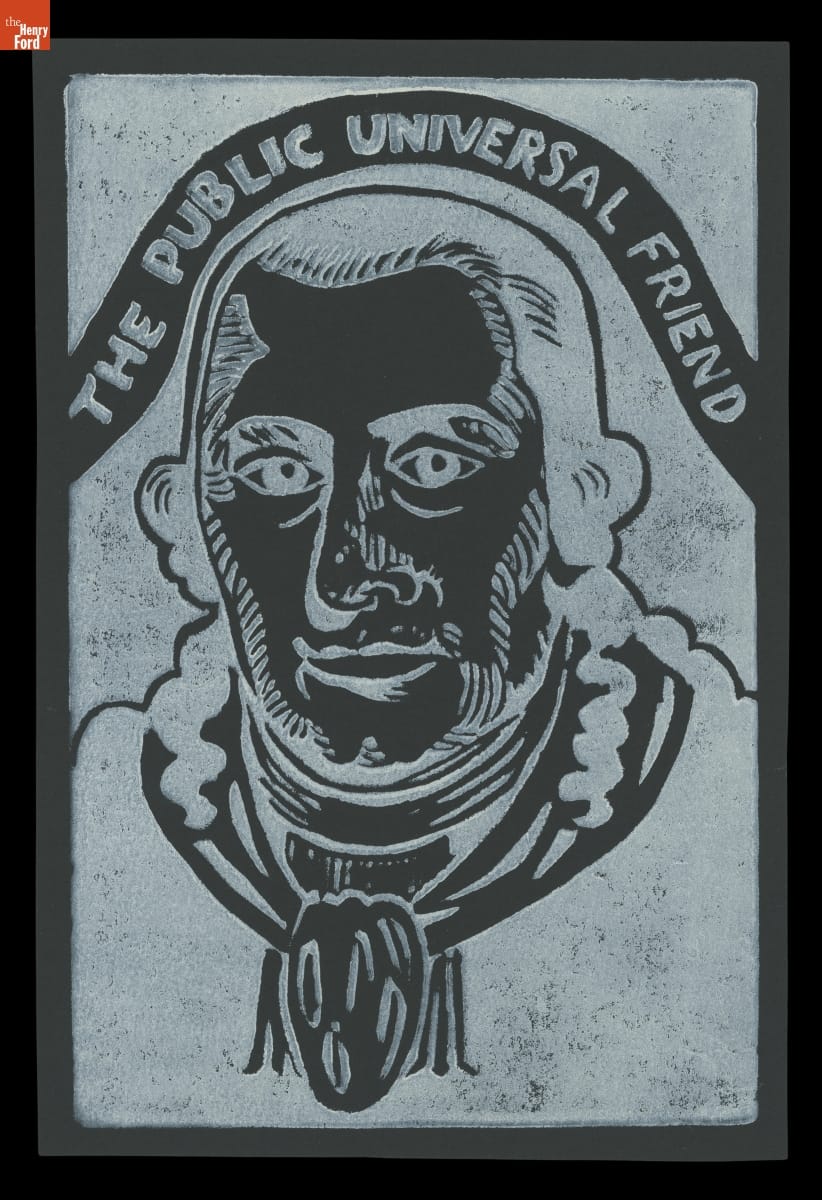
- circa 2020
- Collections - Artifact
"The Public Universal Friend," Linocut, circa 2020
Public Universal Friend (1752-1819) defied societal expectations as a genderless Quaker minister. Although assigned female at birth, the Friend assumed their new identity following a 1776 religious epiphany and began preaching across the northeast United States. In 2019, 200 years after the Friend’s death, their life story was spread across social media, and they became emblematic of early American LBGTQIA+ history.
- "Portable and Agricultural Engines a Specialty Since 1852," circa 1880 -
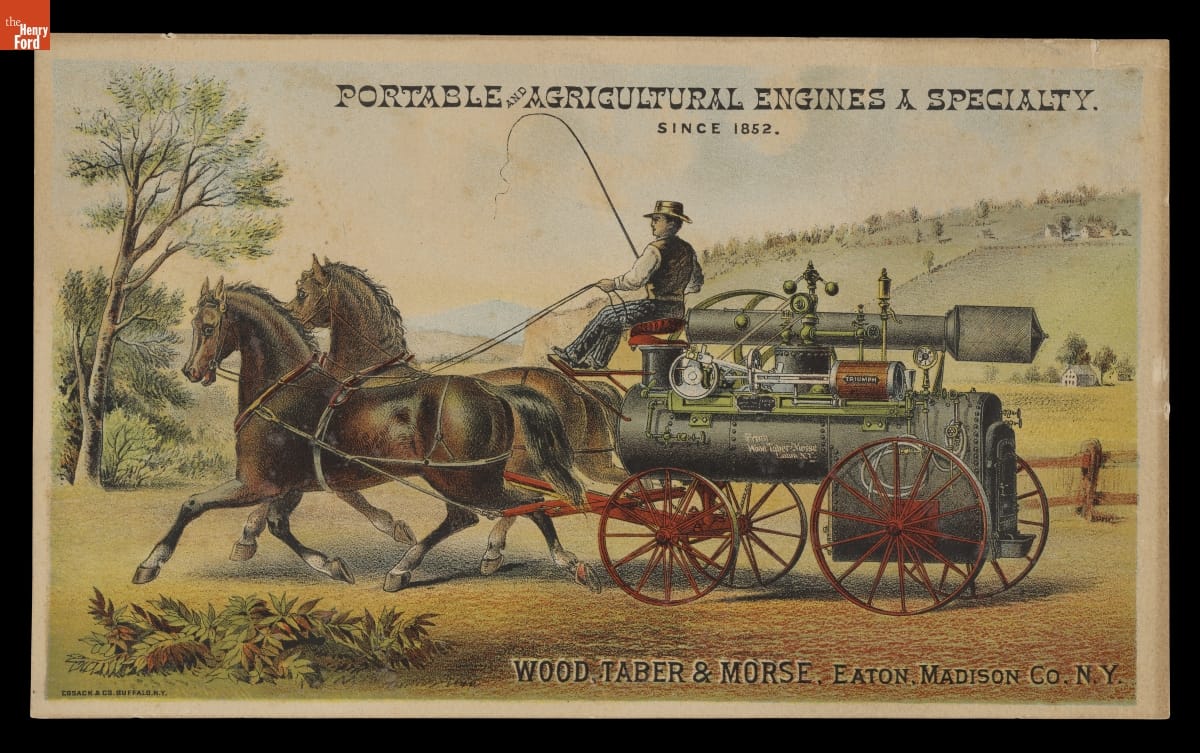
- circa 1880
- Collections - Artifact
"Portable and Agricultural Engines a Specialty Since 1852," circa 1880
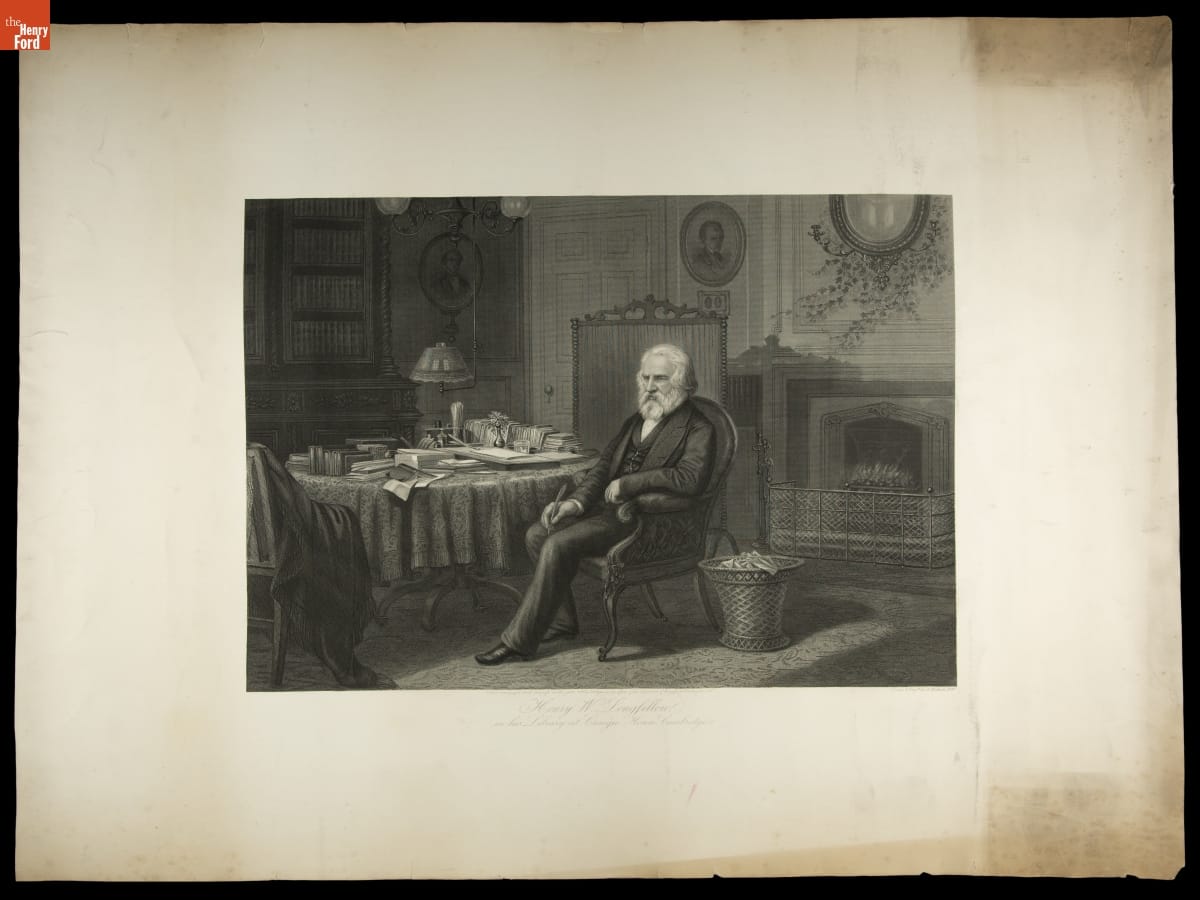
- Engraving, "Henry W. Longfellow in His Library at Craigie House, Cambridge," 1882 - Henry Wadsworth Longfellow (1807-1882) was the most beloved American poet of the 19th century. Longfellow's poems appealed to mid-19th-century Americans from all classes. Many of his poems centered around American themes and topics--though he often took poetic license to depart from the facts to create an effect. Years after Longfellow's death, his poetry--recited at civic celebrations and studied in school rooms--continued to inspire.
- 1882
- Collections - Artifact
Engraving, "Henry W. Longfellow in His Library at Craigie House, Cambridge," 1882
Henry Wadsworth Longfellow (1807-1882) was the most beloved American poet of the 19th century. Longfellow's poems appealed to mid-19th-century Americans from all classes. Many of his poems centered around American themes and topics--though he often took poetic license to depart from the facts to create an effect. Years after Longfellow's death, his poetry--recited at civic celebrations and studied in school rooms--continued to inspire.
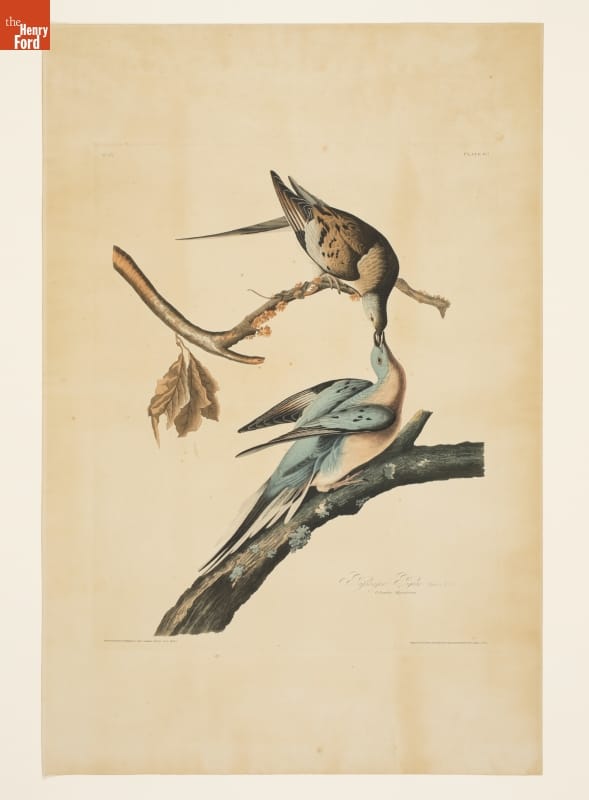
- Engraving, "Passenger Pigeon, Columba Migratoria," 1845 -
- 1824
- Collections - Artifact
Engraving, "Passenger Pigeon, Columba Migratoria," 1845
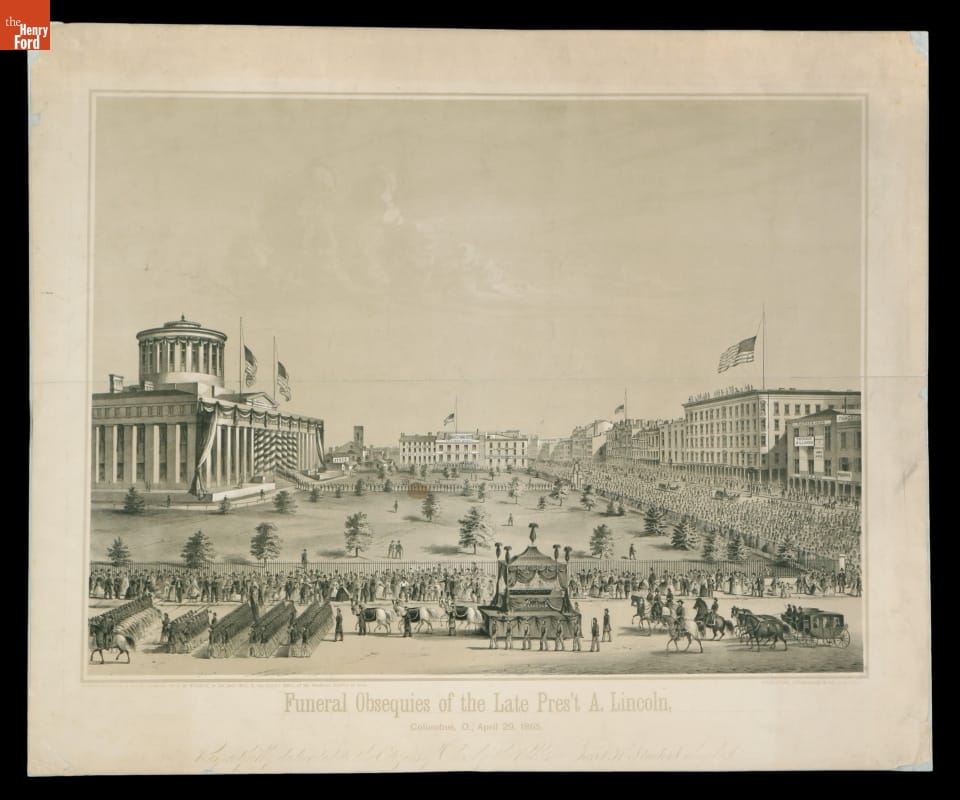
- Lithograph, "Funeral Obsequies of the Late President A. Lincoln, Columbus, O., April 29, 1865" - Abraham Lincoln's assassination on April 15, 1865, plunged Americans into deep mourning. All over the nation, communities joined in public ceremonies honoring the 16th president. This illustrates the procession through Columbus, Ohio, after the funeral train's arrival on April 29. Lincoln's casket, carried on an impressively large hearse drawn by six horses, is shown heading toward the mourning-draped Ohio State Capitol building.
- April 29, 1865
- Collections - Artifact
Lithograph, "Funeral Obsequies of the Late President A. Lincoln, Columbus, O., April 29, 1865"
Abraham Lincoln's assassination on April 15, 1865, plunged Americans into deep mourning. All over the nation, communities joined in public ceremonies honoring the 16th president. This illustrates the procession through Columbus, Ohio, after the funeral train's arrival on April 29. Lincoln's casket, carried on an impressively large hearse drawn by six horses, is shown heading toward the mourning-draped Ohio State Capitol building.
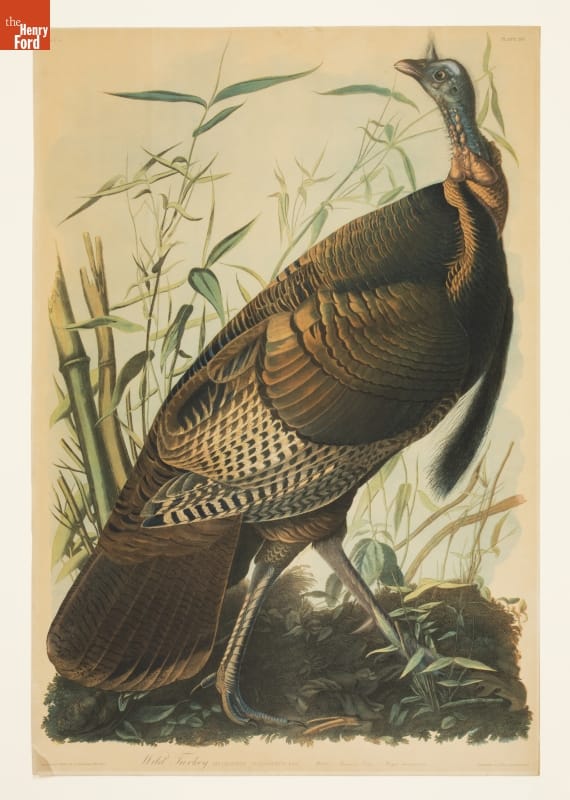
- Chromolithograph, "Wild Turkey Meleagris Gallopavo, Linn, Male. American Cane, Miegia Macrosperma," 1858 -
- 1858
- Collections - Artifact
Chromolithograph, "Wild Turkey Meleagris Gallopavo, Linn, Male. American Cane, Miegia Macrosperma," 1858
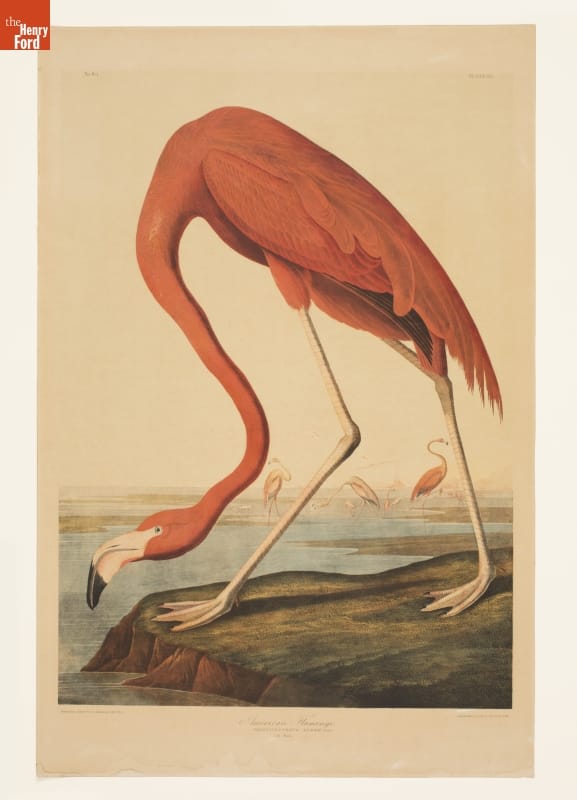
- Chromolithograph, "American Flamingo. Phoenicopterus Ruber. Linn. Old Male," 1860 -
- 1838
- Collections - Artifact
Chromolithograph, "American Flamingo. Phoenicopterus Ruber. Linn. Old Male," 1860
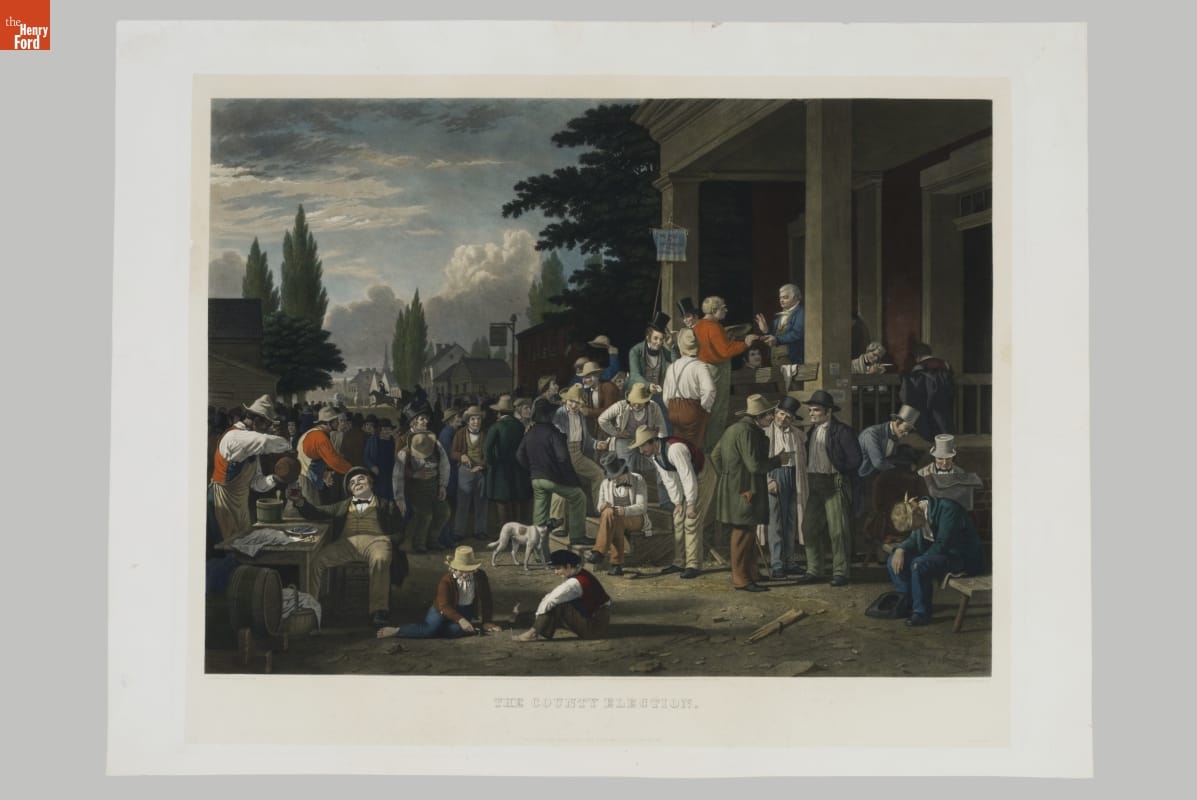
- "The County Election," 1854 - Reforms in most states expanded the American electorate in the mid-nineteenth century. By 1840, nearly 80 percent of adult white males headed eagerly to the polls. Election day could be an unruly affair, with candidates and campaigners soliciting support at polling locations. Votes were often cast by voice or paper ballot and recorded -- in public -- by local officials.
- 1850-1854
- Collections - Artifact
"The County Election," 1854
Reforms in most states expanded the American electorate in the mid-nineteenth century. By 1840, nearly 80 percent of adult white males headed eagerly to the polls. Election day could be an unruly affair, with candidates and campaigners soliciting support at polling locations. Votes were often cast by voice or paper ballot and recorded -- in public -- by local officials.