
Search
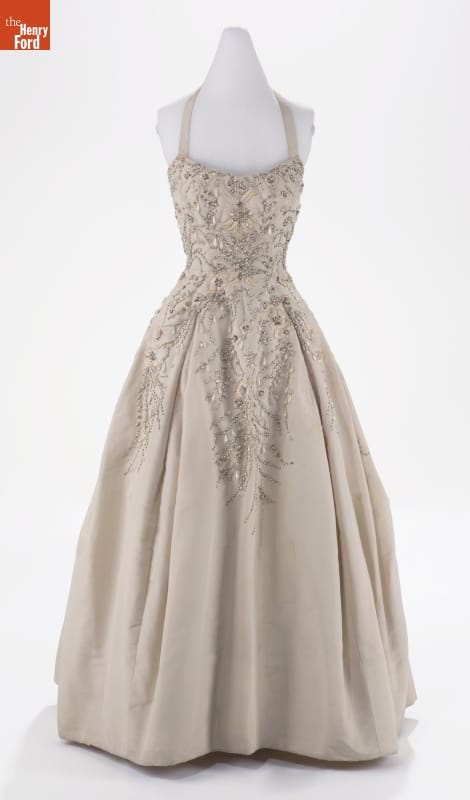
- Christian Dior Evening Dress, "Fontainebleau Adaptation," Worn by Anne Firestone to the 1955 Reopening of the Vienna Opera House, 1954 -
- 1955
- Collections - Artifact
Christian Dior Evening Dress, "Fontainebleau Adaptation," Worn by Anne Firestone to the 1955 Reopening of the Vienna Opera House, 1954
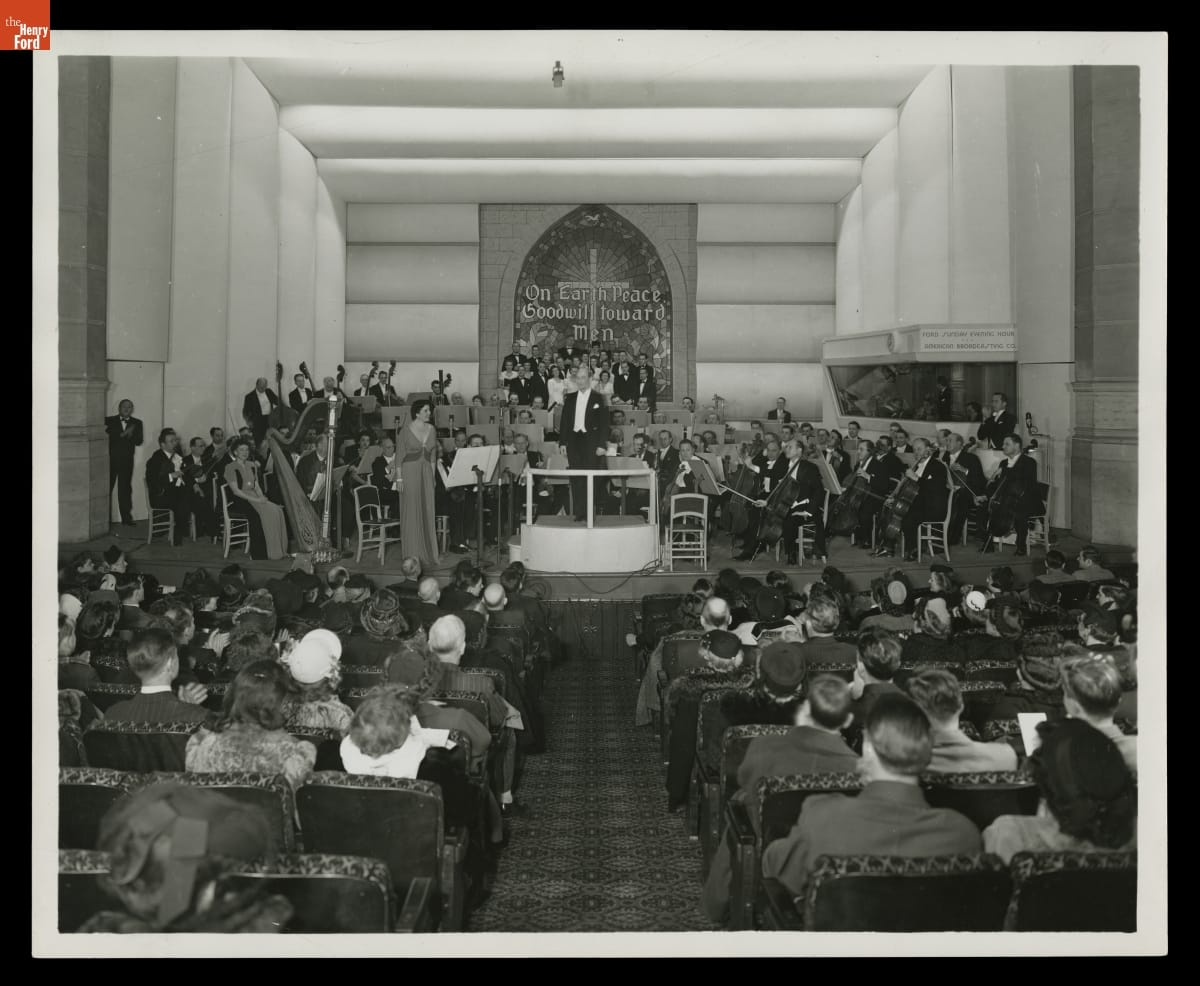
- Soloist Rose Bampton Performing on the "Ford Sunday Evening Hour" Program, December 16, 1945 -
- December 16, 1945
- Collections - Artifact
Soloist Rose Bampton Performing on the "Ford Sunday Evening Hour" Program, December 16, 1945
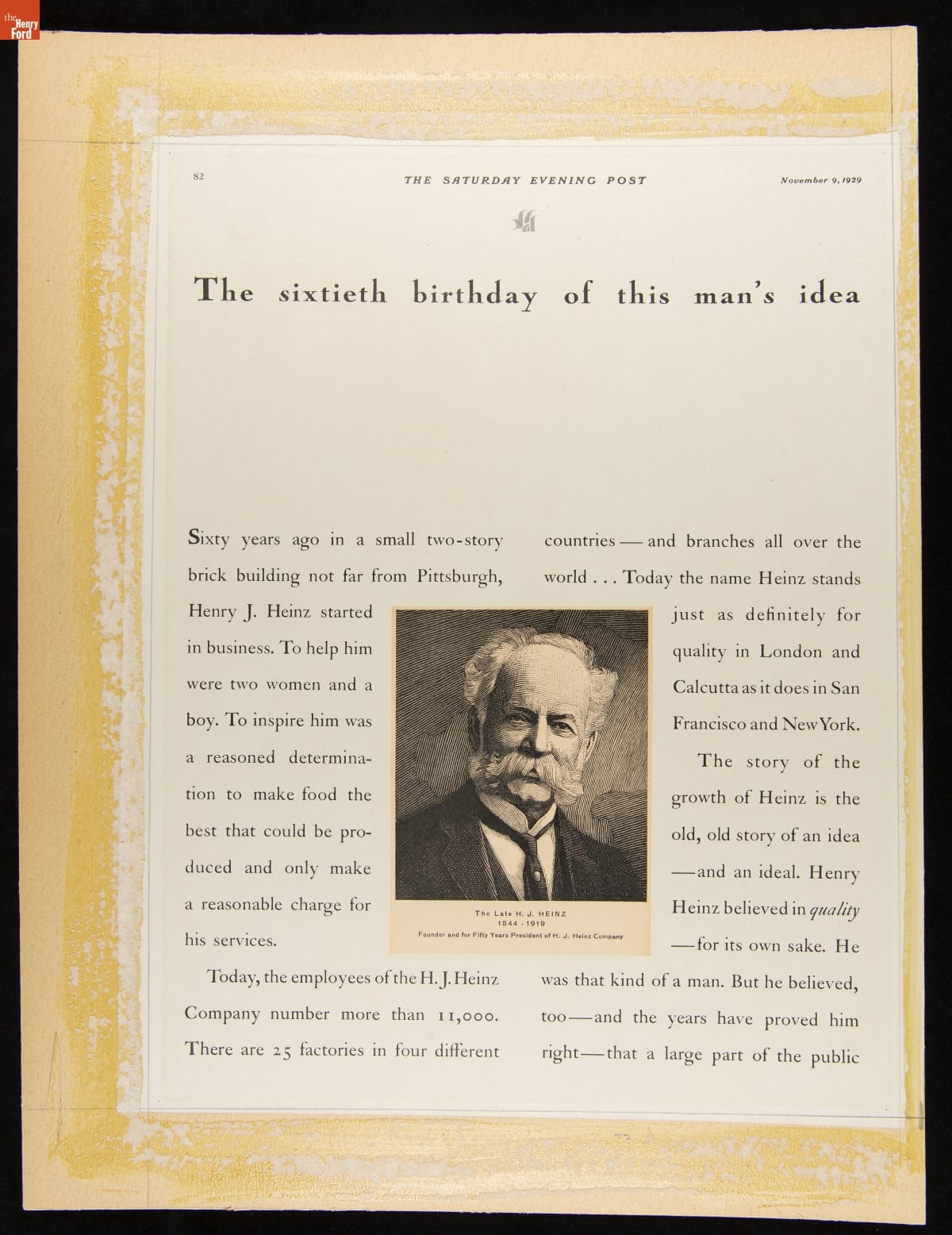
- "The Sixtieth Birthday of This Man's Idea," Heinz Company Advertisement, November 9, 1929 - This two-page tear sheet advertising layout was created to be published in the Saturday Evening Post on November 9, 1929, in honor of the H.J. Heinz Company's 60th birthday. The advertisement describes H.J. Heinz's commitment to quality and how the company continues to strive for the highest-quality ingredients and products even after its founders' death in 1919.
- November 09, 1929
- Collections - Artifact
"The Sixtieth Birthday of This Man's Idea," Heinz Company Advertisement, November 9, 1929
This two-page tear sheet advertising layout was created to be published in the Saturday Evening Post on November 9, 1929, in honor of the H.J. Heinz Company's 60th birthday. The advertisement describes H.J. Heinz's commitment to quality and how the company continues to strive for the highest-quality ingredients and products even after its founders' death in 1919.
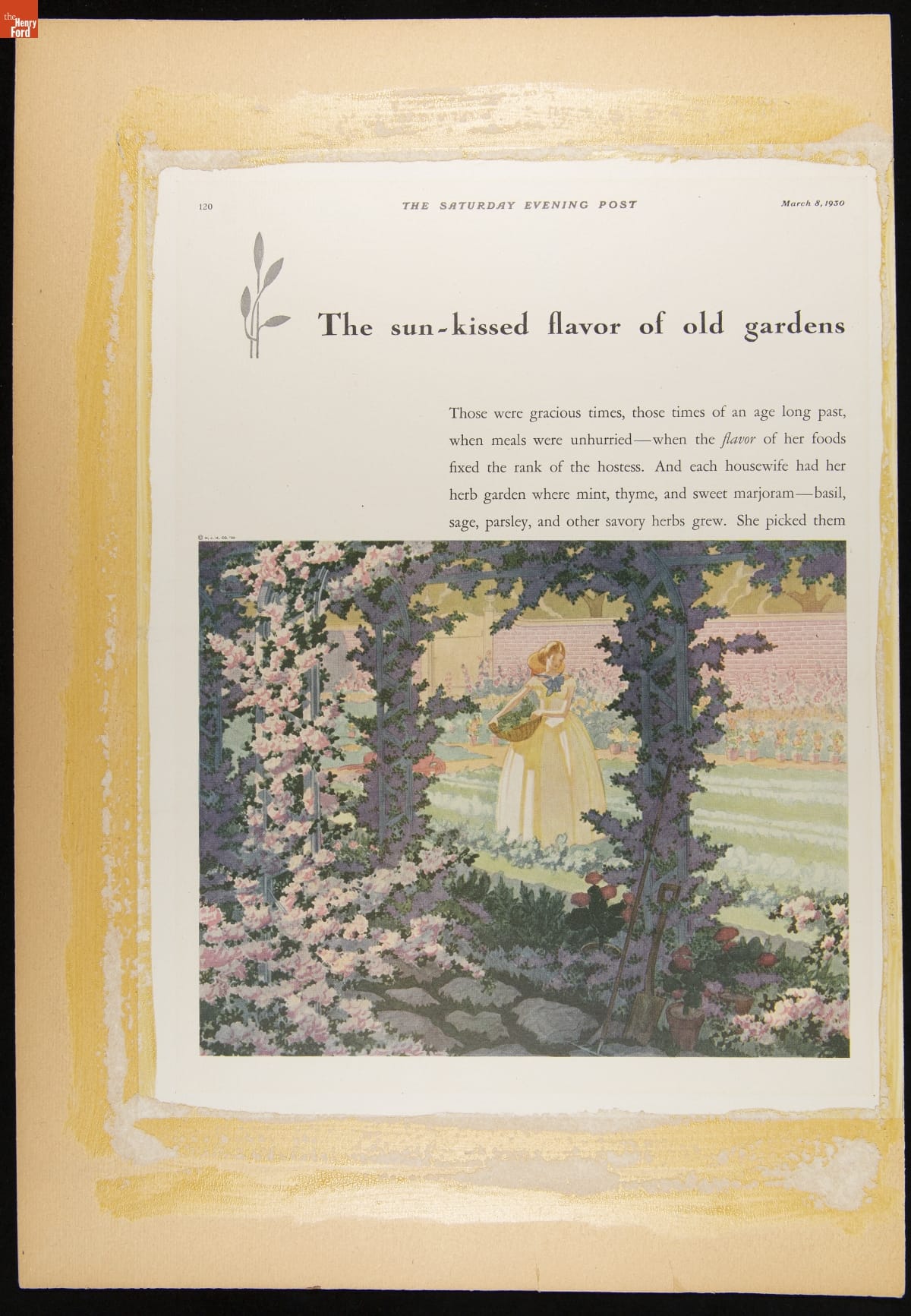
- "The Sun-Kissed Flavor of Old Gardens," Heinz Company Advertisement, March 8, 1930 - This two-page tear sheet advertising layout was created to be published in the Saturday Evening Post on March 8, 1930. The advertisement describes how old ways of cooking were painstaking and time consuming, whereas Heinz products exhibit the same great taste of old recipes without all the hassle.
- March 08, 1930
- Collections - Artifact
"The Sun-Kissed Flavor of Old Gardens," Heinz Company Advertisement, March 8, 1930
This two-page tear sheet advertising layout was created to be published in the Saturday Evening Post on March 8, 1930. The advertisement describes how old ways of cooking were painstaking and time consuming, whereas Heinz products exhibit the same great taste of old recipes without all the hassle.
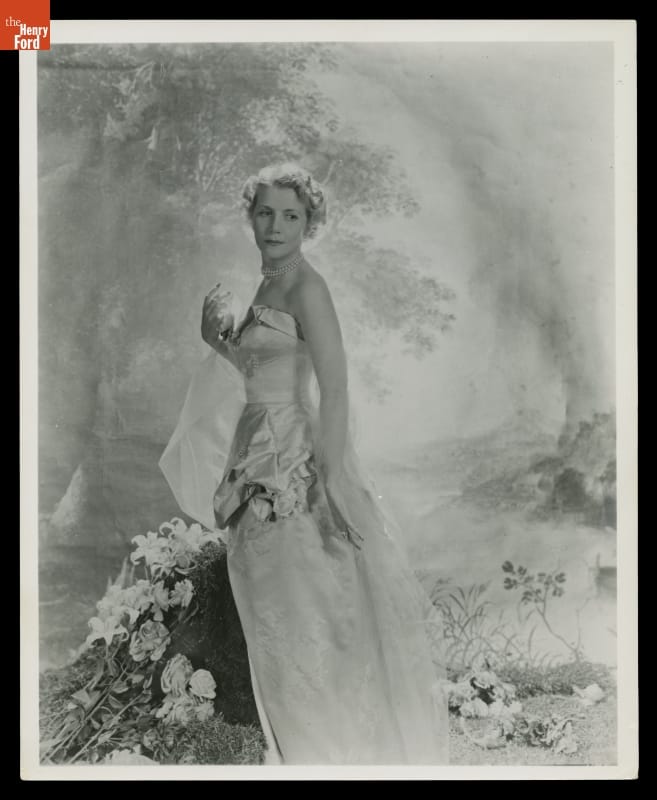
- Portrait of Elizabeth Parke Firestone by Cecil Beaton, 1949 - Elizabeth Parke Firestone, wife of tire magnate Harvey S. Firestone, Jr., cultivated a refined sense of fashion through years of interest in clothing design and collaboration with world-renowned couturiers. In 1949, Firestone posed for celebrated Vogue fashion photographer Cecil Beaton. She wore an ice blue evening gown designed by Sophie Gimbel for Salon Moderne of Saks Fifth Avenue.
- 1949
- Collections - Artifact
Portrait of Elizabeth Parke Firestone by Cecil Beaton, 1949
Elizabeth Parke Firestone, wife of tire magnate Harvey S. Firestone, Jr., cultivated a refined sense of fashion through years of interest in clothing design and collaboration with world-renowned couturiers. In 1949, Firestone posed for celebrated Vogue fashion photographer Cecil Beaton. She wore an ice blue evening gown designed by Sophie Gimbel for Salon Moderne of Saks Fifth Avenue.
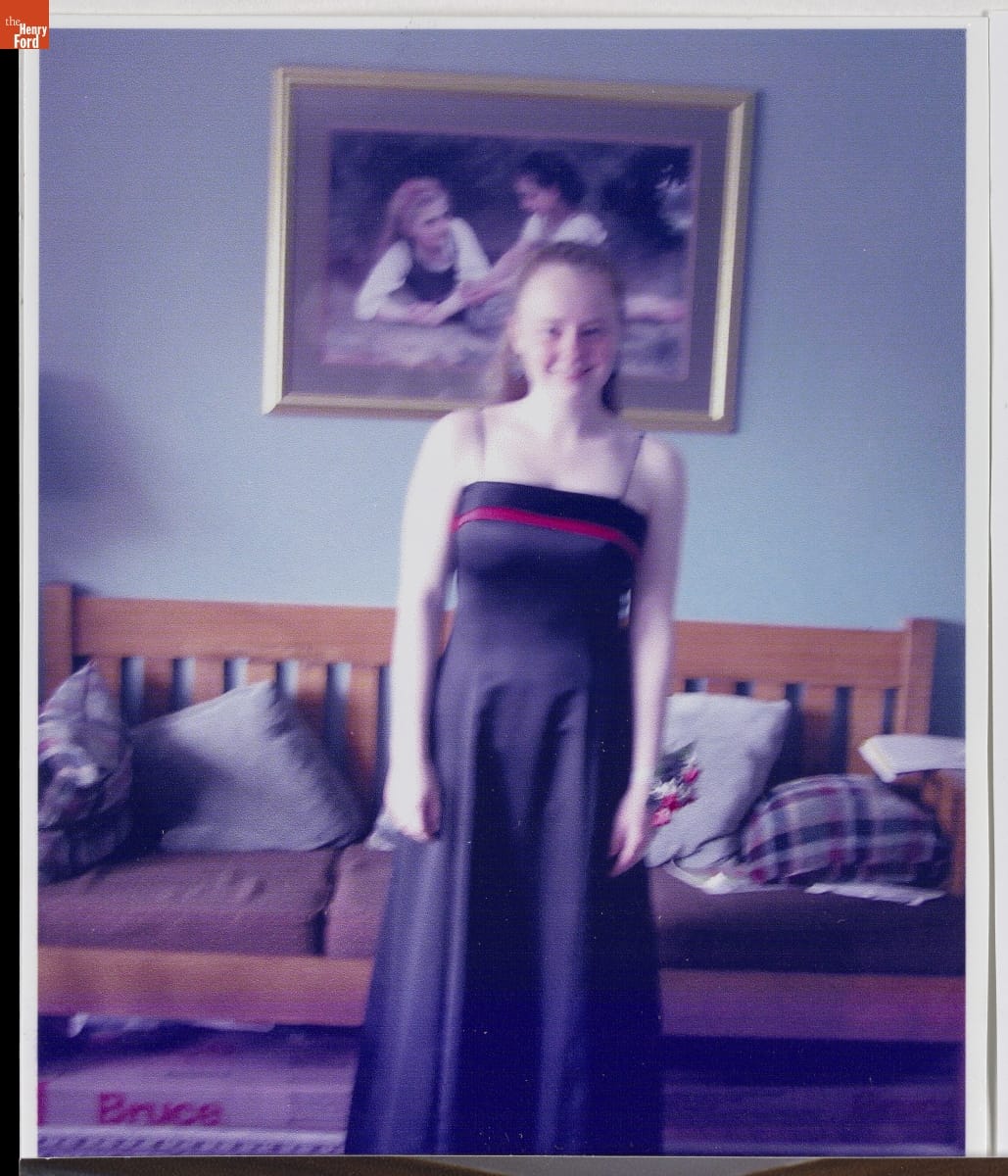
- Jennifer O'Hare in Her Prom Dress, May 13, 2006 - Proms are a much-anticipated milestone for many teenagers. High school students dress up in their most glamorous formal clothing to enjoy the prom. And for teen girls, choosing the perfect dress is key to the experience -- even when a compromise is required. Jennifer O'Hare preferred a backless dress but chose one acceptable to her mother, who helped pay for the gown.
- May 13, 2006
- Collections - Artifact
Jennifer O'Hare in Her Prom Dress, May 13, 2006
Proms are a much-anticipated milestone for many teenagers. High school students dress up in their most glamorous formal clothing to enjoy the prom. And for teen girls, choosing the perfect dress is key to the experience -- even when a compromise is required. Jennifer O'Hare preferred a backless dress but chose one acceptable to her mother, who helped pay for the gown.
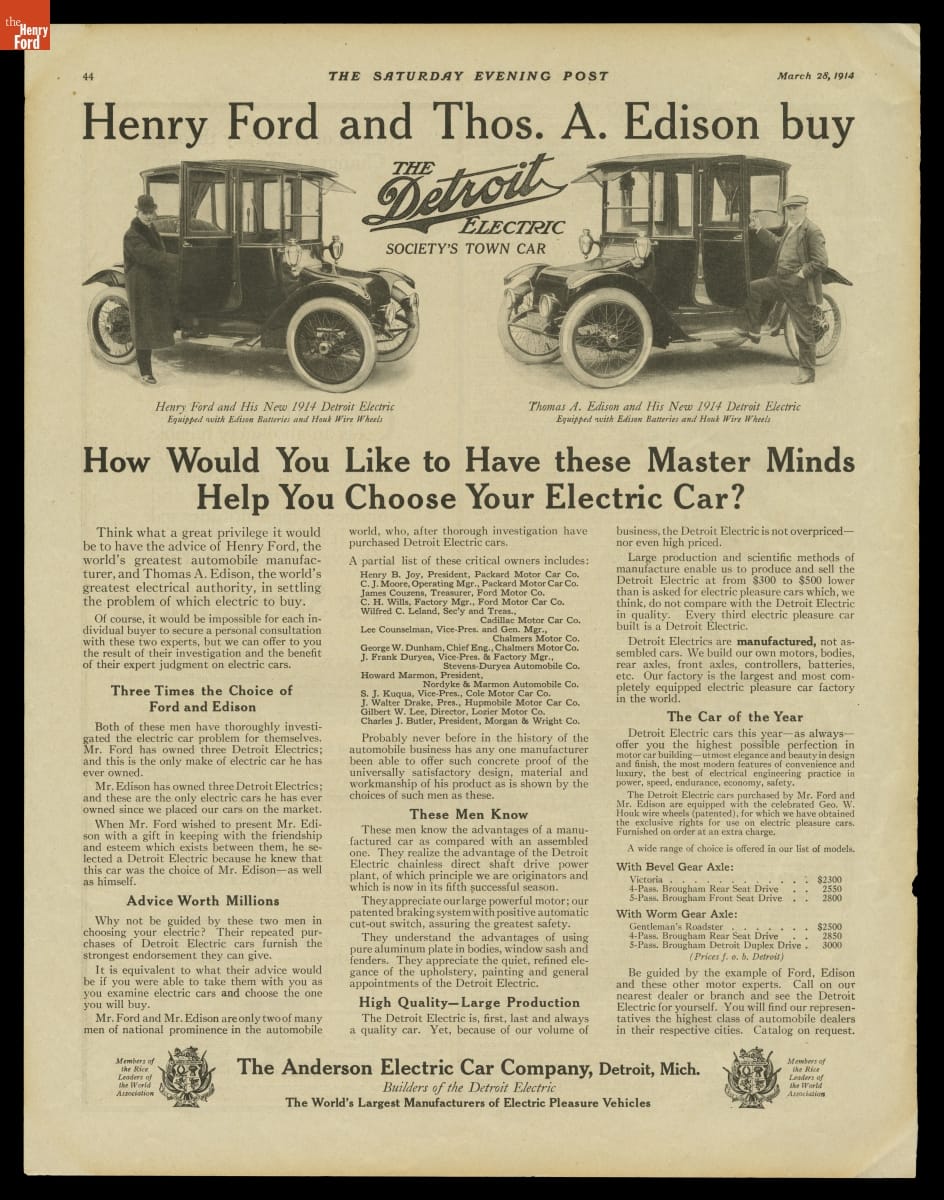
- "Henry Ford and Thomas A. Edison Buy the Detroit Electric," 1914 - Detroit Electric was the best-known and longest-lived American electric car company, producing automobiles from 1907-1939. The company marketed its cars to well-to-do customers -- particularly women -- looking for a clean, quiet car in which to take short trips in cities, where electricity was readily available and range wasn't an issue. Detroit Electric buyers included Henry Ford and Thomas Edison.
- March 28, 1914
- Collections - Artifact
"Henry Ford and Thomas A. Edison Buy the Detroit Electric," 1914
Detroit Electric was the best-known and longest-lived American electric car company, producing automobiles from 1907-1939. The company marketed its cars to well-to-do customers -- particularly women -- looking for a clean, quiet car in which to take short trips in cities, where electricity was readily available and range wasn't an issue. Detroit Electric buyers included Henry Ford and Thomas Edison.
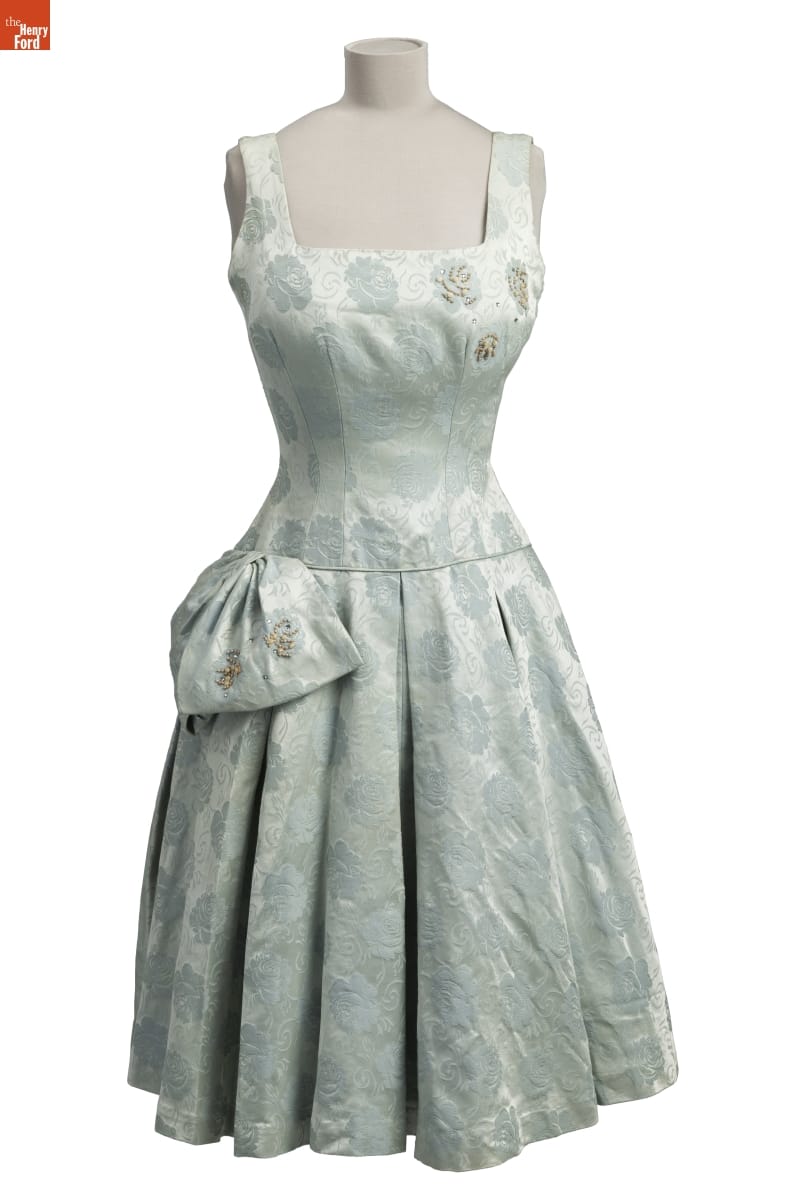
- Dress, Worn by Kay Sempliner, 1956 -
- 1956
- Collections - Artifact
Dress, Worn by Kay Sempliner, 1956
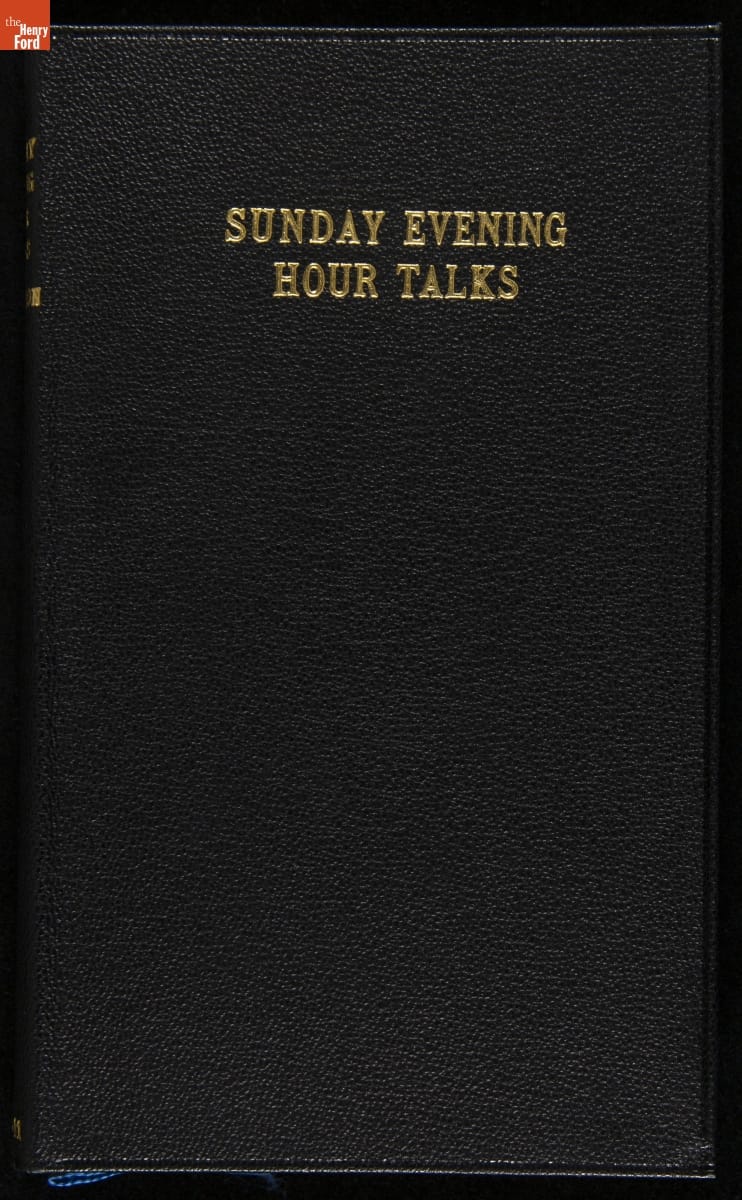
- Talks Given on The Ford Sunday Evening Hour, September 1940-May 1941 - Launched in 1934, the <em>Ford Sunday Evening Hour</em> radio program featured classical music, guest soloists and conductors, and a weekly talk during intermission. Henry Ford asked his friend and advisor William J. Cameron to write and deliver these messages. Cameron, who composed the anti-Semitic articles for <em>The Dearborn Independent</em>, now peddled softer populist views--avoiding extremes and any direct attacks on politicians, ethnic groups, or Wall Street financiers.
- June 01, 1941
- Collections - Artifact
Talks Given on The Ford Sunday Evening Hour, September 1940-May 1941
Launched in 1934, the Ford Sunday Evening Hour radio program featured classical music, guest soloists and conductors, and a weekly talk during intermission. Henry Ford asked his friend and advisor William J. Cameron to write and deliver these messages. Cameron, who composed the anti-Semitic articles for The Dearborn Independent, now peddled softer populist views--avoiding extremes and any direct attacks on politicians, ethnic groups, or Wall Street financiers.
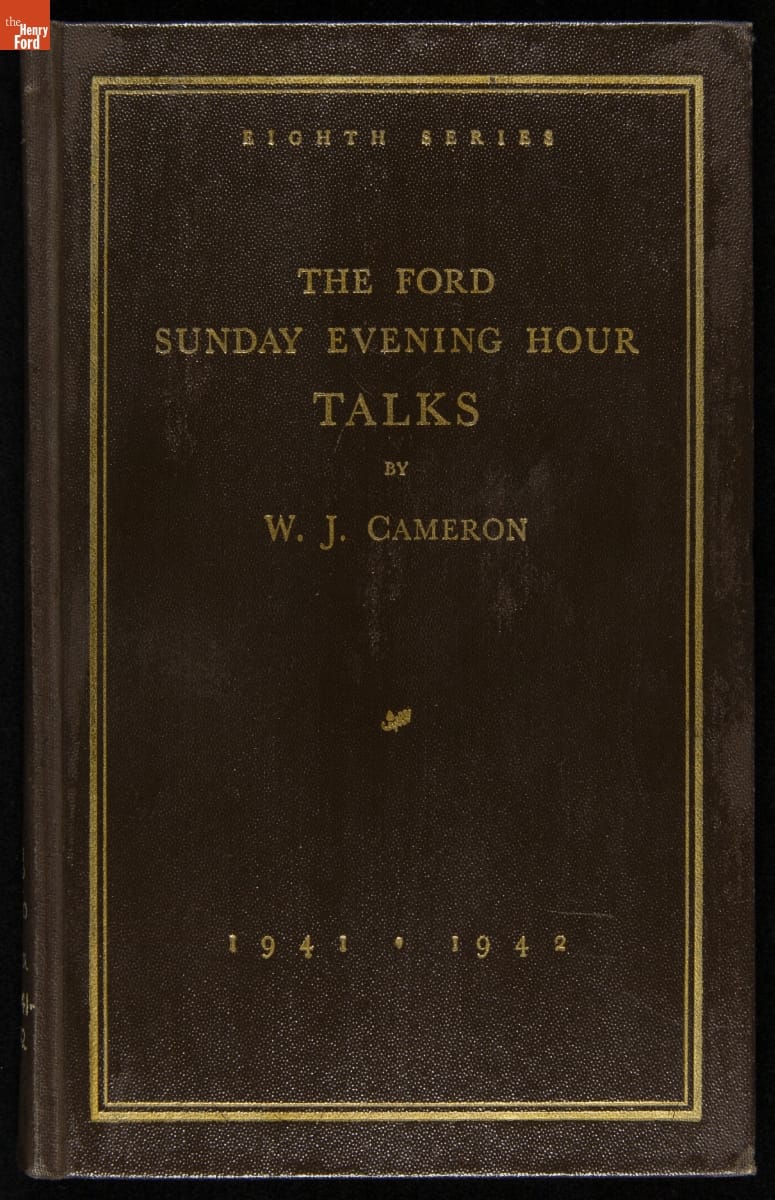
- Talks Given on The Ford Sunday Evening Hour, September 1941-March 1942 - Launched in 1934, the <em>Ford Sunday Evening Hour</em> radio program featured classical music, guest soloists and conductors, and a weekly talk during intermission. Henry Ford asked his friend and advisor William J. Cameron to write and deliver these messages. Cameron, who composed the anti-Semitic articles for <em>The Dearborn Independent</em>, now peddled softer populist views--avoiding extremes and any direct attacks on politicians, ethnic groups, or Wall Street financiers.
- April 01, 1942
- Collections - Artifact
Talks Given on The Ford Sunday Evening Hour, September 1941-March 1942
Launched in 1934, the Ford Sunday Evening Hour radio program featured classical music, guest soloists and conductors, and a weekly talk during intermission. Henry Ford asked his friend and advisor William J. Cameron to write and deliver these messages. Cameron, who composed the anti-Semitic articles for The Dearborn Independent, now peddled softer populist views--avoiding extremes and any direct attacks on politicians, ethnic groups, or Wall Street financiers.