
Search
- "Sketches from the Ford-Tribune Libel Suit," by Irving R. Bacon, 1919 - When Henry Ford sued the <em>Chicago Tribune</em> for libel, the million-dollar lawsuit made national headlines. Ford's shaky court testimony, in which he mangled basic American history facts, shocked lawyers but further endeared him to working people. The trial took place in 1919 at Mount Clemens, Michigan, 25 miles northeast of Detroit. The jury found for Ford but awarded him just six cents.
- 1919
- Collections - Artifact
"Sketches from the Ford-Tribune Libel Suit," by Irving R. Bacon, 1919
When Henry Ford sued the Chicago Tribune for libel, the million-dollar lawsuit made national headlines. Ford's shaky court testimony, in which he mangled basic American history facts, shocked lawyers but further endeared him to working people. The trial took place in 1919 at Mount Clemens, Michigan, 25 miles northeast of Detroit. The jury found for Ford but awarded him just six cents.
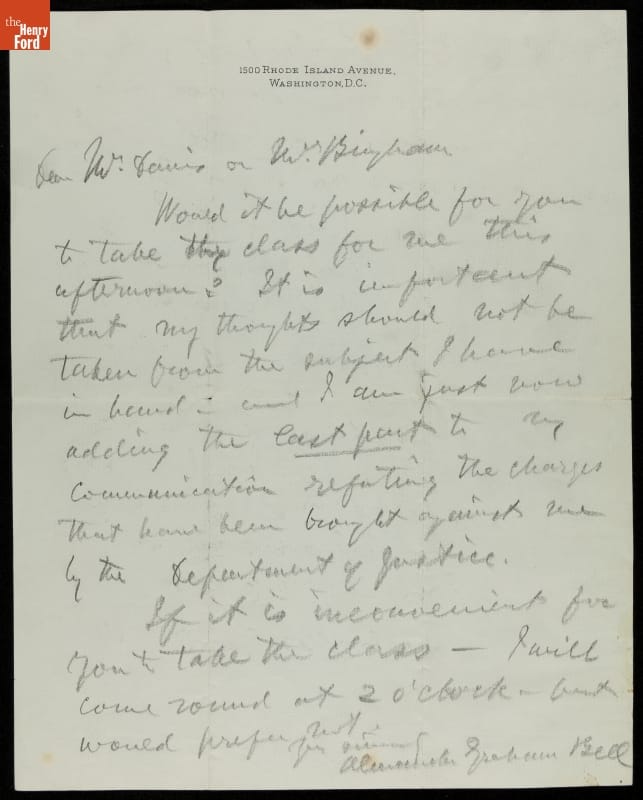
- Letter from Alexander Graham Bell to Cornelia D. Bingham, with Reply on Reverse, circa 1913 -
- circa 1913
- Collections - Artifact
Letter from Alexander Graham Bell to Cornelia D. Bingham, with Reply on Reverse, circa 1913
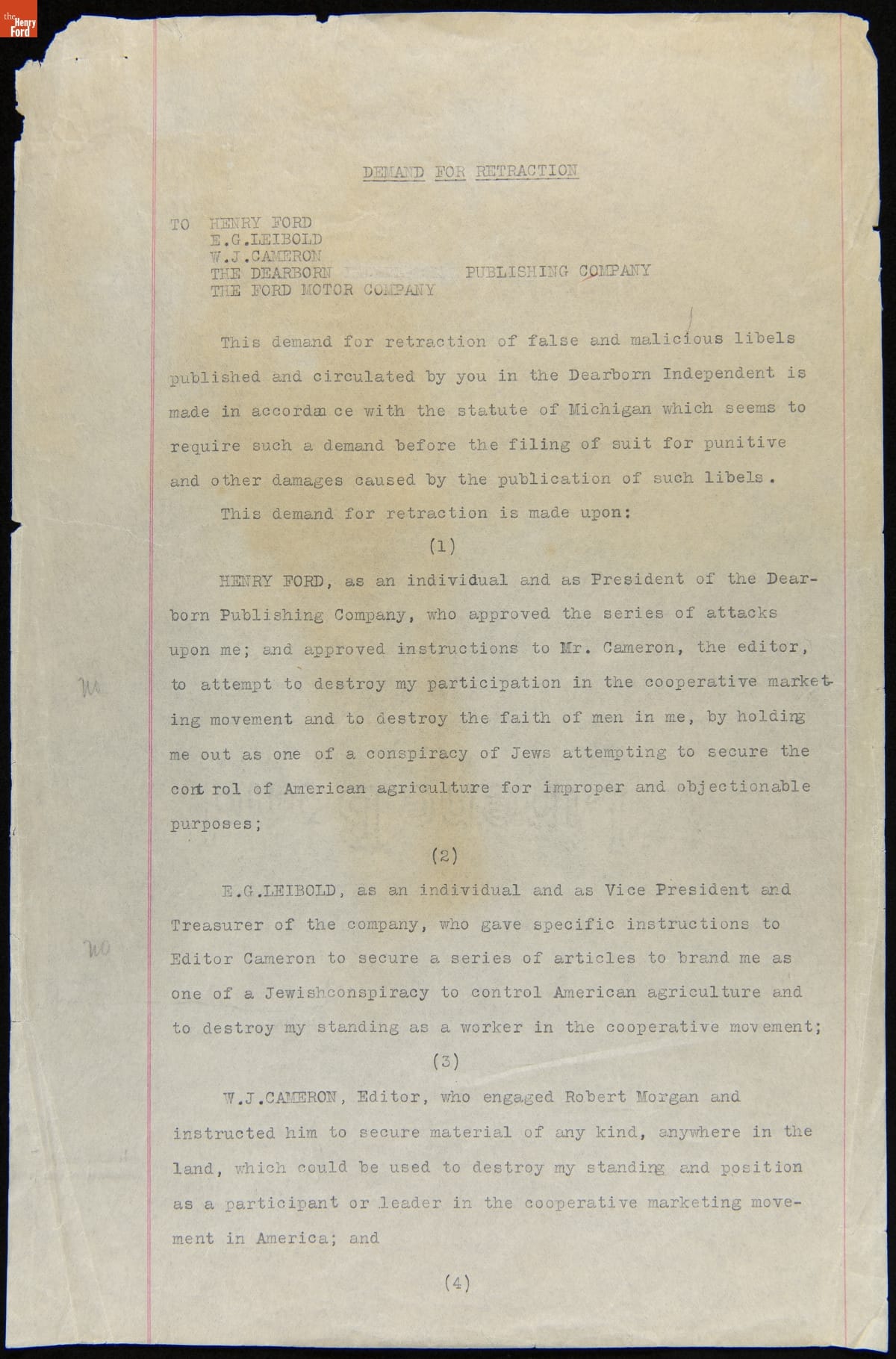
- Demand for Retraction, Dated 06 January 1925, in Preparation for Henry Ford vs Aaron Sapiro Trial - In 1925, Aaron Sapiro--a farm cooperative organizer--filed a libel lawsuit against Henry Ford and his associates for articles published in the <em>The Dearborn Independent</em>. The articles attacked Sapiro, claiming his work with the agricultural community was part of a Jewish conspiracy. This was not the first time the Ford-owned <em>The Dearborn Independent</em> had attacked Jews: from 1920-1922 the paper ran a series of front-page anti-Semitic articles. During the ensuing trial, Ford--uneasy about the possibility of testifying and fearing the loss of his reputation--decided to settle. In 1927, Ford released a written apology, which claimed he was ill-informed about the paper's action, and formally recanted the charges against Jews made by his paper.
- January 06, 1925
- Collections - Artifact
Demand for Retraction, Dated 06 January 1925, in Preparation for Henry Ford vs Aaron Sapiro Trial
In 1925, Aaron Sapiro--a farm cooperative organizer--filed a libel lawsuit against Henry Ford and his associates for articles published in the The Dearborn Independent. The articles attacked Sapiro, claiming his work with the agricultural community was part of a Jewish conspiracy. This was not the first time the Ford-owned The Dearborn Independent had attacked Jews: from 1920-1922 the paper ran a series of front-page anti-Semitic articles. During the ensuing trial, Ford--uneasy about the possibility of testifying and fearing the loss of his reputation--decided to settle. In 1927, Ford released a written apology, which claimed he was ill-informed about the paper's action, and formally recanted the charges against Jews made by his paper.
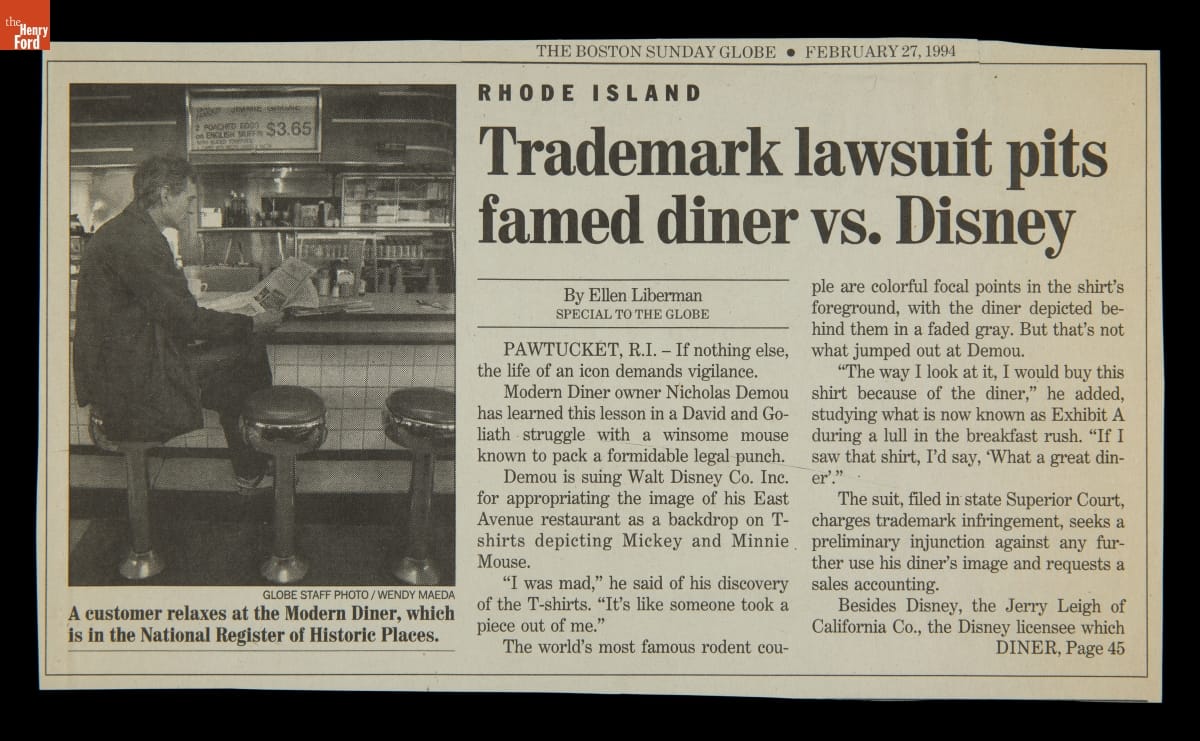
- "Trademark Lawsuit Pits Famed Diner vs. Disney," Article from Boston Sunday Globe, February 27, 1994 -
- February 27, 1994
- Collections - Artifact
"Trademark Lawsuit Pits Famed Diner vs. Disney," Article from Boston Sunday Globe, February 27, 1994
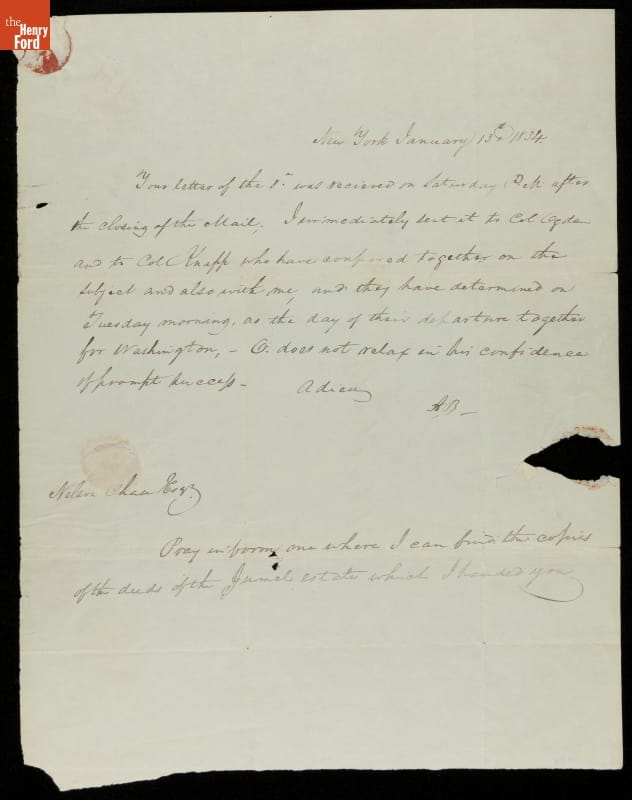
- Letter from Aaron Burr to Nelson Chase, 1834 -
- January 13, 1834
- Collections - Artifact
Letter from Aaron Burr to Nelson Chase, 1834
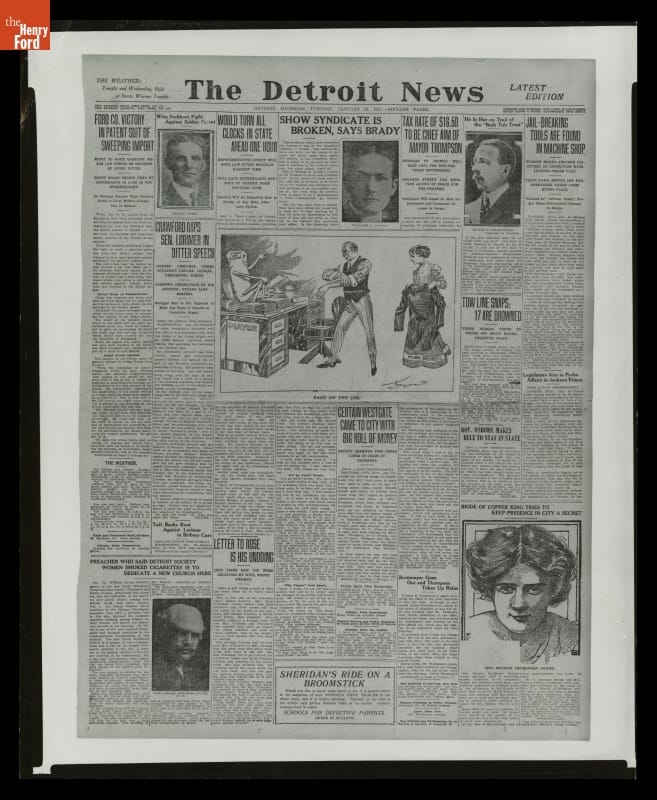
- Detroit News Headline Announcing the Selden Patent Lawsuit Decision, January 10, 1911 - The Association of Licensed Automobile Manufacturers believed that George Selden's 1895 patent covered any and all internal combustion automobiles. When Henry Ford refused to pay ALAM's requested royalties, the organization took him to court. After a lengthy legal battle, the U.S. Court of Appeals found in Ford's favor in 1911. Automakers were freed from patent fees and Ford became a folk hero.
- January 10, 1911
- Collections - Artifact
Detroit News Headline Announcing the Selden Patent Lawsuit Decision, January 10, 1911
The Association of Licensed Automobile Manufacturers believed that George Selden's 1895 patent covered any and all internal combustion automobiles. When Henry Ford refused to pay ALAM's requested royalties, the organization took him to court. After a lengthy legal battle, the U.S. Court of Appeals found in Ford's favor in 1911. Automakers were freed from patent fees and Ford became a folk hero.
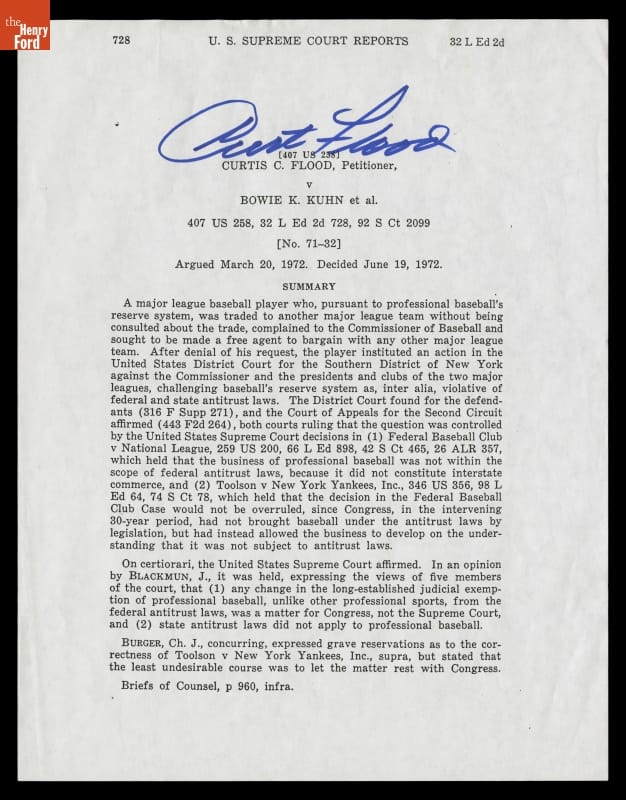
- U.S. Supreme Court Report, Curtis C. Flood, Petitioner, v. Bowie K. Kuhn et al, 1972 - In 1969, Curt Flood, all-star center fielder for the St. Louis Cardinals, decided to challenge Major League Baseball's Reserve Clause in the U.S. Supreme Court. The reserve clause was the key tool that owners used to restrict the movement of players from team to team and to control player salaries. Flood lost. But his actions put in motion changes that led to baseball's free agency a few years later.
- June 19, 1972
- Collections - Artifact
U.S. Supreme Court Report, Curtis C. Flood, Petitioner, v. Bowie K. Kuhn et al, 1972
In 1969, Curt Flood, all-star center fielder for the St. Louis Cardinals, decided to challenge Major League Baseball's Reserve Clause in the U.S. Supreme Court. The reserve clause was the key tool that owners used to restrict the movement of players from team to team and to control player salaries. Flood lost. But his actions put in motion changes that led to baseball's free agency a few years later.