
Search
- We Hand You a Hint: The Hemco Twin-Lite is Made of Condensite, circa 1915 - Chemically synthetic plastics were developed in the early 1900s to replace shellac and hard rubber -- naturally derived substances increasingly in demand for various industrial applications. The Condensite Company of America formed in 1910 to sell a new material first developed at Thomas Edison's West Orange laboratory for phonograph records. Durable and nonconductive, Condensite was well suited for electrical products.

- circa 1915
- Collections - Artifact
We Hand You a Hint: The Hemco Twin-Lite is Made of Condensite, circa 1915
Chemically synthetic plastics were developed in the early 1900s to replace shellac and hard rubber -- naturally derived substances increasingly in demand for various industrial applications. The Condensite Company of America formed in 1910 to sell a new material first developed at Thomas Edison's West Orange laboratory for phonograph records. Durable and nonconductive, Condensite was well suited for electrical products.
- Henry Ford Hitting Soybean Plastic Trunk with an Axe, 1940 - Henry Ford hoped that plastic made from soybeans might be developed into a strong, safe substitute for traditional metals. He established a laboratory where scientists molded ground soybean meal into small plastic car parts. Here, Ford swings an ax at a plastic trunk lid -- mounted to his personal car -- to demonstrate the material's strength.

- November 02, 1940
- Collections - Artifact
Henry Ford Hitting Soybean Plastic Trunk with an Axe, 1940
Henry Ford hoped that plastic made from soybeans might be developed into a strong, safe substitute for traditional metals. He established a laboratory where scientists molded ground soybean meal into small plastic car parts. Here, Ford swings an ax at a plastic trunk lid -- mounted to his personal car -- to demonstrate the material's strength.
- Condensite in the Automotive Industry, March 1922 - Chemically synthetic plastics were developed in the early 1900s to replace shellac and hard rubber -- naturally derived substances increasingly in demand for various industrial applications. The Condensite Company of America formed in 1910 to sell a new material first developed at Thomas Edison's West Orange laboratory for phonograph records. Durable and nonconductive, Condensite was well suited for automotive components.
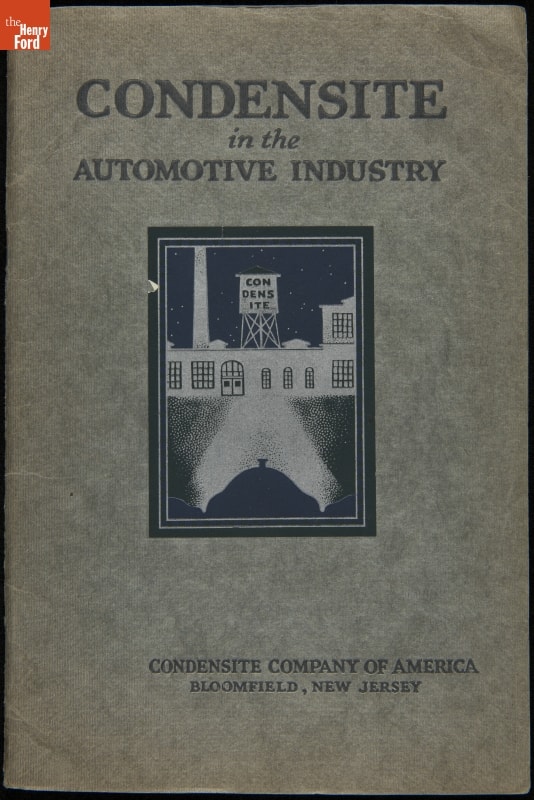
- March 01, 1922
- Collections - Artifact
Condensite in the Automotive Industry, March 1922
Chemically synthetic plastics were developed in the early 1900s to replace shellac and hard rubber -- naturally derived substances increasingly in demand for various industrial applications. The Condensite Company of America formed in 1910 to sell a new material first developed at Thomas Edison's West Orange laboratory for phonograph records. Durable and nonconductive, Condensite was well suited for automotive components.
- Employee Operating New Machinery in the Plastic Building of the Ford Motor Company Rouge Plant, November 1946 -
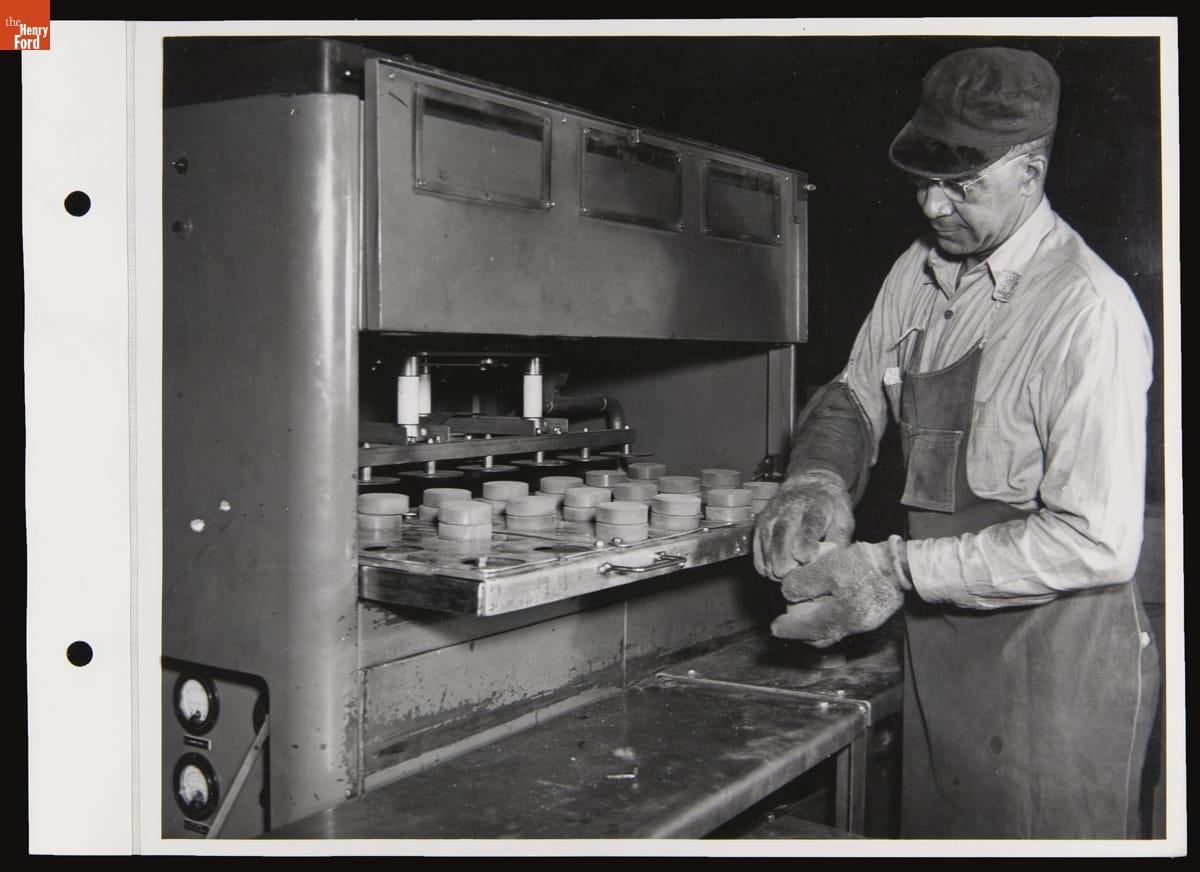
- November 11, 1946
- Collections - Artifact
Employee Operating New Machinery in the Plastic Building of the Ford Motor Company Rouge Plant, November 1946
- W.R. Grace & Co. Sales Brochure, "Now the True All Plastic Milk Container from Grace Plastics," circa 1965 -

- circa 1965
- Collections - Artifact
W.R. Grace & Co. Sales Brochure, "Now the True All Plastic Milk Container from Grace Plastics," circa 1965
- Soy Bean Display, "Ford Cycle of Production," Ford Exposition, New York World's Fair, 1940 - Ford Motor Company poured resources into the 1939-40 New York World's Fair, spending more than $5 million to construct and maintain its elaborate and well-attended exposition space. Ford's massive exhibition building attracted fairgoers with industrial demonstrations and informative displays. The huge, revolving "Ford Cycle of Production" - which explained how raw materials became Ford automobile parts - particularly impressed visitors.
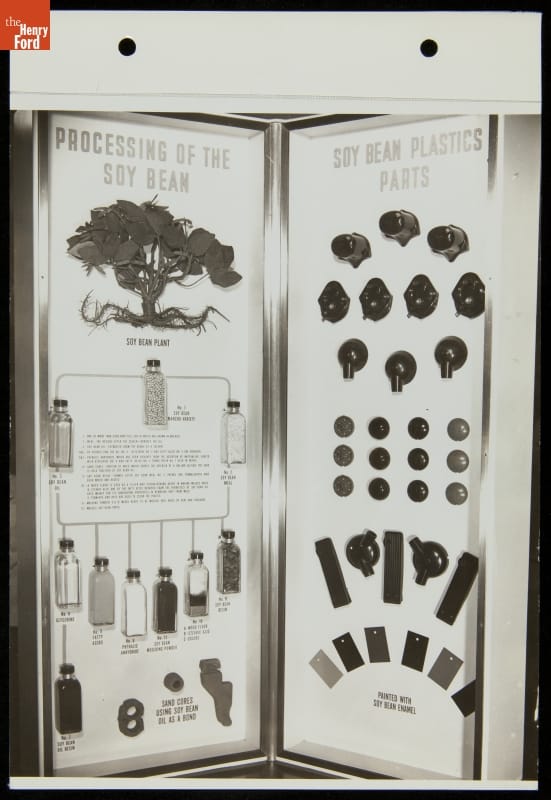
- January 08, 1940
- Collections - Artifact
Soy Bean Display, "Ford Cycle of Production," Ford Exposition, New York World's Fair, 1940
Ford Motor Company poured resources into the 1939-40 New York World's Fair, spending more than $5 million to construct and maintain its elaborate and well-attended exposition space. Ford's massive exhibition building attracted fairgoers with industrial demonstrations and informative displays. The huge, revolving "Ford Cycle of Production" - which explained how raw materials became Ford automobile parts - particularly impressed visitors.
- Cellulose Acetate Plastic Display, "Ford Cycle of Production," Ford Exposition, New York World's Fair, 1940 - Ford Motor Company poured resources into the 1939-40 New York World's Fair, spending more than $5 million to construct and maintain its elaborate and well-attended exposition space. Ford's massive exhibition building attracted fairgoers with industrial demonstrations and informative displays. The huge, revolving "Ford Cycle of Production" - which explained how raw materials became Ford automobile parts - particularly impressed visitors.
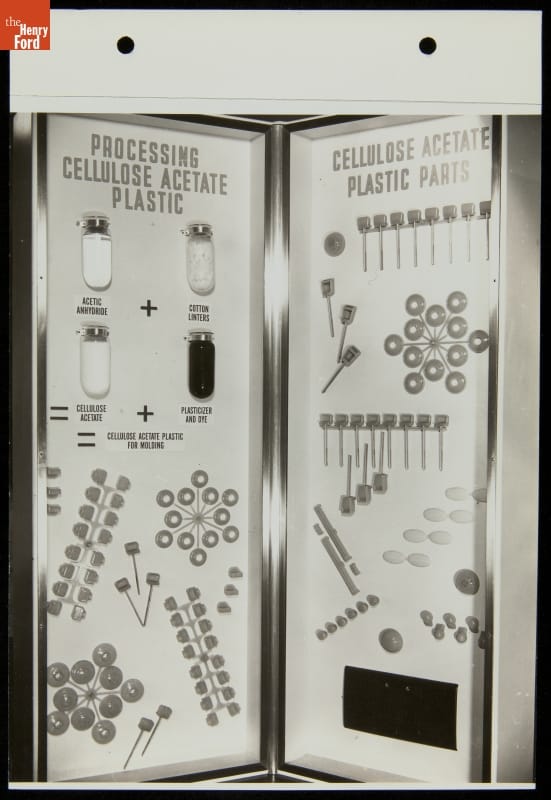
- January 08, 1940
- Collections - Artifact
Cellulose Acetate Plastic Display, "Ford Cycle of Production," Ford Exposition, New York World's Fair, 1940
Ford Motor Company poured resources into the 1939-40 New York World's Fair, spending more than $5 million to construct and maintain its elaborate and well-attended exposition space. Ford's massive exhibition building attracted fairgoers with industrial demonstrations and informative displays. The huge, revolving "Ford Cycle of Production" - which explained how raw materials became Ford automobile parts - particularly impressed visitors.
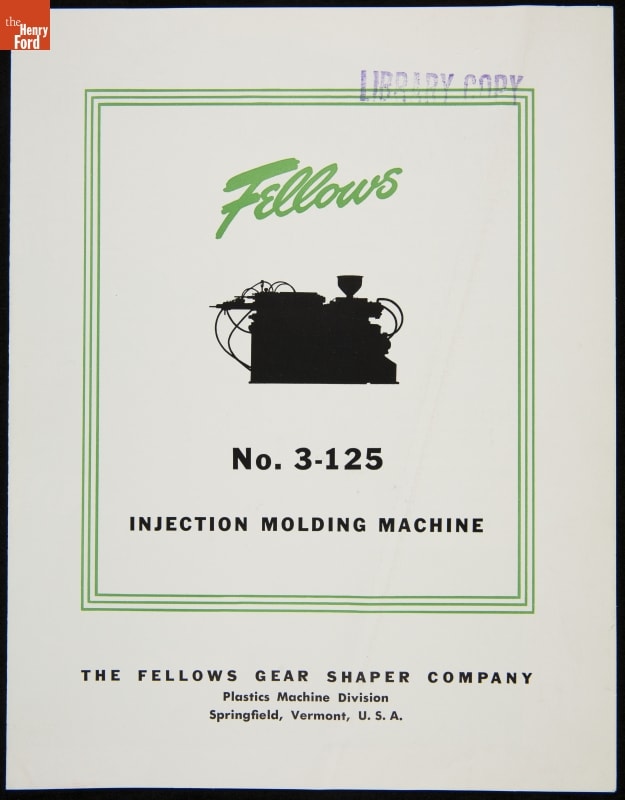
- Fellows No. 3-125 Injection Molding Machine, circa 1961 -
- circa 1961
- Collections - Artifact
Fellows No. 3-125 Injection Molding Machine, circa 1961
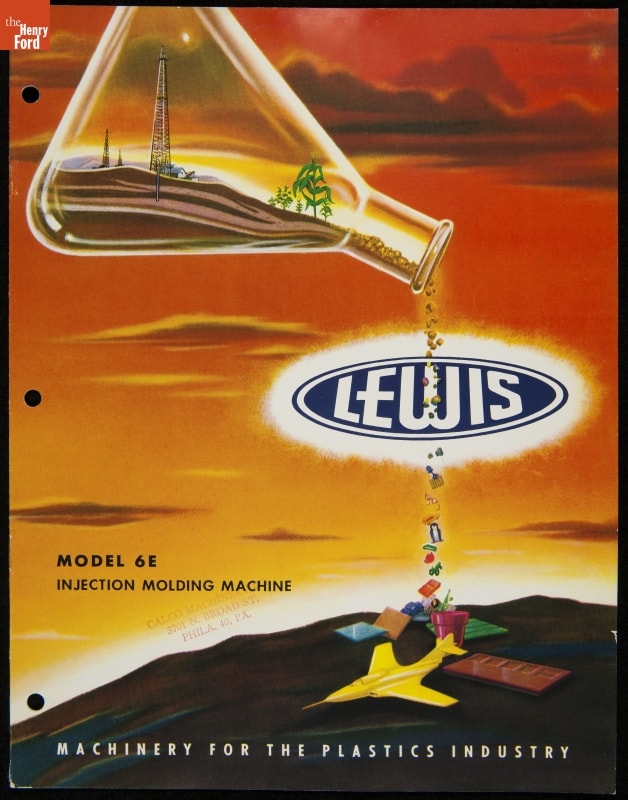
- Model 6E Injection Molding Machine: Machinery for the Plastic Industry, circa 1958 -
- circa 1958
- Collections - Artifact
Model 6E Injection Molding Machine: Machinery for the Plastic Industry, circa 1958
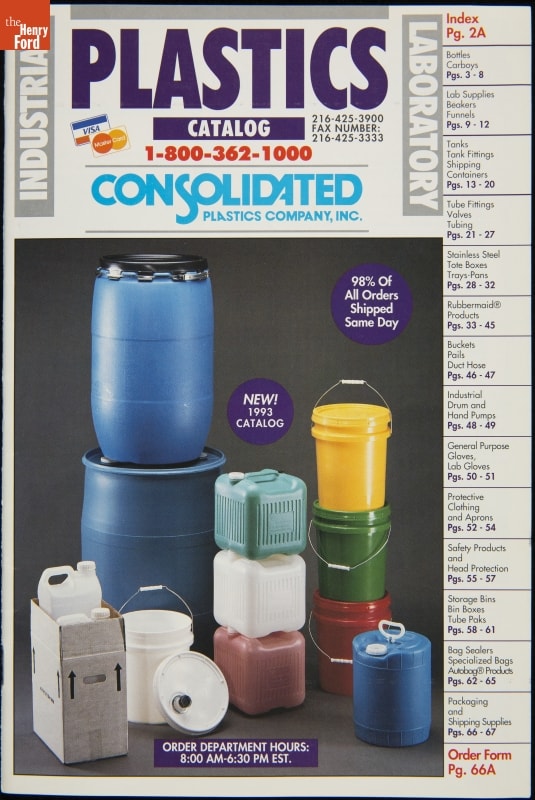
- Consolidated Plastics Company Catalog, "Industrial and Laboratory Plastics," 1993 -
- 1993
- Collections - Artifact
Consolidated Plastics Company Catalog, "Industrial and Laboratory Plastics," 1993