
Search
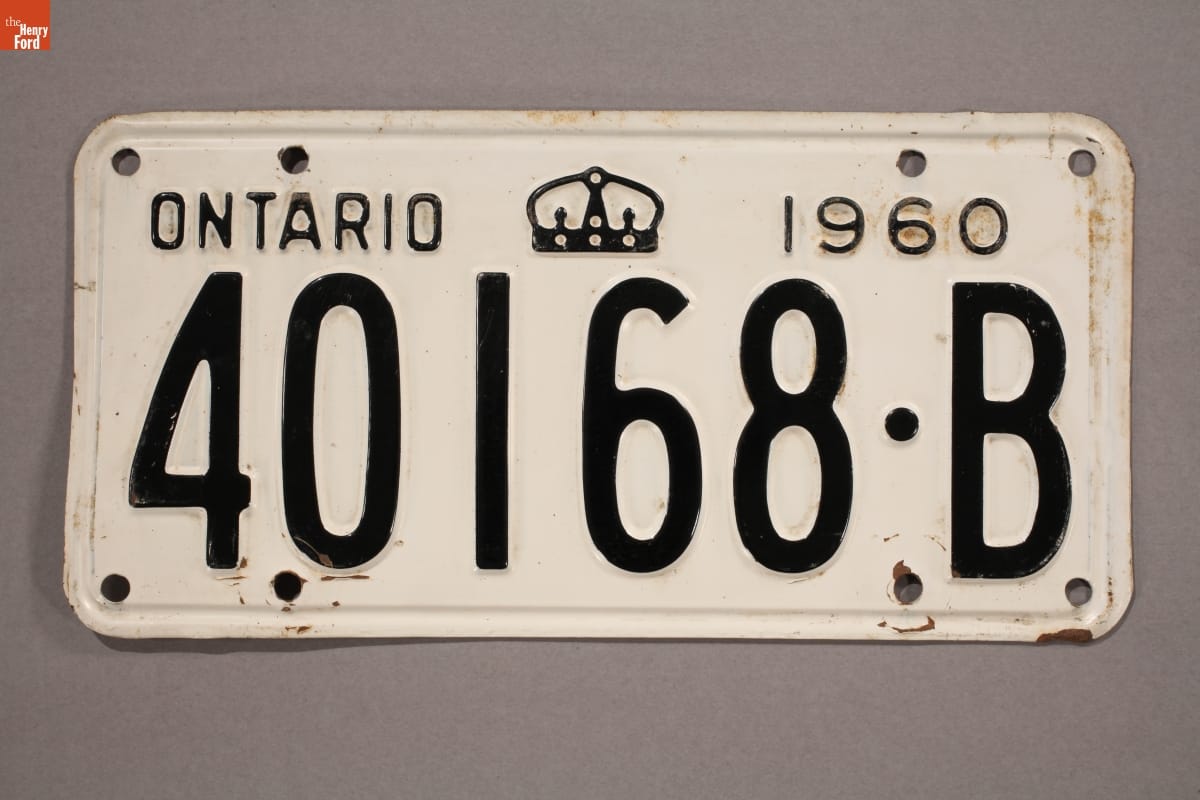
- Pair of Ontario License Plates, 1960 - Ontario's provincial government began registering motor vehicles in 1903. During the first decades of the 20th century, the province issued license plates made out of leather, rubber, porcelain, or flat steel. Embossed steel plates, like this one from 1960, were introduced in the 1920s.
- 1960
- Collections - Artifact
Pair of Ontario License Plates, 1960
Ontario's provincial government began registering motor vehicles in 1903. During the first decades of the 20th century, the province issued license plates made out of leather, rubber, porcelain, or flat steel. Embossed steel plates, like this one from 1960, were introduced in the 1920s.
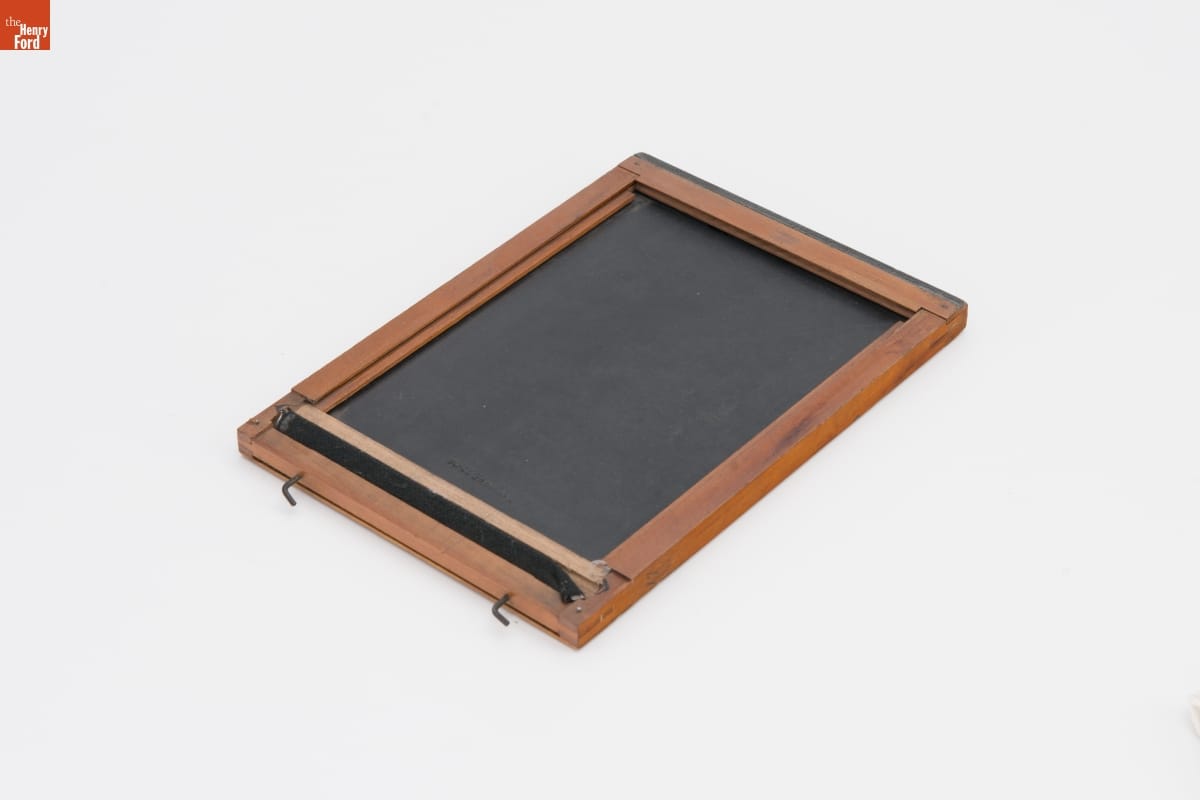
- Plate Film Holder, 1908-1920 - Wet plate photography was a primary photographic method until the invention of roll-film in the 1880s. Metal or glass plates were coated with light-sensitive collodion, placed into holders, and exposed in a camera. Before the plate dried, it was developed in a darkroom. Exacting and demanding, wet plate photography was the opposite of being a mobile, spontaneous, or user-friendly process.
- 1908-1920
- Collections - Artifact
Plate Film Holder, 1908-1920
Wet plate photography was a primary photographic method until the invention of roll-film in the 1880s. Metal or glass plates were coated with light-sensitive collodion, placed into holders, and exposed in a camera. Before the plate dried, it was developed in a darkroom. Exacting and demanding, wet plate photography was the opposite of being a mobile, spontaneous, or user-friendly process.
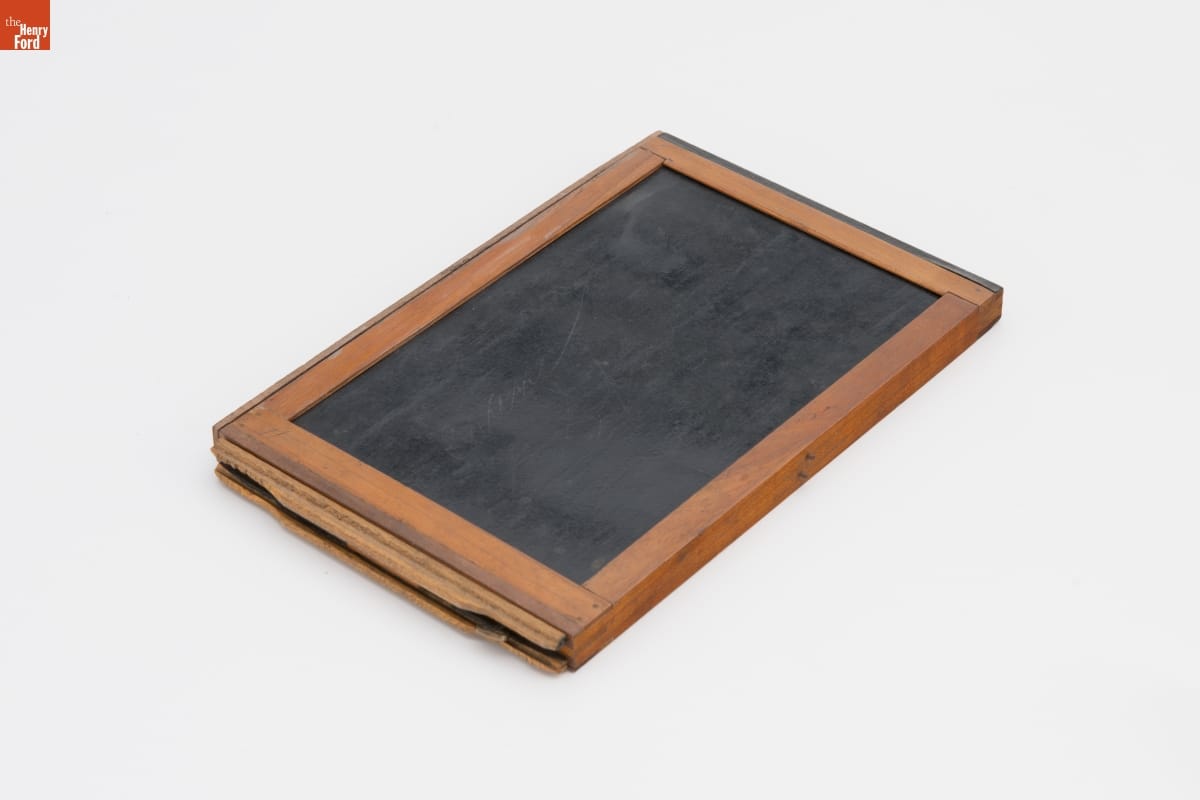
- Plate Film Holder, 1870-1920 - Wet plate photography was a primary photographic method until the invention of roll-film in the 1880s. Metal or glass plates were coated with light-sensitive collodion, placed into holders, and exposed in a camera. Before the plate dried, it was developed in a darkroom. Exacting and demanding, wet plate photography was the opposite of being a mobile, spontaneous, or user-friendly process.
- 1870-1920
- Collections - Artifact
Plate Film Holder, 1870-1920
Wet plate photography was a primary photographic method until the invention of roll-film in the 1880s. Metal or glass plates were coated with light-sensitive collodion, placed into holders, and exposed in a camera. Before the plate dried, it was developed in a darkroom. Exacting and demanding, wet plate photography was the opposite of being a mobile, spontaneous, or user-friendly process.
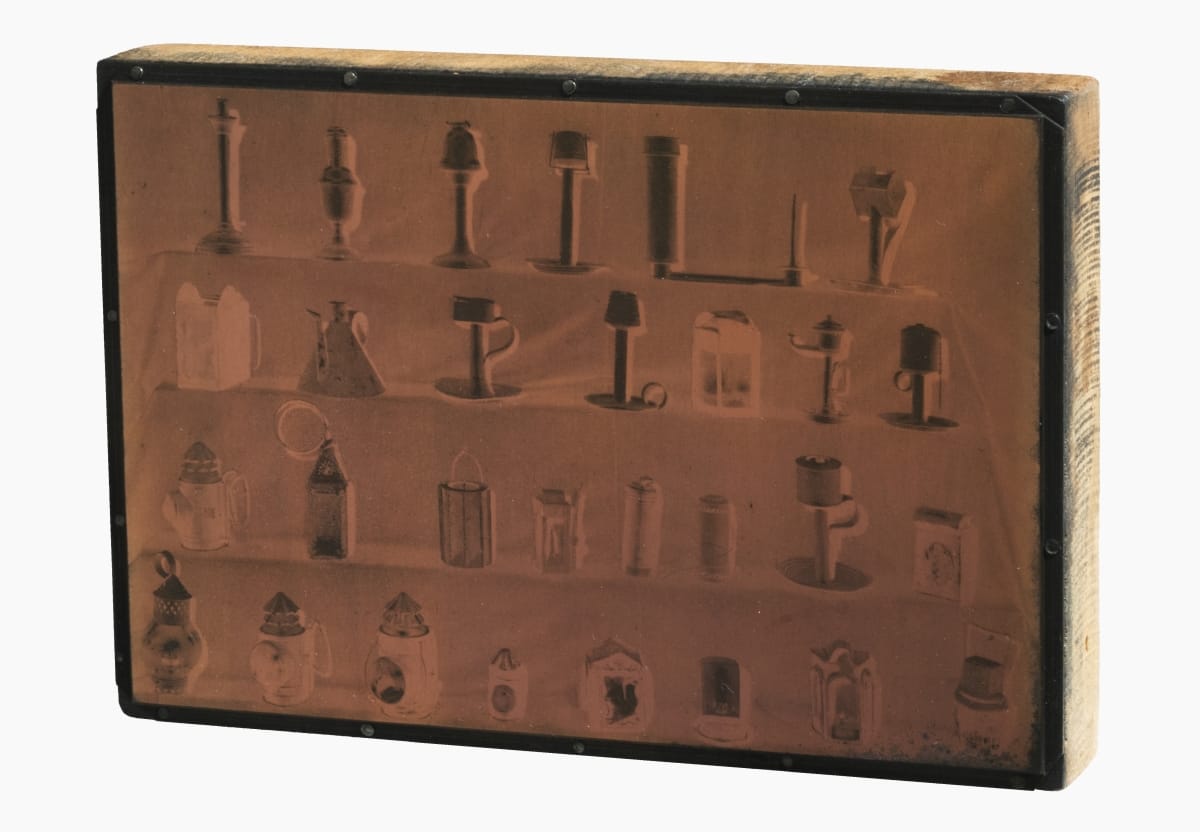
- Printing Plate with Image of Lamps and Lanterns -
- Collections - Artifact
Printing Plate with Image of Lamps and Lanterns
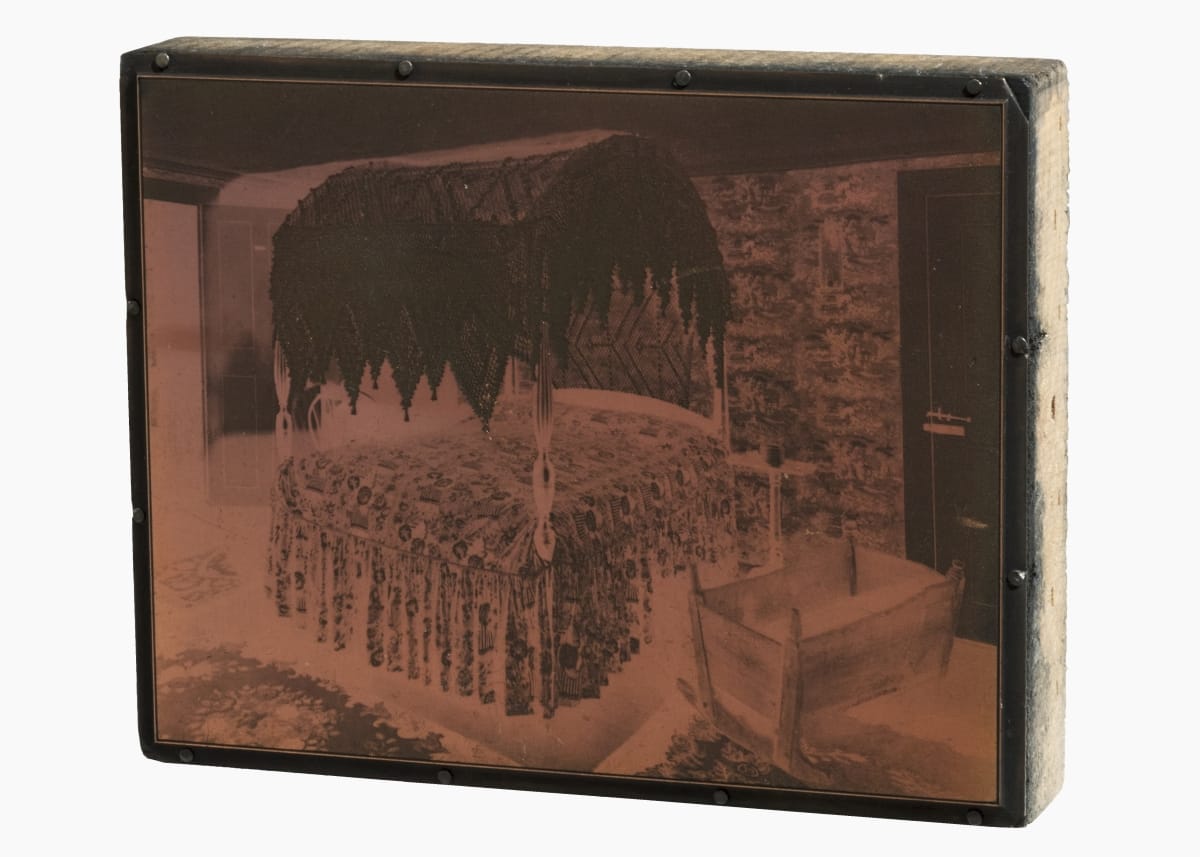
- Printing Plate with Image of a Bedroom Interior -
- Collections - Artifact
Printing Plate with Image of a Bedroom Interior
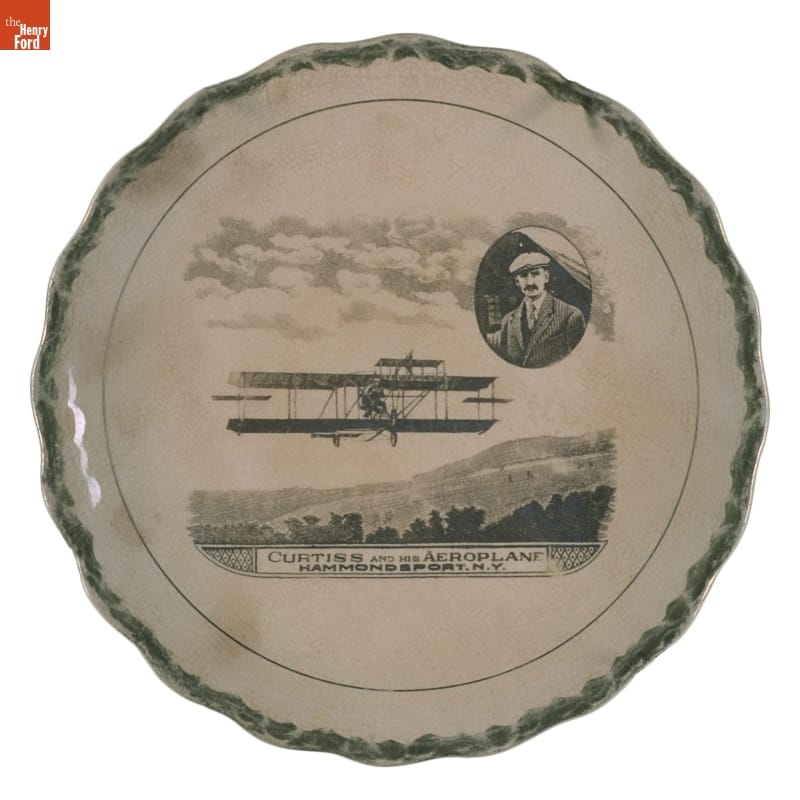
- Commemorative Plate, Featuring Glenn Curtiss, circa 1910 - Glenn Curtiss pioneered aileron control systems and designed some of the first successful seaplanes. He formed an exhibition flying team, and he set several flight records of his own. Starting in 1909, Curtiss was involved in a bitter patent dispute with the Wright brothers. It wasn't resolved until 1917, when World War I forced the creation of a patent pool.
- circa 1910
- Collections - Artifact
Commemorative Plate, Featuring Glenn Curtiss, circa 1910
Glenn Curtiss pioneered aileron control systems and designed some of the first successful seaplanes. He formed an exhibition flying team, and he set several flight records of his own. Starting in 1909, Curtiss was involved in a bitter patent dispute with the Wright brothers. It wasn't resolved until 1917, when World War I forced the creation of a patent pool.
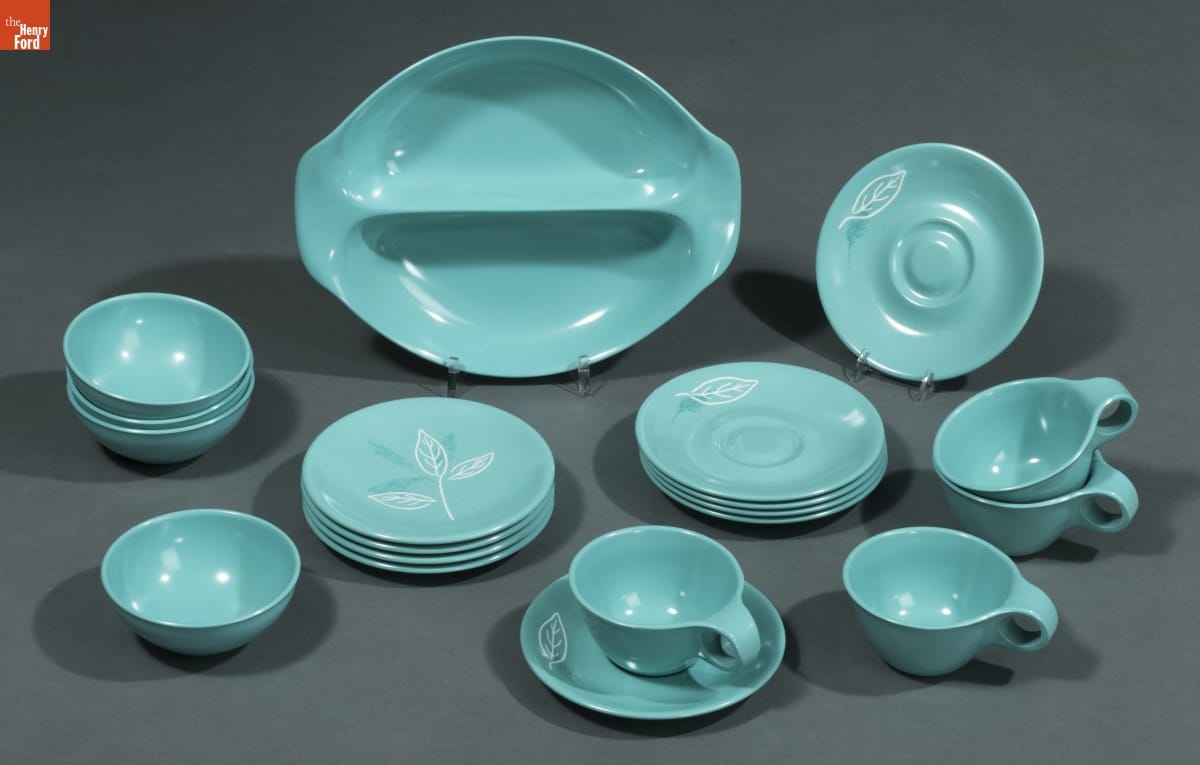
- Set of Melamine Tableware, 1950-1960 - During the early 1950s, plastic dinnerware in the form of melamine was introduced to the American market. By 1956, twenty-five percent of Americans owned at least a pair of these plates. Industrial designers Russel and Mary Wright were famous for producing aesthetically pleasing ceramic dinnerware as early as the 1930s. This set, in fashionable turquoise, was the Wrights' first design in plastic.
- 1950-1960
- Collections - Artifact
Set of Melamine Tableware, 1950-1960
During the early 1950s, plastic dinnerware in the form of melamine was introduced to the American market. By 1956, twenty-five percent of Americans owned at least a pair of these plates. Industrial designers Russel and Mary Wright were famous for producing aesthetically pleasing ceramic dinnerware as early as the 1930s. This set, in fashionable turquoise, was the Wrights' first design in plastic.
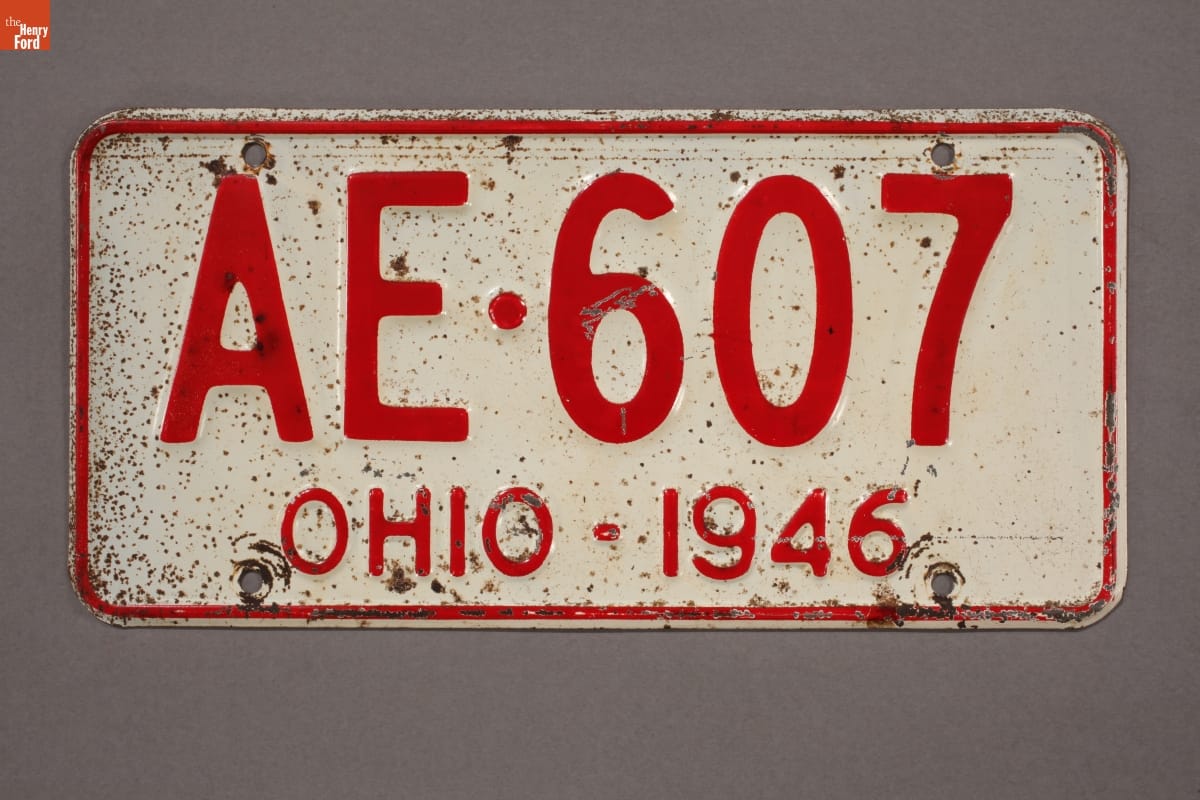
- Ohio License Plate, 1946 - Early state-issued license plates were made of porcelain-coated iron. Later, states stamped tin, steel, or even copper to make plates. During the Second World War several states used fiberboard. Plate colors varied and some states added symbols, mottoes, or other design elements. Today, states use reflective sheeting to coat a standard-sized aluminum blank which is then stamped and decorated.
- 1946
- Collections - Artifact
Ohio License Plate, 1946
Early state-issued license plates were made of porcelain-coated iron. Later, states stamped tin, steel, or even copper to make plates. During the Second World War several states used fiberboard. Plate colors varied and some states added symbols, mottoes, or other design elements. Today, states use reflective sheeting to coat a standard-sized aluminum blank which is then stamped and decorated.
- Ohio License Plate, 1958 - Early state-issued license plates were made of porcelain-coated iron. Later, states stamped tin, steel, or even copper to make plates. During the Second World War several states used fiberboard. Plate colors varied and some states added symbols, mottoes, or other design elements. Today, states use reflective sheeting to coat a standard-sized aluminum blank which is then stamped and decorated.
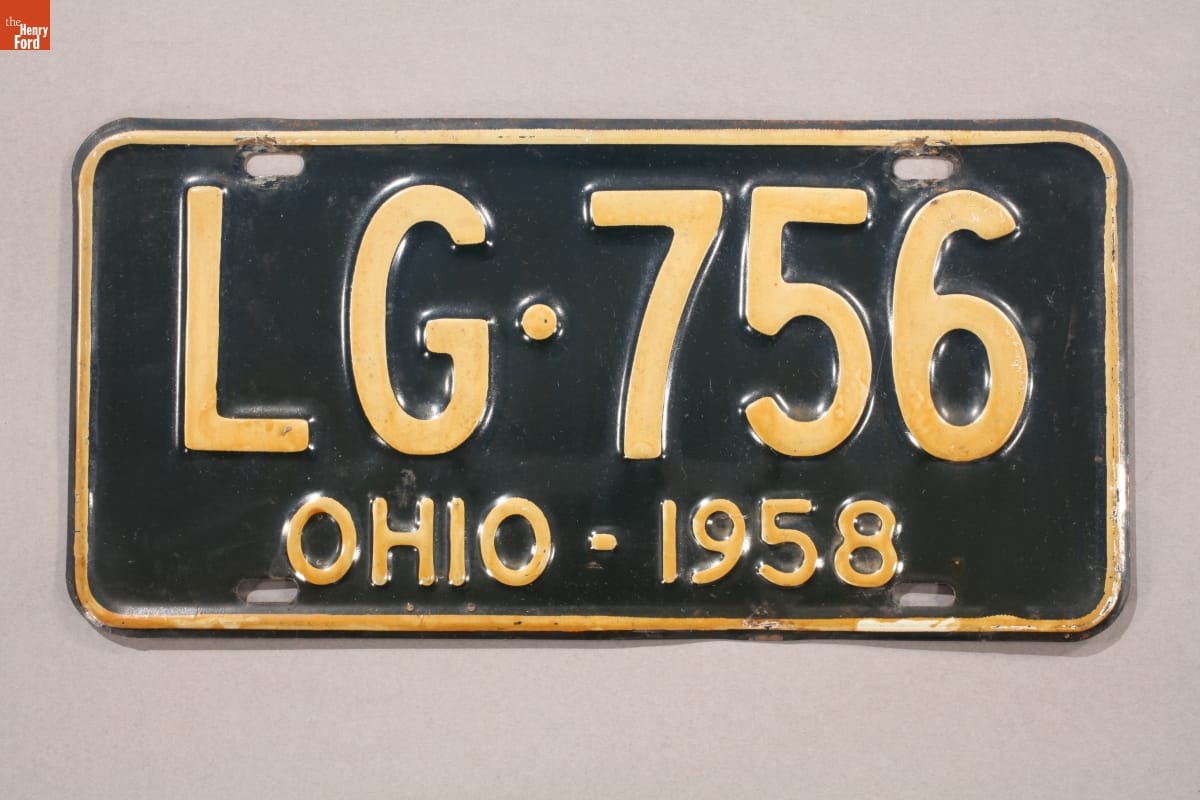
- 1958
- Collections - Artifact
Ohio License Plate, 1958
Early state-issued license plates were made of porcelain-coated iron. Later, states stamped tin, steel, or even copper to make plates. During the Second World War several states used fiberboard. Plate colors varied and some states added symbols, mottoes, or other design elements. Today, states use reflective sheeting to coat a standard-sized aluminum blank which is then stamped and decorated.
- Ohio License Plate, 1908-1909 - Early state-issued license plates were made of porcelain-coated iron. Later, states stamped tin, steel, or even copper to make plates. During the Second World War several states used fiberboard. Plate colors varied and some states added symbols, mottoes, or other design elements. Today, states use reflective sheeting to coat a standard-sized aluminum blank which is then stamped and decorated.
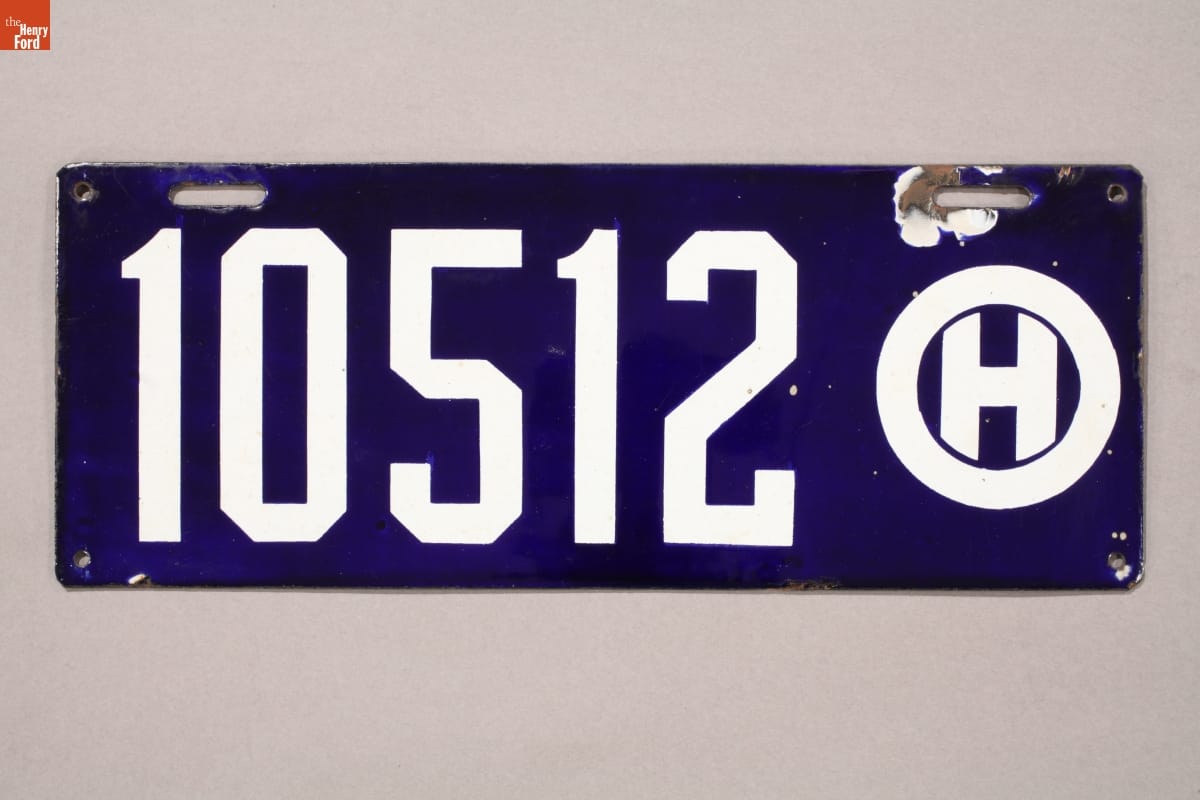
- 1908-1909
- Collections - Artifact
Ohio License Plate, 1908-1909
Early state-issued license plates were made of porcelain-coated iron. Later, states stamped tin, steel, or even copper to make plates. During the Second World War several states used fiberboard. Plate colors varied and some states added symbols, mottoes, or other design elements. Today, states use reflective sheeting to coat a standard-sized aluminum blank which is then stamped and decorated.