
Search
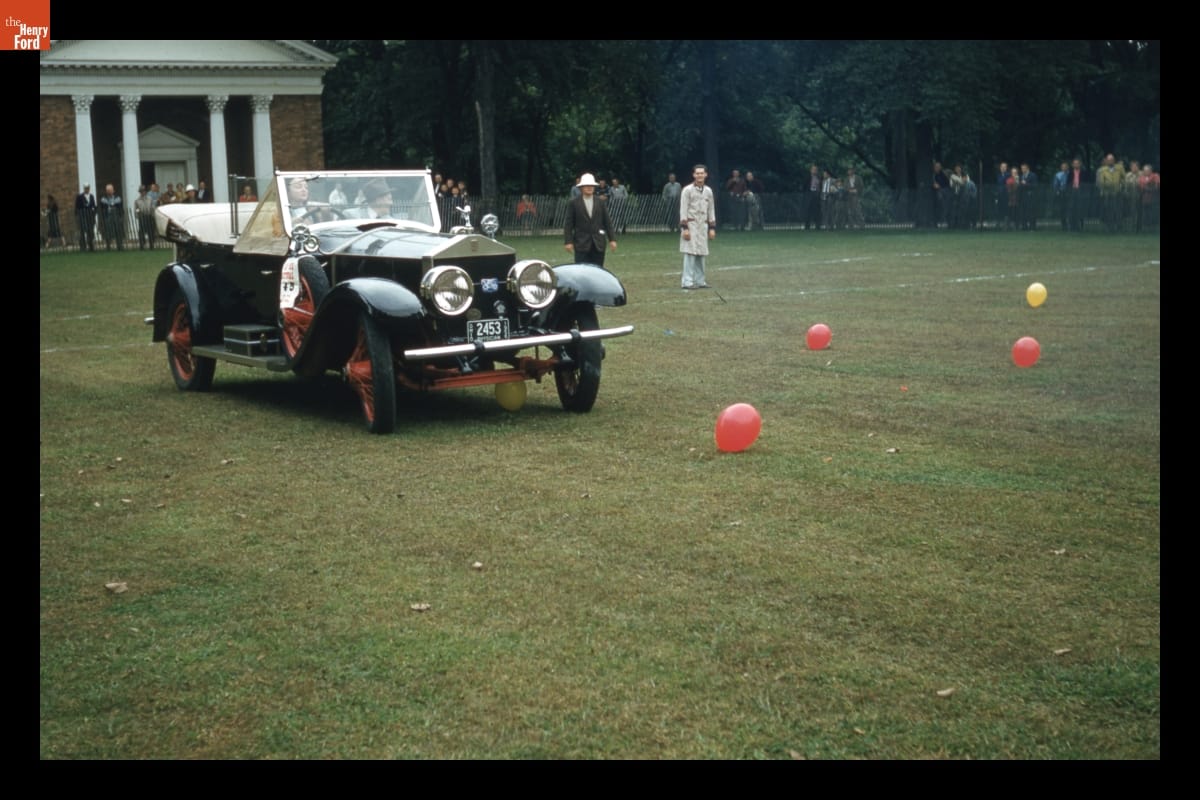
- Obstacle Race at Old Car Festival in Greenfield Village, September 1956 - Held annually since 1951, The Henry Ford's Old Car Festival is the longest-running antique automobile show in the United States. While its specific events, activities and featured time periods have evolved over the decades, Old Car Festival's enthusiastic celebration of early American motoring remains unchanged.
- September 08, 1956
- Collections - Artifact
Obstacle Race at Old Car Festival in Greenfield Village, September 1956
Held annually since 1951, The Henry Ford's Old Car Festival is the longest-running antique automobile show in the United States. While its specific events, activities and featured time periods have evolved over the decades, Old Car Festival's enthusiastic celebration of early American motoring remains unchanged.
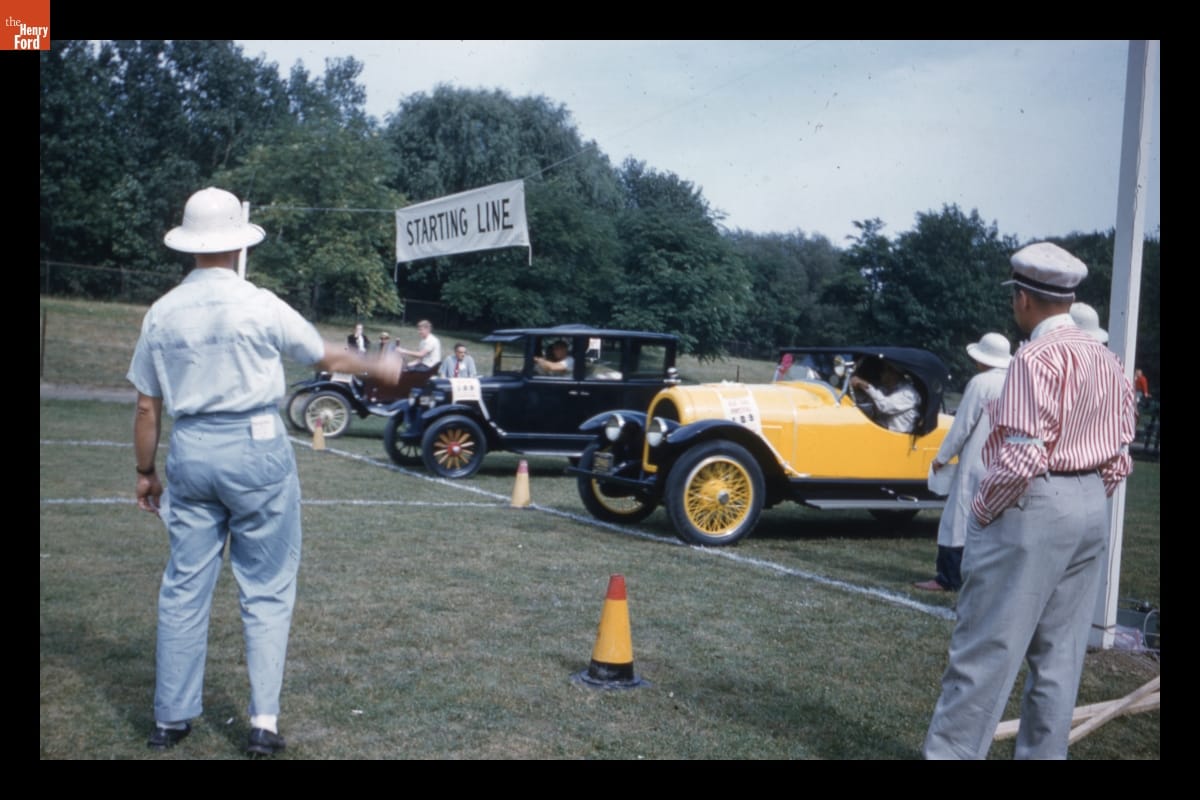
- Race at Old Car Festival in Greenfield Village, September 1960 - Held annually since 1951, The Henry Ford's Old Car Festival is the longest-running antique automobile show in the United States. While its specific events, activities and featured time periods have evolved over the decades, Old Car Festival's enthusiastic celebration of early American motoring remains unchanged.
- 10 September 1960-11 September 1960
- Collections - Artifact
Race at Old Car Festival in Greenfield Village, September 1960
Held annually since 1951, The Henry Ford's Old Car Festival is the longest-running antique automobile show in the United States. While its specific events, activities and featured time periods have evolved over the decades, Old Car Festival's enthusiastic celebration of early American motoring remains unchanged.
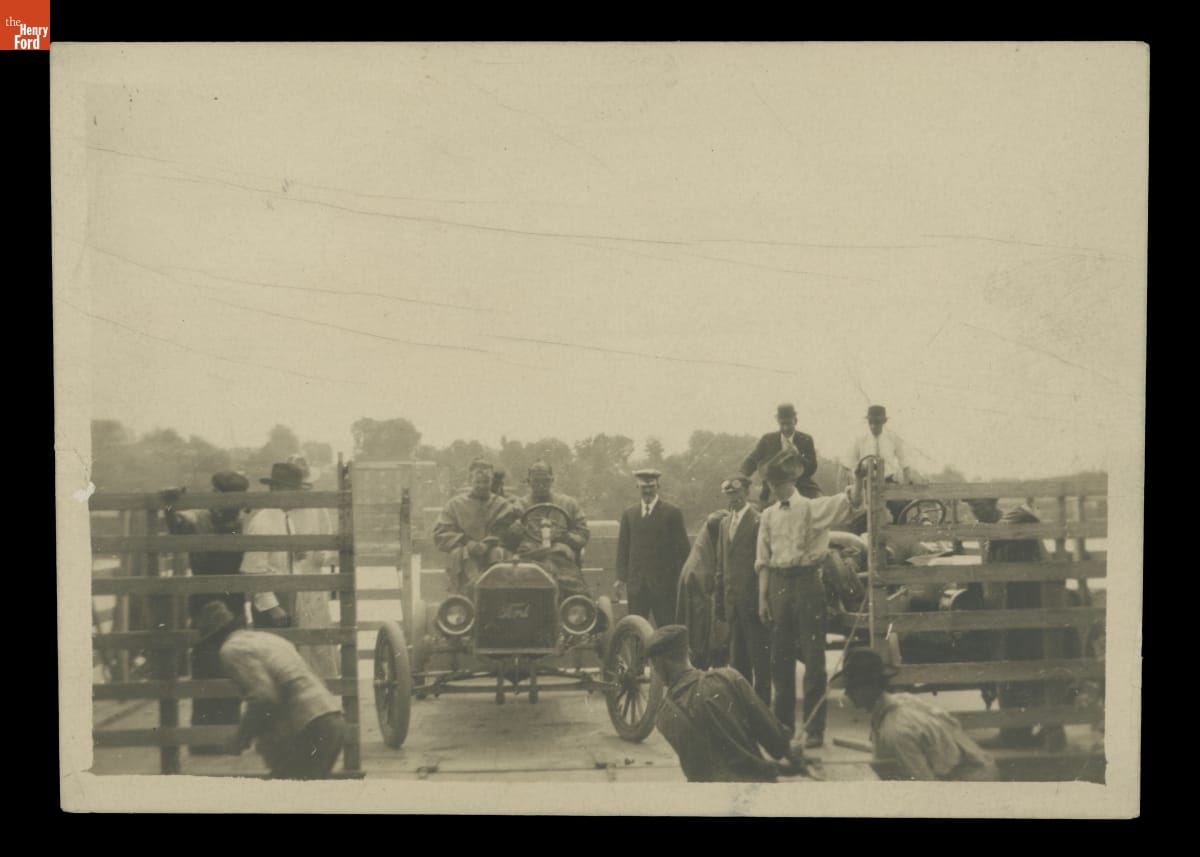
- Ford Model T Race Car Crossing the Missouri River during the New York-Seattle Transcontinental Race, 1909 - Ford Motor Company promoted its Model T by entering two cars in a 1909 race from New York to Seattle. It was a demanding contest at a time when roads were nearly nonexistent. After 23 days, the #2 Model T won the race. It was later disqualified on a technicality -- but the little Ford had already made big headlines by then.
- 1909
- Collections - Artifact
Ford Model T Race Car Crossing the Missouri River during the New York-Seattle Transcontinental Race, 1909
Ford Motor Company promoted its Model T by entering two cars in a 1909 race from New York to Seattle. It was a demanding contest at a time when roads were nearly nonexistent. After 23 days, the #2 Model T won the race. It was later disqualified on a technicality -- but the little Ford had already made big headlines by then.
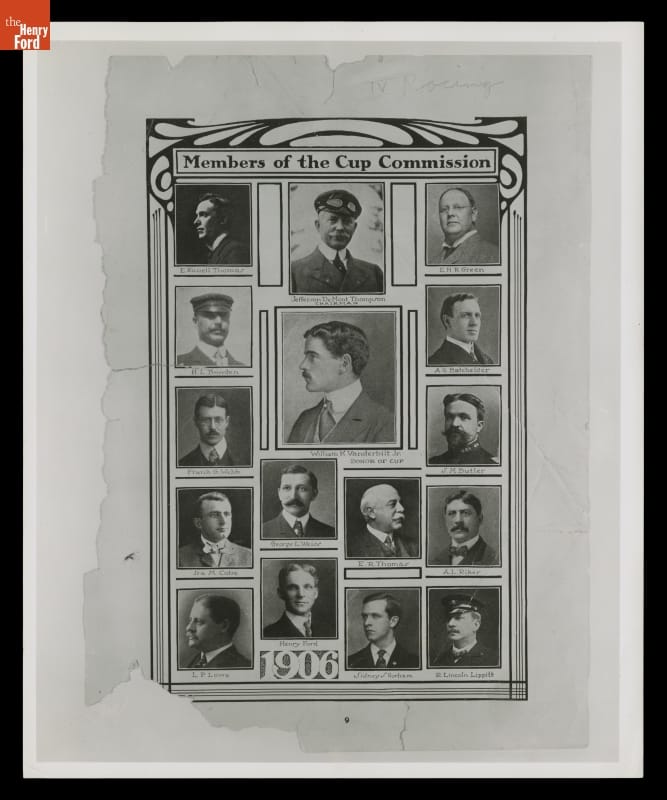
- Members of the Vanderbilt Cup Race Commission, Including Henry Ford, 1906 - The Vanderbilt Cup, held from 1904 to 1916, was America's first internationally prominent automobile race. William K. Vanderbilt, Jr., a wealthy railroad heir, organized the competition over public roads on Long Island. European cars dominated until 1908, when Connecticut-built Locomobile "Old 16" won. Long Island residents tired of the crowds and accidents, and the race relocated to Georgia, Wisconsin, and finally California.
- 1906
- Collections - Artifact
Members of the Vanderbilt Cup Race Commission, Including Henry Ford, 1906
The Vanderbilt Cup, held from 1904 to 1916, was America's first internationally prominent automobile race. William K. Vanderbilt, Jr., a wealthy railroad heir, organized the competition over public roads on Long Island. European cars dominated until 1908, when Connecticut-built Locomobile "Old 16" won. Long Island residents tired of the crowds and accidents, and the race relocated to Georgia, Wisconsin, and finally California.
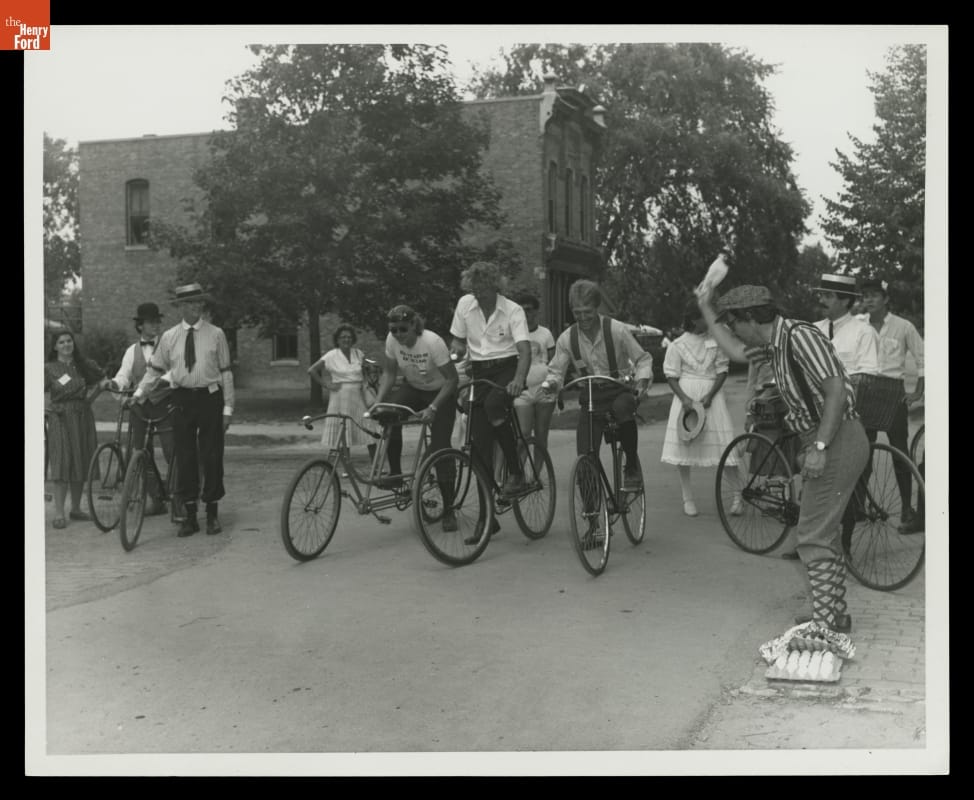
- Bicycle Race at Greenfield Village, 1982 - Contestants were photographed at the start of an egg-and-spoon race in Greenfield Village in 1982. The twist: each racer was riding a bicycle. The competition was part of a special event called "An 1890s Outing," held on July 17-18 of that year. Each cyclist had to finish the race without dropping the precariously perched egg.
- July 17, 1982
- Collections - Artifact
Bicycle Race at Greenfield Village, 1982
Contestants were photographed at the start of an egg-and-spoon race in Greenfield Village in 1982. The twist: each racer was riding a bicycle. The competition was part of a special event called "An 1890s Outing," held on July 17-18 of that year. Each cyclist had to finish the race without dropping the precariously perched egg.
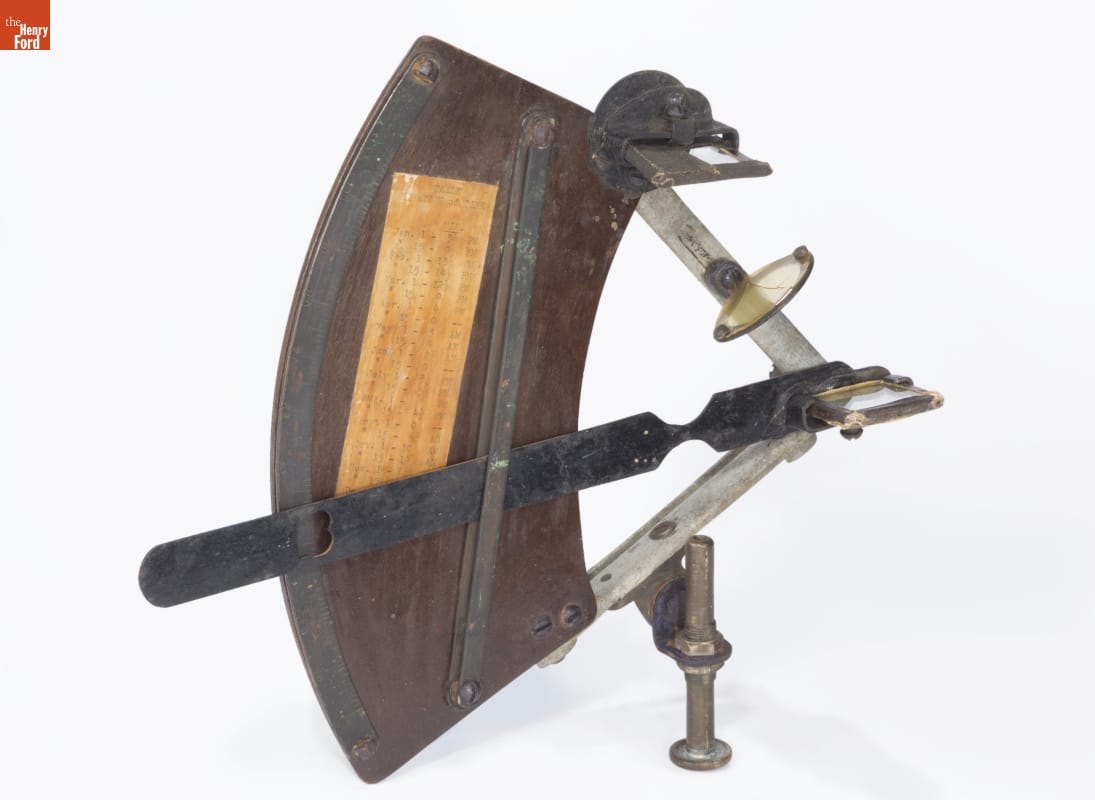
- Handmade Sextant. On Loan from Jeff Mahl, George Schuster's Great-Grandson. - George Schuster, an employee of the E.R. Thomas Motor Company, used this handmade sextant while driving a Thomas Flyer in an auto race from New York to Paris in 1908. Schuster won, overcoming unmapped territory, abysmal roads and multiple breakdowns. In 2010, Schuster was inducted into the Automotive Hall of Fame in recognition of his victory.
- 1908
- Collections - Artifact
Handmade Sextant. On Loan from Jeff Mahl, George Schuster's Great-Grandson.
George Schuster, an employee of the E.R. Thomas Motor Company, used this handmade sextant while driving a Thomas Flyer in an auto race from New York to Paris in 1908. Schuster won, overcoming unmapped territory, abysmal roads and multiple breakdowns. In 2010, Schuster was inducted into the Automotive Hall of Fame in recognition of his victory.
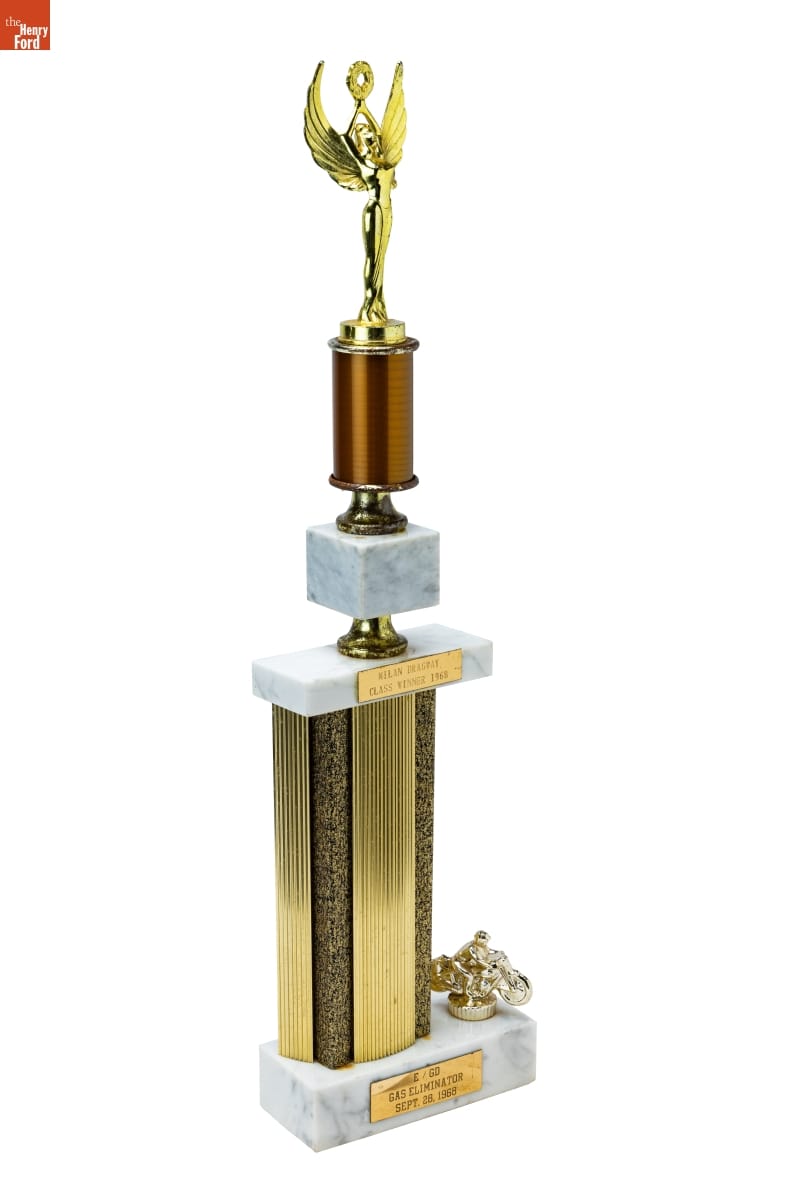
- "Milan Dragway Class Winner" Trophy, 1968 - Amateur racers Barry Egen and Wayne Snyder of Monroe, Michigan, competed with their custom-built motorcycle at Milan Dragway in the late 1960s. The bike, named "Revolution," was powered by a 350-cubic-centimeter, straight-twin Honda engine and posted race times in the low 12-second range. Egen and Snyder won several trophies at Milan, including an impressive Competition Eliminator title in fall 1968.
- September 28, 1968
- Collections - Artifact
"Milan Dragway Class Winner" Trophy, 1968
Amateur racers Barry Egen and Wayne Snyder of Monroe, Michigan, competed with their custom-built motorcycle at Milan Dragway in the late 1960s. The bike, named "Revolution," was powered by a 350-cubic-centimeter, straight-twin Honda engine and posted race times in the low 12-second range. Egen and Snyder won several trophies at Milan, including an impressive Competition Eliminator title in fall 1968.
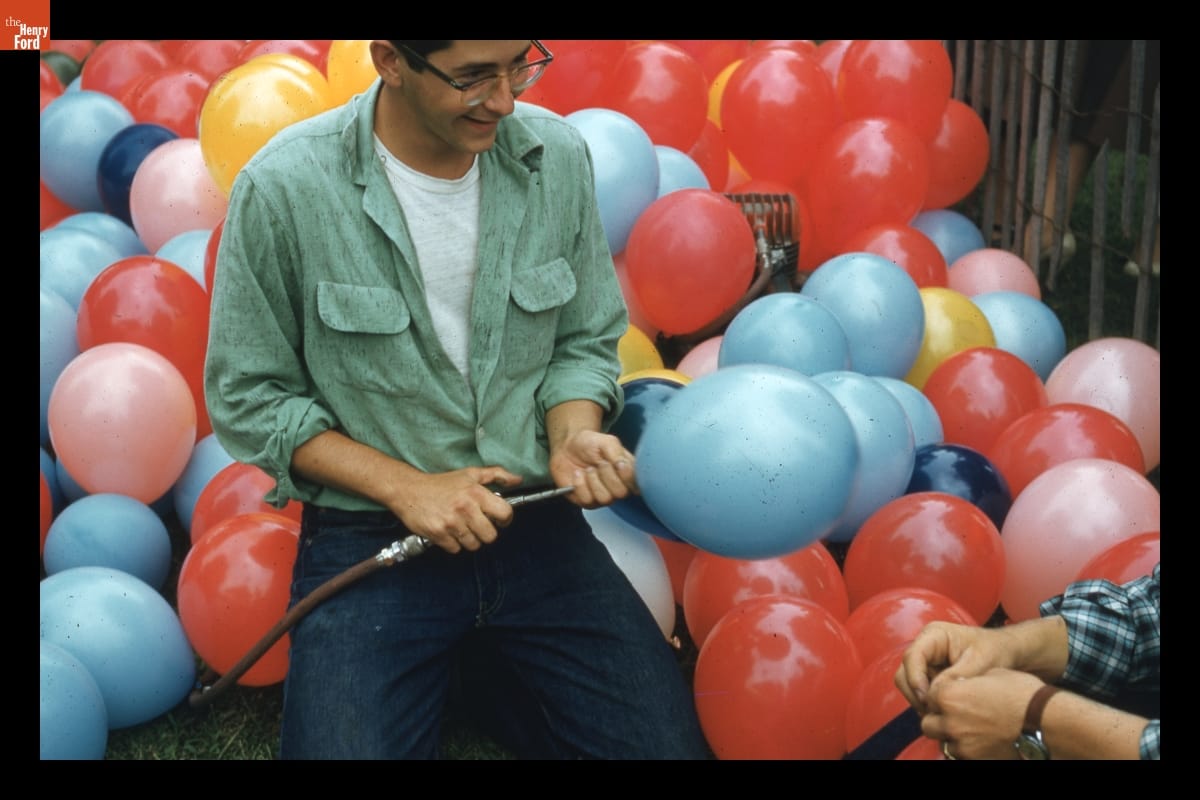
- Filling Balloons for Obstacle Race at Old Car Festival in Greenfield Village, September 1956 - Held annually since 1951, The Henry Ford's Old Car Festival is the longest-running antique automobile show in the United States. While its specific events, activities and featured time periods have evolved over the decades, Old Car Festival's enthusiastic celebration of early American motoring remains unchanged.
- September 08, 1956
- Collections - Artifact
Filling Balloons for Obstacle Race at Old Car Festival in Greenfield Village, September 1956
Held annually since 1951, The Henry Ford's Old Car Festival is the longest-running antique automobile show in the United States. While its specific events, activities and featured time periods have evolved over the decades, Old Car Festival's enthusiastic celebration of early American motoring remains unchanged.
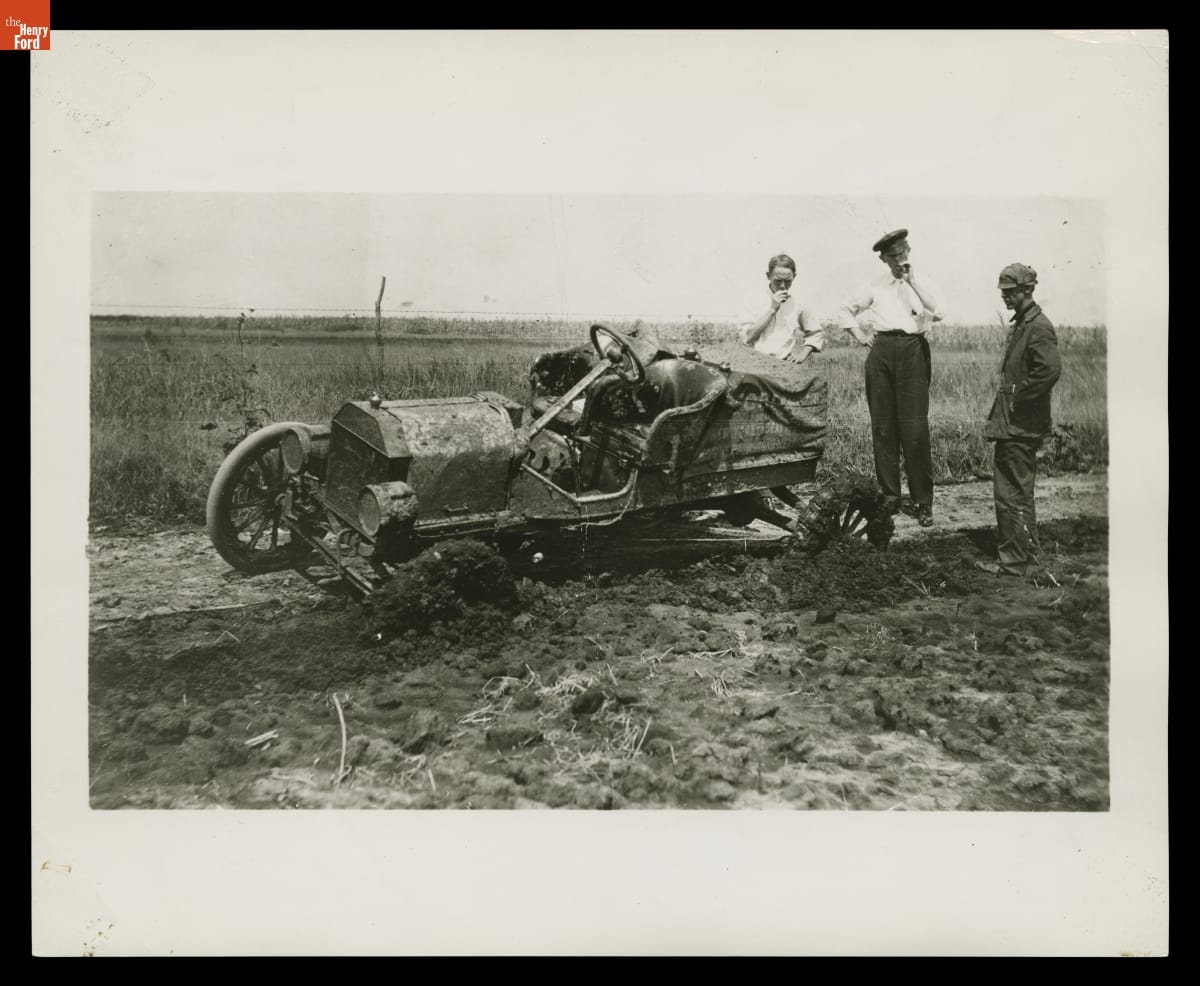
- Ford Model T Stuck in Mud during the 1909 Transcontinental Race - Ford Motor Company promoted its Model T by entering two cars in a 1909 race from New York to Seattle. It was a demanding contest at a time when roads were nearly nonexistent. After 23 days, the #2 Model T won the race. It was later disqualified on a technicality -- but the little Ford had already made big headlines by then.
- 1909
- Collections - Artifact
Ford Model T Stuck in Mud during the 1909 Transcontinental Race
Ford Motor Company promoted its Model T by entering two cars in a 1909 race from New York to Seattle. It was a demanding contest at a time when roads were nearly nonexistent. After 23 days, the #2 Model T won the race. It was later disqualified on a technicality -- but the little Ford had already made big headlines by then.
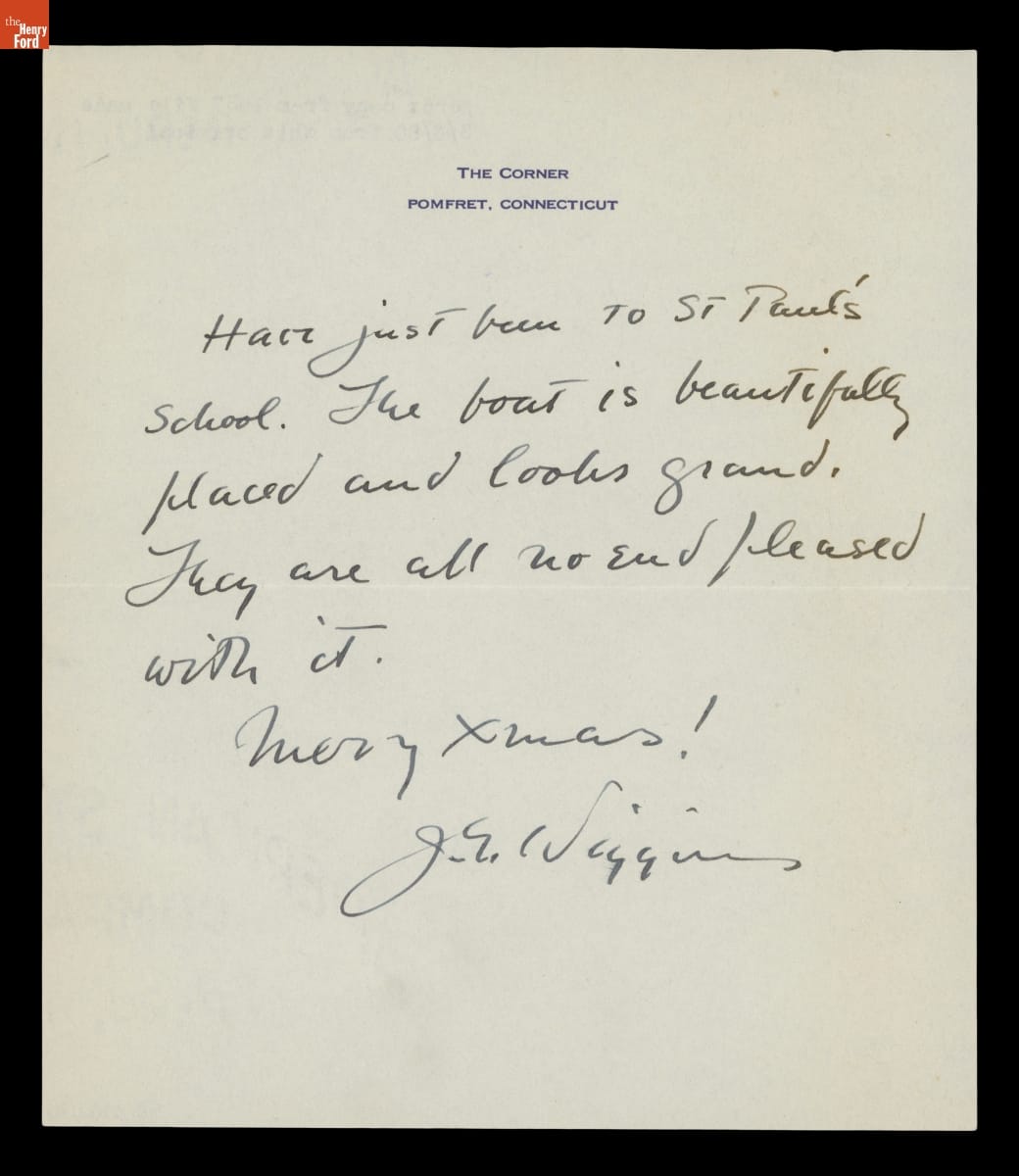
- Note from John Gregory Wiggins to George C. Gebelein, 1937 - George Gebelein, a silversmith from Boston, Massachusetts, created the Scudder Memorial Trophy for St. Paul's School, a college preparatory school near Concord, New Hampshire. The rowing trophy was designed by John Wiggins, a well-known woodcarver. The school presents the trophy, first awarded in 1937, to the winner of the annual First Crew race between the school's Shattuck and Halcyon boat clubs.
- 1937
- Collections - Artifact
Note from John Gregory Wiggins to George C. Gebelein, 1937
George Gebelein, a silversmith from Boston, Massachusetts, created the Scudder Memorial Trophy for St. Paul's School, a college preparatory school near Concord, New Hampshire. The rowing trophy was designed by John Wiggins, a well-known woodcarver. The school presents the trophy, first awarded in 1937, to the winner of the annual First Crew race between the school's Shattuck and Halcyon boat clubs.