
Search
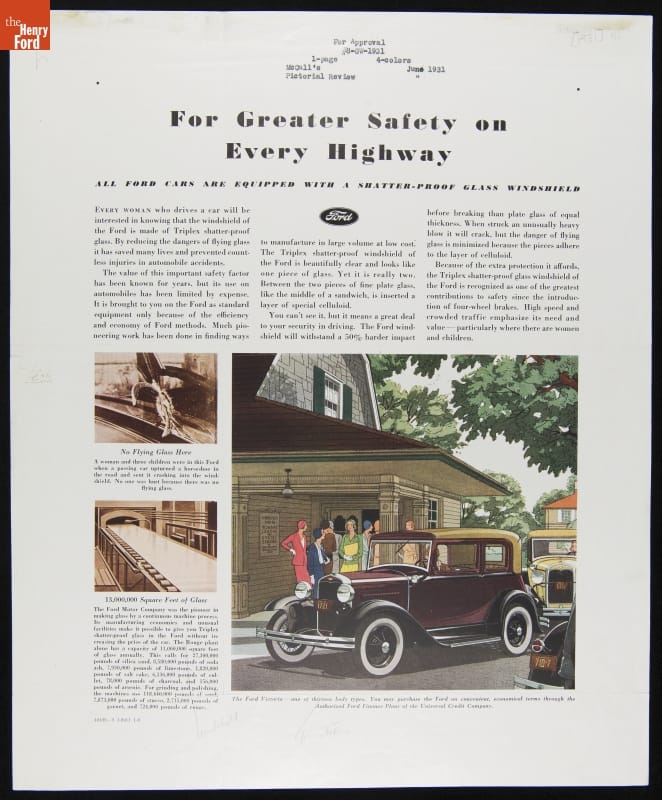
- 1931 Ford Advertisement, "For Greater Safety on Every Highway" - Safety was an infrequent theme in early automobile advertisements, but it's central in this 1931 ad for the Ford Model A. The advertisement spotlights the Model A's safety-glass windshield, with two pieces of plate glass laminated to a clear plastic layer. If the windshield broke, the plastic held the glass pieces together to reduce the risk of cuts.
- 1931
- Collections - Artifact
1931 Ford Advertisement, "For Greater Safety on Every Highway"
Safety was an infrequent theme in early automobile advertisements, but it's central in this 1931 ad for the Ford Model A. The advertisement spotlights the Model A's safety-glass windshield, with two pieces of plate glass laminated to a clear plastic layer. If the windshield broke, the plastic held the glass pieces together to reduce the risk of cuts.
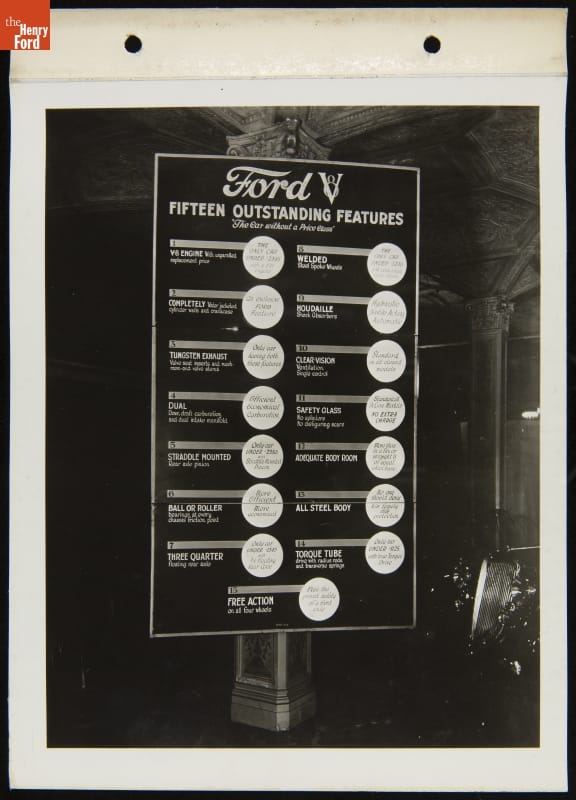
- Ford V-8 Sales Display, "Fifteen Outstanding Features," August 1935 - Ford Motor Company highlighted the advantages of its V-8 powered automobiles in this sales display, photographed in August 1935. Several of the selling points, like the water-jacketed engine cylinders and the welded steel-spoke wheels, were either exclusive to Ford or unavailable elsewhere at Ford's low price. Engineering and safety were key points among the "fifteen outstanding features."
- May 20, 1935
- Collections - Artifact
Ford V-8 Sales Display, "Fifteen Outstanding Features," August 1935
Ford Motor Company highlighted the advantages of its V-8 powered automobiles in this sales display, photographed in August 1935. Several of the selling points, like the water-jacketed engine cylinders and the welded steel-spoke wheels, were either exclusive to Ford or unavailable elsewhere at Ford's low price. Engineering and safety were key points among the "fifteen outstanding features."
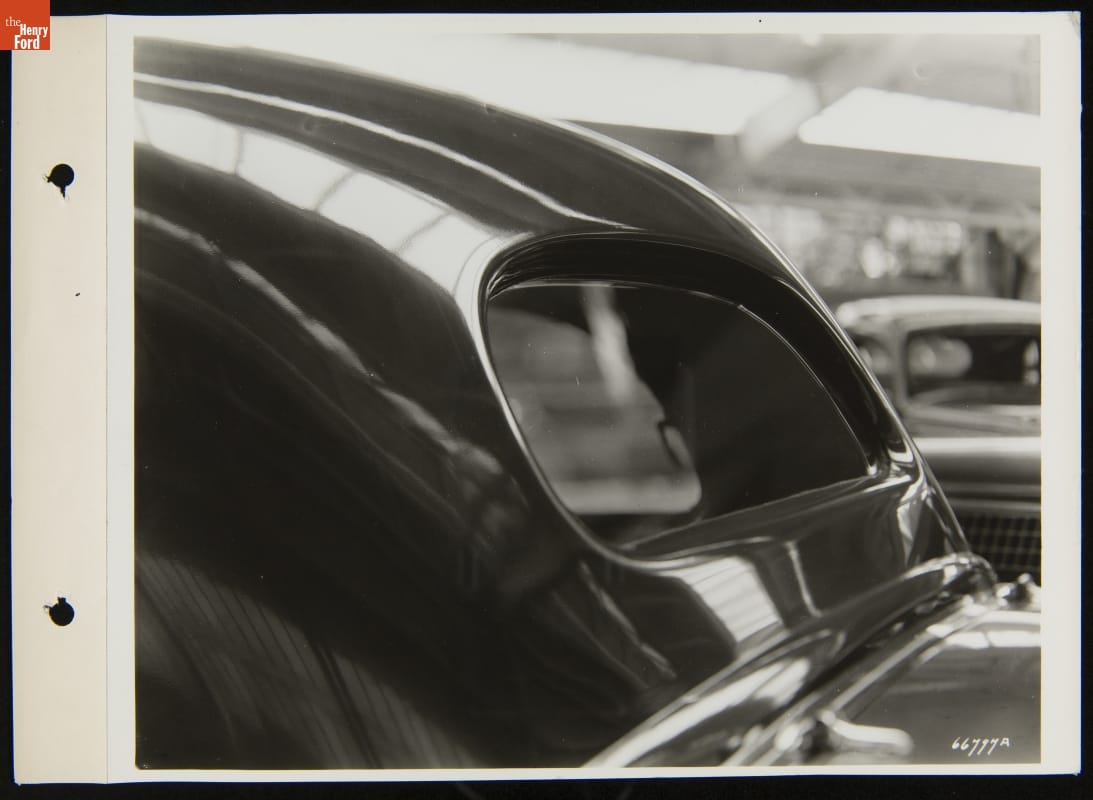
- Ford Automobile with Safety Glass in Rear Window, September 1936 - Laminated safety glass, which Ford introduced to the low-price market as standard equipment on its 1928-1931 Model A, represented a significant improvement in automotive accident injury protection. Two layers of glass were bonded to a clear plastic material sandwiched between them. The plastic laminate helped keep glass shards in place after impact.
- September 22, 1936
- Collections - Artifact
Ford Automobile with Safety Glass in Rear Window, September 1936
Laminated safety glass, which Ford introduced to the low-price market as standard equipment on its 1928-1931 Model A, represented a significant improvement in automotive accident injury protection. Two layers of glass were bonded to a clear plastic material sandwiched between them. The plastic laminate helped keep glass shards in place after impact.
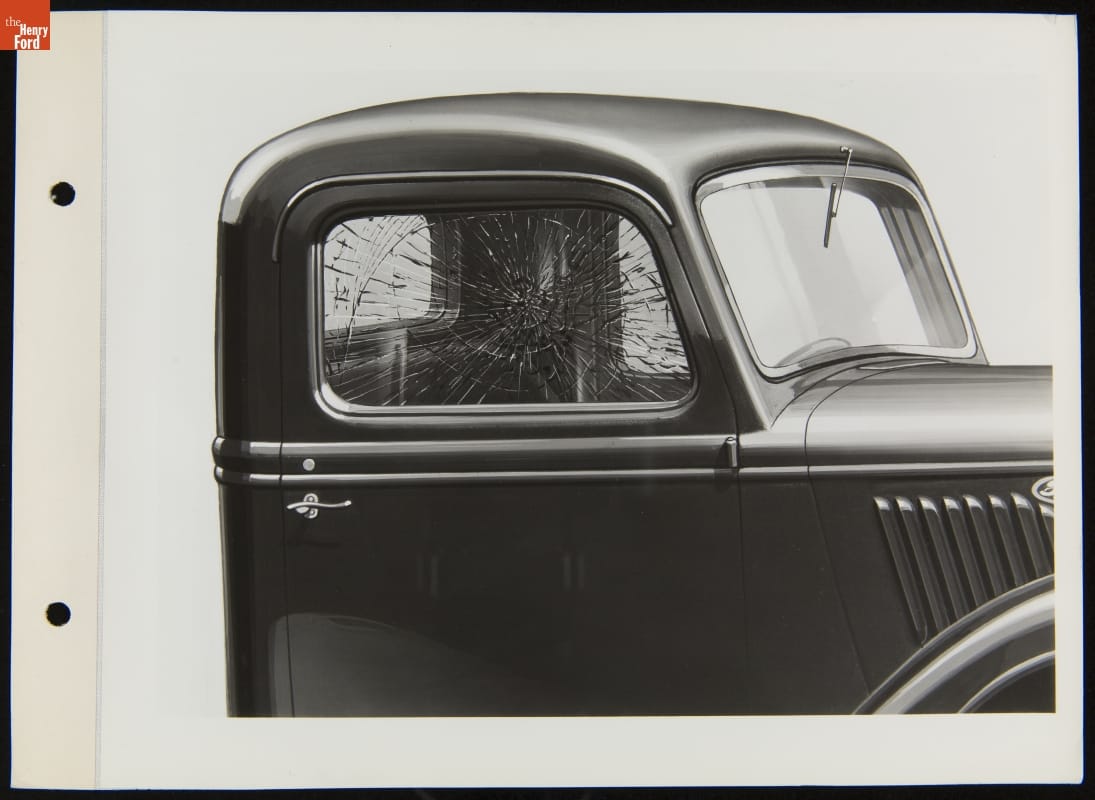
- Ford Truck Cab with Cracked Safety Glass in Door, December 1934 - Laminated safety glass, which Ford introduced to the low-price market as standard equipment on its 1928-1931 Model A, represented a significant improvement in automotive accident injury protection. Two layers of glass were bonded to a clear plastic material sandwiched between them. The plastic laminate helped keep glass shards in place after impact.
- December 10, 1934
- Collections - Artifact
Ford Truck Cab with Cracked Safety Glass in Door, December 1934
Laminated safety glass, which Ford introduced to the low-price market as standard equipment on its 1928-1931 Model A, represented a significant improvement in automotive accident injury protection. Two layers of glass were bonded to a clear plastic material sandwiched between them. The plastic laminate helped keep glass shards in place after impact.
- 1935 Ford V-8 Tudor with Cracked Safety Glass in Doors - Laminated safety glass, which Ford introduced to the low-price market as standard equipment on its 1928-1931 Model A, represented a significant improvement in automotive accident injury protection. Two layers of glass were bonded to a clear plastic material sandwiched between them. The plastic laminate helped keep glass shards in place after impact.
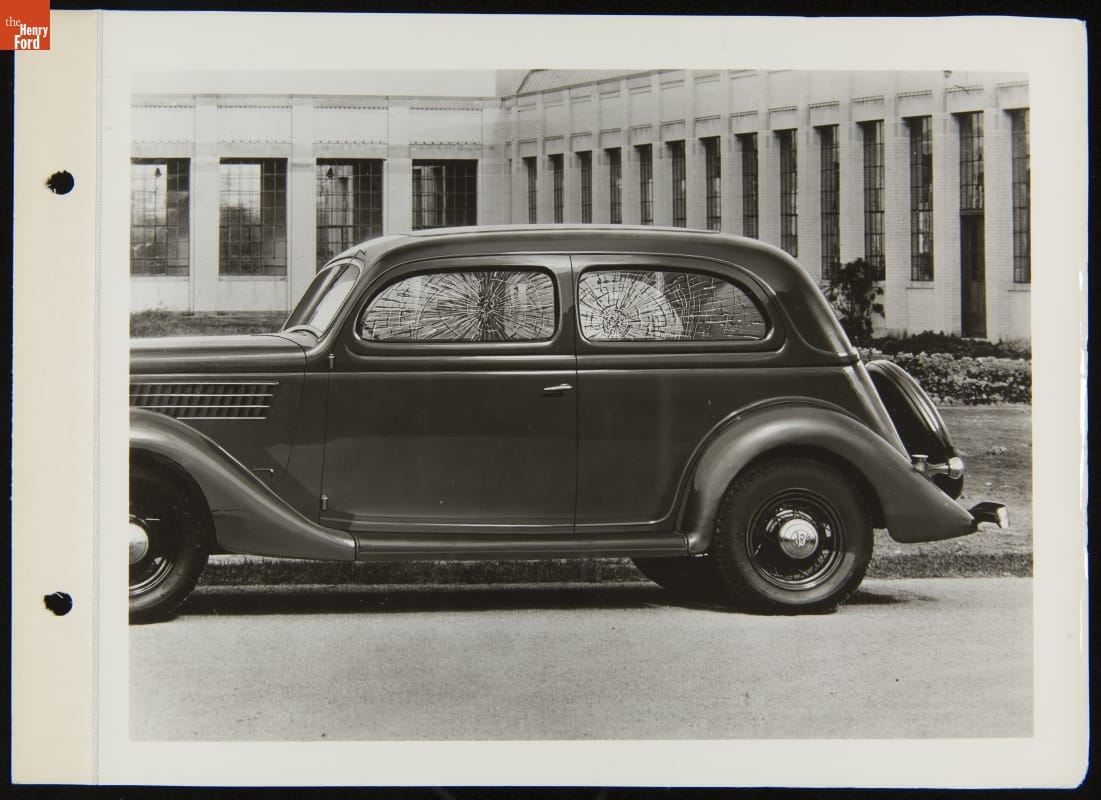
- January 14, 1935
- Collections - Artifact
1935 Ford V-8 Tudor with Cracked Safety Glass in Doors
Laminated safety glass, which Ford introduced to the low-price market as standard equipment on its 1928-1931 Model A, represented a significant improvement in automotive accident injury protection. Two layers of glass were bonded to a clear plastic material sandwiched between them. The plastic laminate helped keep glass shards in place after impact.
- Safety Glass Demonstration, Ford Building, California Pacific International Exposition, San Diego, 1935 - Through the 1930s, Ford Motor Company poured resources into exhibitions at regional and world's fairs. Henry Ford believed strongly in the educational value of such displays, and a corporate presence at the fairs benefitted public relations. Ford's popular exhibits and demonstrations -- pictured here in the 1935 California Pacific International Exposition Ford Building -- generated lots of publicity.
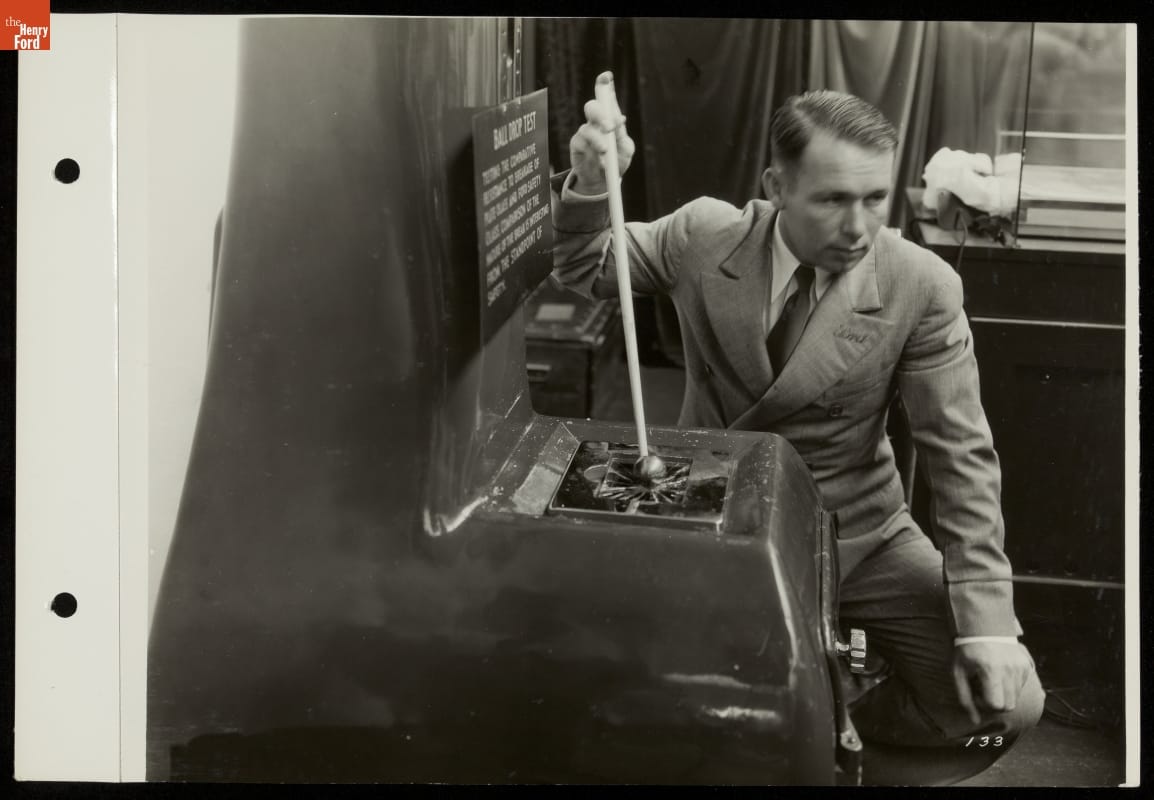
- 1935
- Collections - Artifact
Safety Glass Demonstration, Ford Building, California Pacific International Exposition, San Diego, 1935
Through the 1930s, Ford Motor Company poured resources into exhibitions at regional and world's fairs. Henry Ford believed strongly in the educational value of such displays, and a corporate presence at the fairs benefitted public relations. Ford's popular exhibits and demonstrations -- pictured here in the 1935 California Pacific International Exposition Ford Building -- generated lots of publicity.
- Pittsburgh Plate Glass Company Samples and Raw Materials, 1938-1968 - Formed in 1883, Pittsburgh Plate Glass Company became the first American firm to produce high-quality, flat plate glass. The rapid growth of the automotive industry in the early 20th century opened a massive new market for the company's products, and it expanded into manufacturing automotive paints. The firm was rebranded as PPG Industries in 1968.
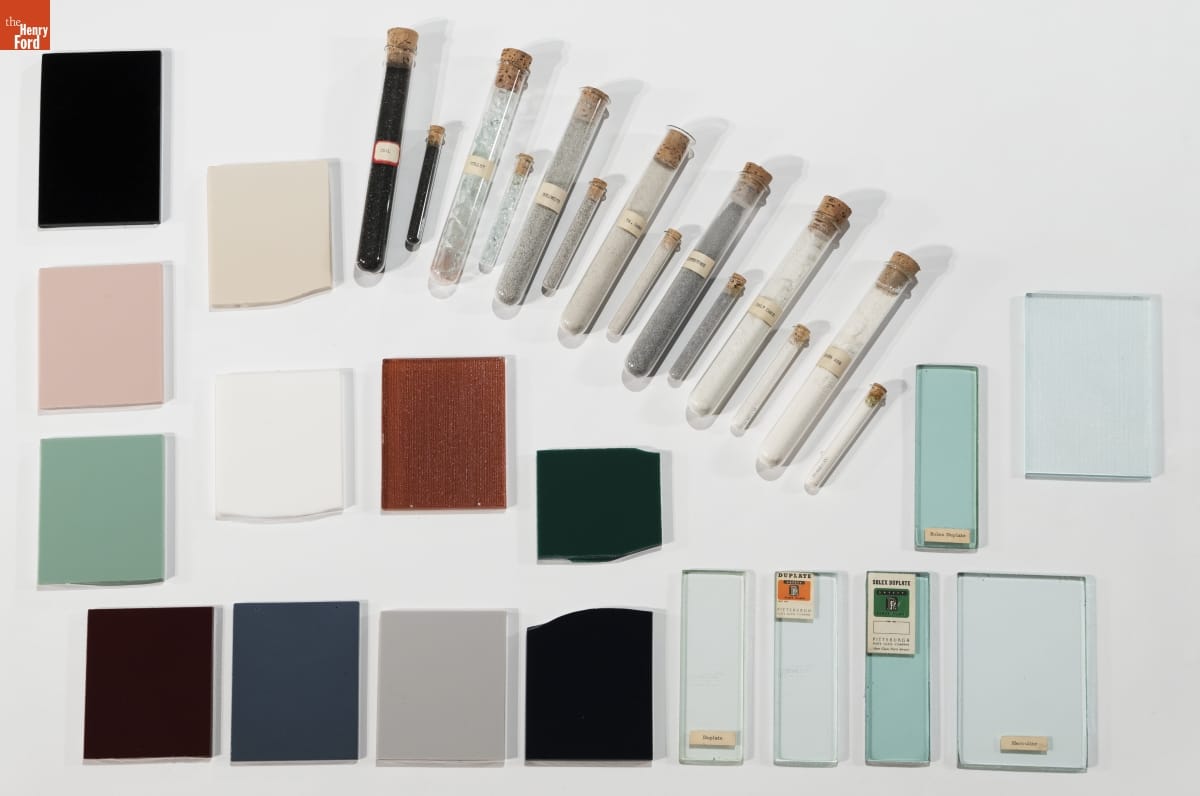
- 1938-1968
- Collections - Artifact
Pittsburgh Plate Glass Company Samples and Raw Materials, 1938-1968
Formed in 1883, Pittsburgh Plate Glass Company became the first American firm to produce high-quality, flat plate glass. The rapid growth of the automotive industry in the early 20th century opened a massive new market for the company's products, and it expanded into manufacturing automotive paints. The firm was rebranded as PPG Industries in 1968.