
Search
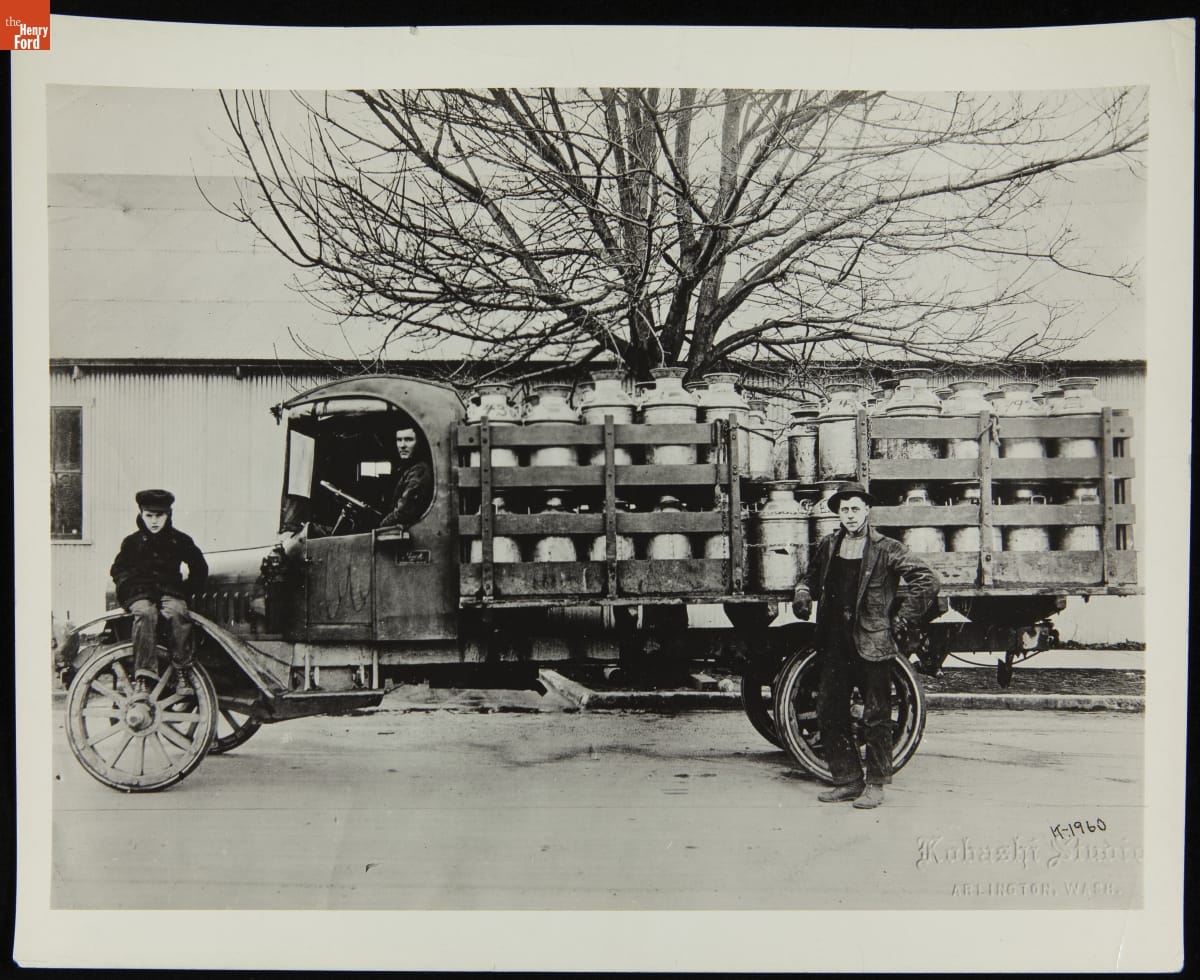
- Two Men and a Boy Pose with a Mack Model AB Stake Truck Loaded with Milk Cans, 1920 - Founded in Brooklyn, New York, in 1900, Mack Brothers Company relocated to Allentown, Pennsylvania, in 1905 and adopted the name Mack Trucks in 1922. Mack-built trucks like this carried cans of raw milk from farms to dairy processors and distributors. Trucks allowed for more flexible and more efficient shipment of milk than was previously possible by railroad.
- 1920
- Collections - Artifact
Two Men and a Boy Pose with a Mack Model AB Stake Truck Loaded with Milk Cans, 1920
Founded in Brooklyn, New York, in 1900, Mack Brothers Company relocated to Allentown, Pennsylvania, in 1905 and adopted the name Mack Trucks in 1922. Mack-built trucks like this carried cans of raw milk from farms to dairy processors and distributors. Trucks allowed for more flexible and more efficient shipment of milk than was previously possible by railroad.
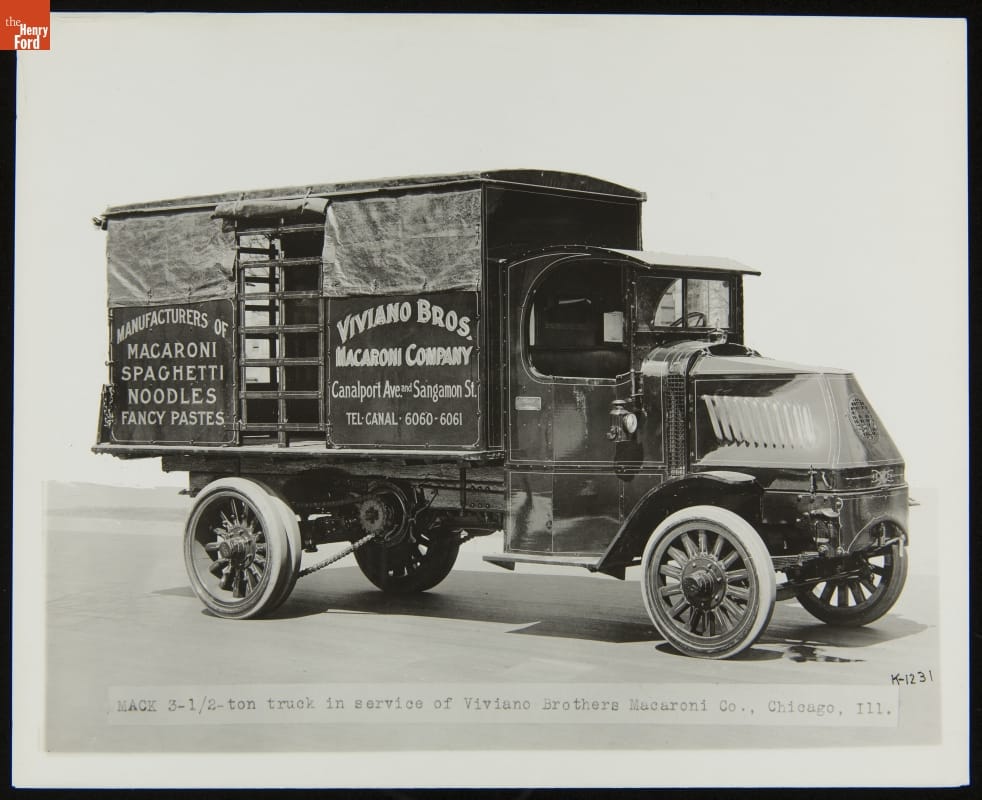
- Mack Model AC Stake Truck in Service of Viviano Brothers Macaroni Company, Chicago, Illinois, 1911-1916 - Founded in Brooklyn, New York, in 1900, Mack Brothers Company relocated to Allentown, Pennsylvania, in 1905 and adopted the name Mack Trucks in 1922. The company introduced its heavy-duty Model AC truck in 1916. The model remained in production until 1938, and Mack built more than 40,000 units. The Model AC's distinctive hood set it apart from other trucks.
- 1911-1916
- Collections - Artifact
Mack Model AC Stake Truck in Service of Viviano Brothers Macaroni Company, Chicago, Illinois, 1911-1916
Founded in Brooklyn, New York, in 1900, Mack Brothers Company relocated to Allentown, Pennsylvania, in 1905 and adopted the name Mack Trucks in 1922. The company introduced its heavy-duty Model AC truck in 1916. The model remained in production until 1938, and Mack built more than 40,000 units. The Model AC's distinctive hood set it apart from other trucks.
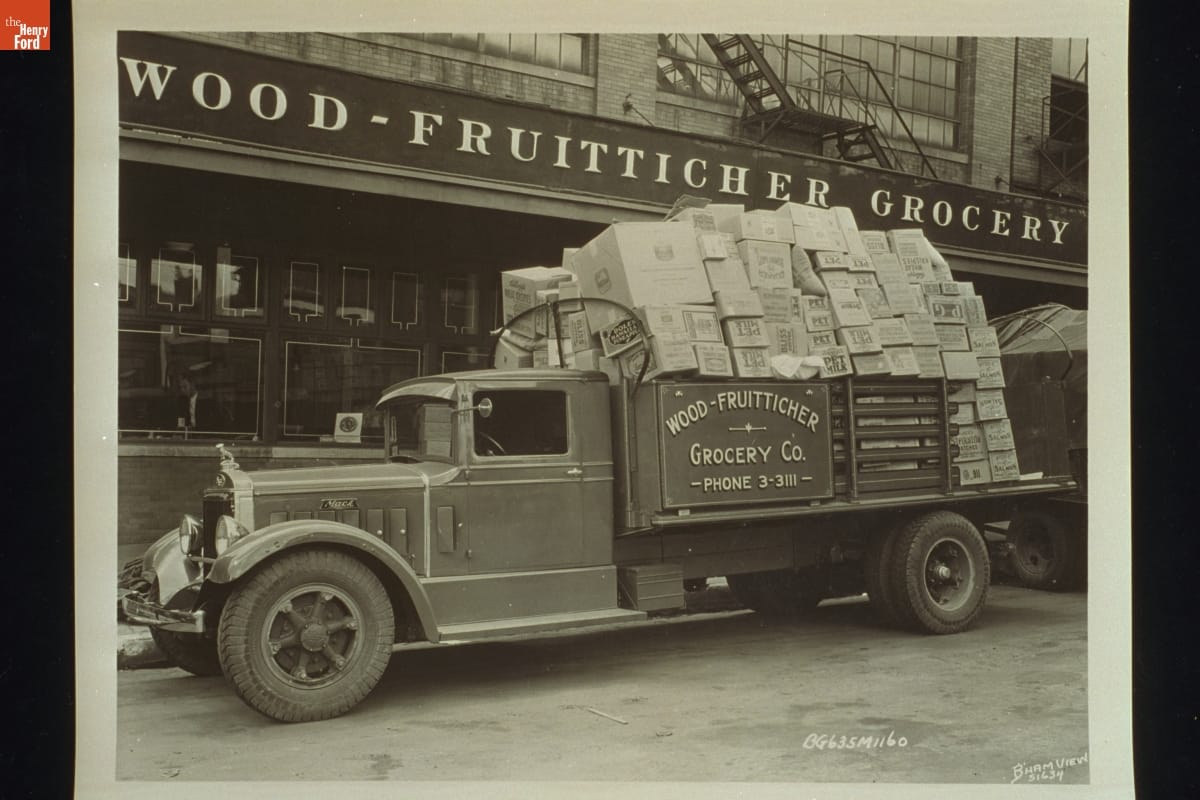
- Mack Truck with a Wood-Fruitticher Grocery Co. Sign, 1935 - Founded in Brooklyn, New York, in 1900, Mack Brothers Company relocated to Allentown, Pennsylvania, in 1905 and adopted the name Mack Trucks in 1922. Wholesale grocer Wood-Fruitticher was formed in 1913. By the early 21st century, it had grown into Alabama's largest independent foodservice distributor. Wood-Fruitticher served schools, restaurants, healthcare facilities, and convenience stores.
- June 01, 1935
- Collections - Artifact
Mack Truck with a Wood-Fruitticher Grocery Co. Sign, 1935
Founded in Brooklyn, New York, in 1900, Mack Brothers Company relocated to Allentown, Pennsylvania, in 1905 and adopted the name Mack Trucks in 1922. Wholesale grocer Wood-Fruitticher was formed in 1913. By the early 21st century, it had grown into Alabama's largest independent foodservice distributor. Wood-Fruitticher served schools, restaurants, healthcare facilities, and convenience stores.
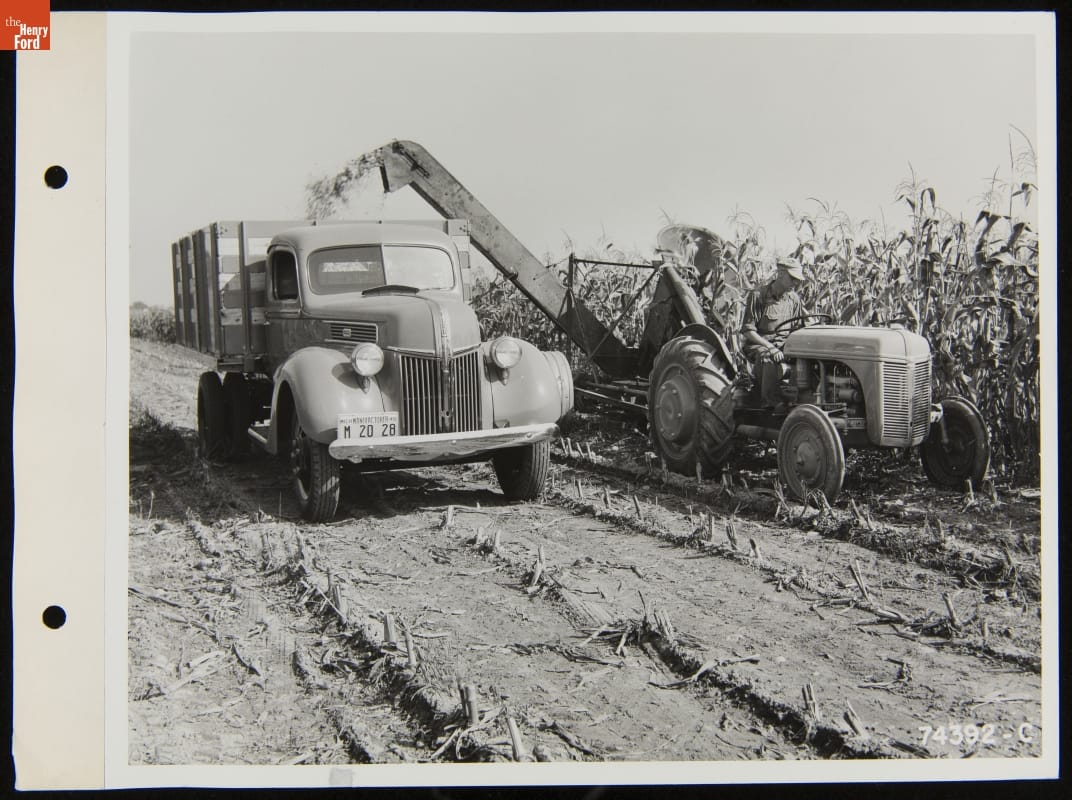
- Ford Stake Truck and Ferguson Model 9N Tractor Cutting and Collecting Silage, September 20, 1940 -
- September 20, 1940
- Collections - Artifact
Ford Stake Truck and Ferguson Model 9N Tractor Cutting and Collecting Silage, September 20, 1940
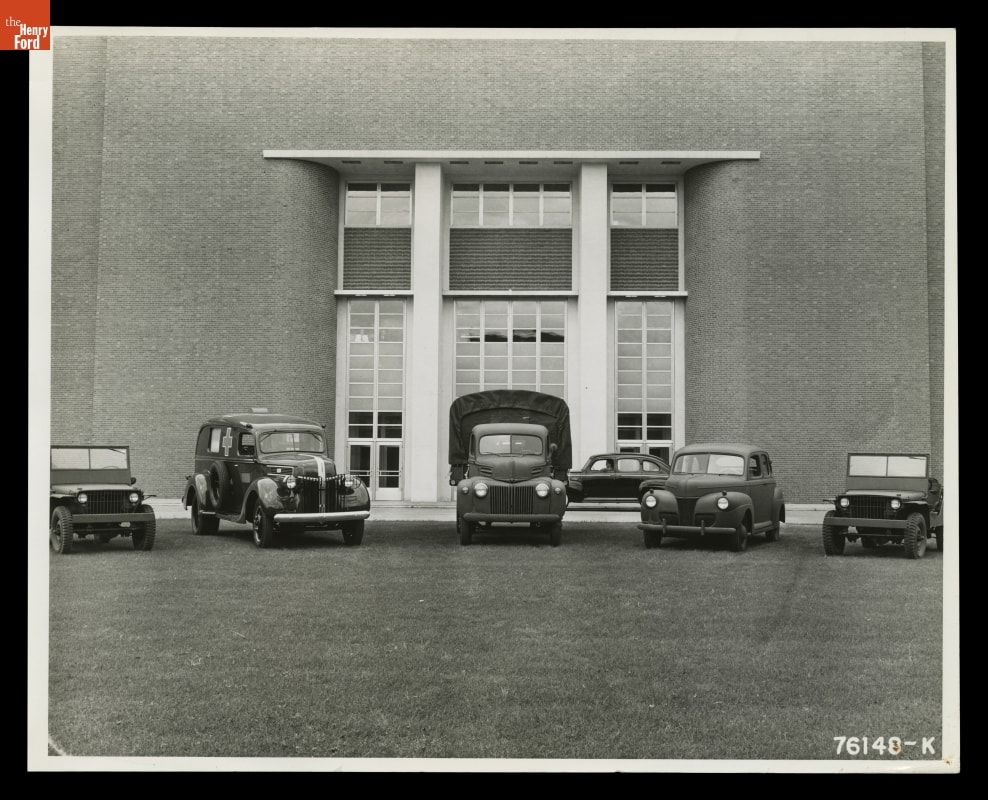
- 1941 Ford GP Jeeps with 1942 Ford Military Ambulance, Stake Truck and Standard Fordor Automobile - Ford Motor Company did not produce civilian vehicles from 1942 to 1945, instead turning its resources to the production of military vehicles and other war materiel. Jeeps, ambulances, trucks, and automobiles were all built for Allied forces -- along with bomber airplanes, gliders, tanks, and other items. The automotive industry provided one fifth of American manufacturing output during World War II.
- September 26, 1941
- Collections - Artifact
1941 Ford GP Jeeps with 1942 Ford Military Ambulance, Stake Truck and Standard Fordor Automobile
Ford Motor Company did not produce civilian vehicles from 1942 to 1945, instead turning its resources to the production of military vehicles and other war materiel. Jeeps, ambulances, trucks, and automobiles were all built for Allied forces -- along with bomber airplanes, gliders, tanks, and other items. The automotive industry provided one fifth of American manufacturing output during World War II.
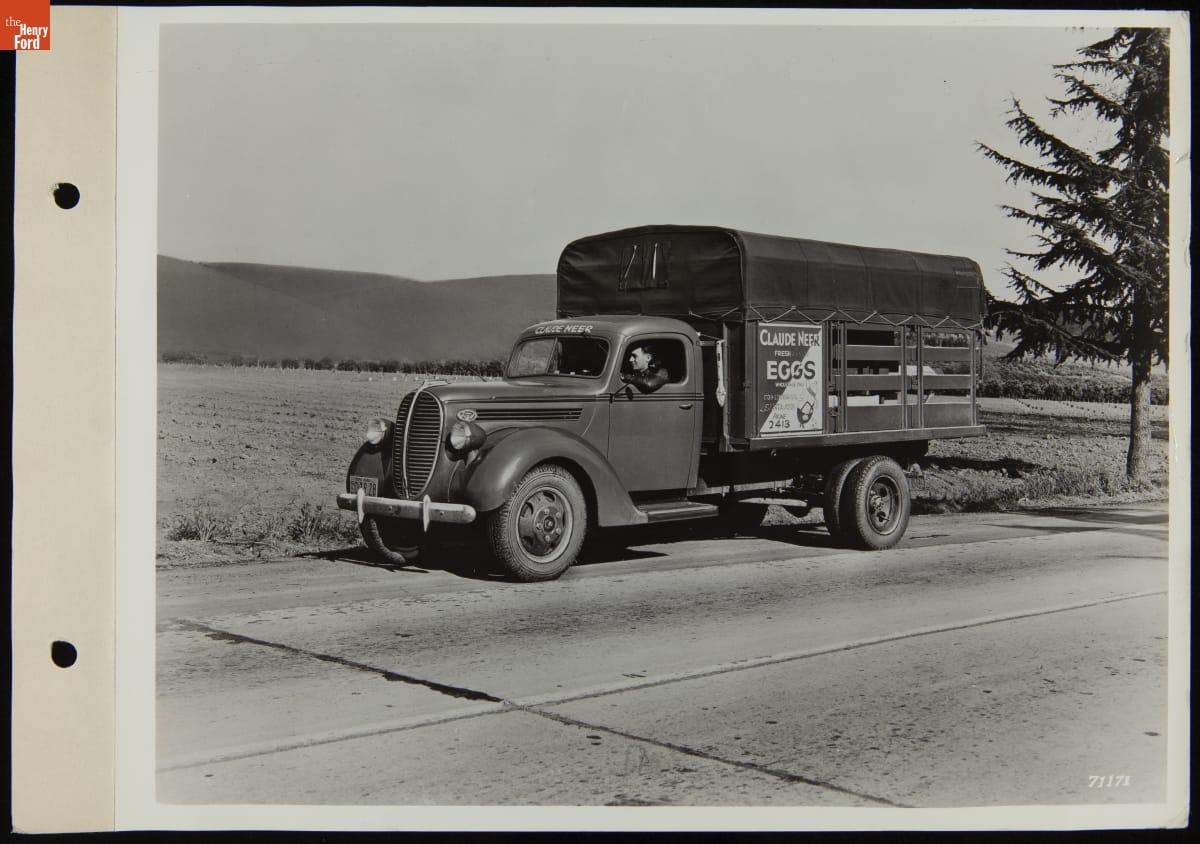
- Ford V-8 Stake Truck with a Sign for Claude Neer Fresh Eggs, 1938 - Ford made significant improvements to its truck bodies and chassis for 1938. The new models featured the industry's first front-opening hoods, while updated fenders and oval grilles gave the trucks a fresh appearance. The 1 1/2-ton truck in this photo handled an especially delicate cargo -- eggs from wholesale distributor Claude Neer of Santa Ana, California.
- December 08, 1938
- Collections - Artifact
Ford V-8 Stake Truck with a Sign for Claude Neer Fresh Eggs, 1938
Ford made significant improvements to its truck bodies and chassis for 1938. The new models featured the industry's first front-opening hoods, while updated fenders and oval grilles gave the trucks a fresh appearance. The 1 1/2-ton truck in this photo handled an especially delicate cargo -- eggs from wholesale distributor Claude Neer of Santa Ana, California.
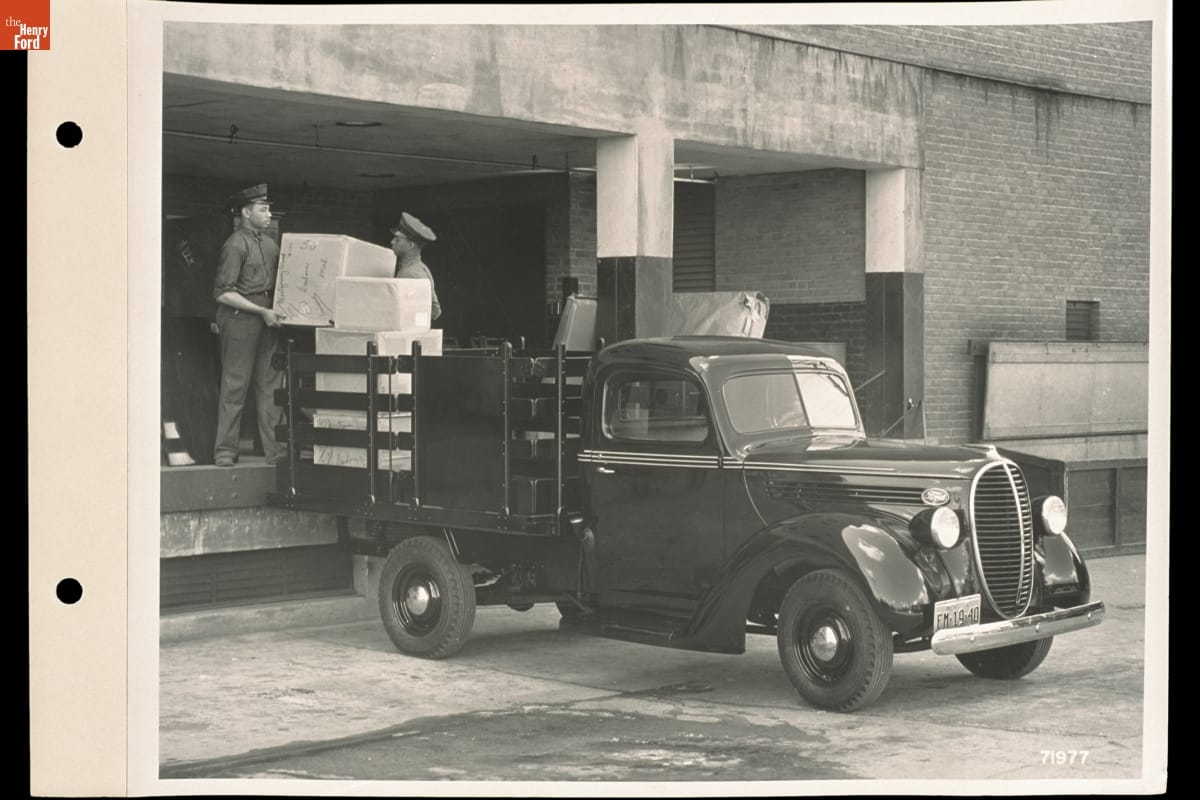
- Ford V-8 Stake Truck, June 23, 1939 - Ford Motor Company's truck lineup for 1939 included pickups, panel trucks, stake body and platform models, and sedan delivery vehicles. Larger commercial models were available in dump truck and cab-over-engine configurations. Power came from V-8 engines available with displacements of 136 or 221 cubic inches.
- June 23, 1939
- Collections - Artifact
Ford V-8 Stake Truck, June 23, 1939
Ford Motor Company's truck lineup for 1939 included pickups, panel trucks, stake body and platform models, and sedan delivery vehicles. Larger commercial models were available in dump truck and cab-over-engine configurations. Power came from V-8 engines available with displacements of 136 or 221 cubic inches.
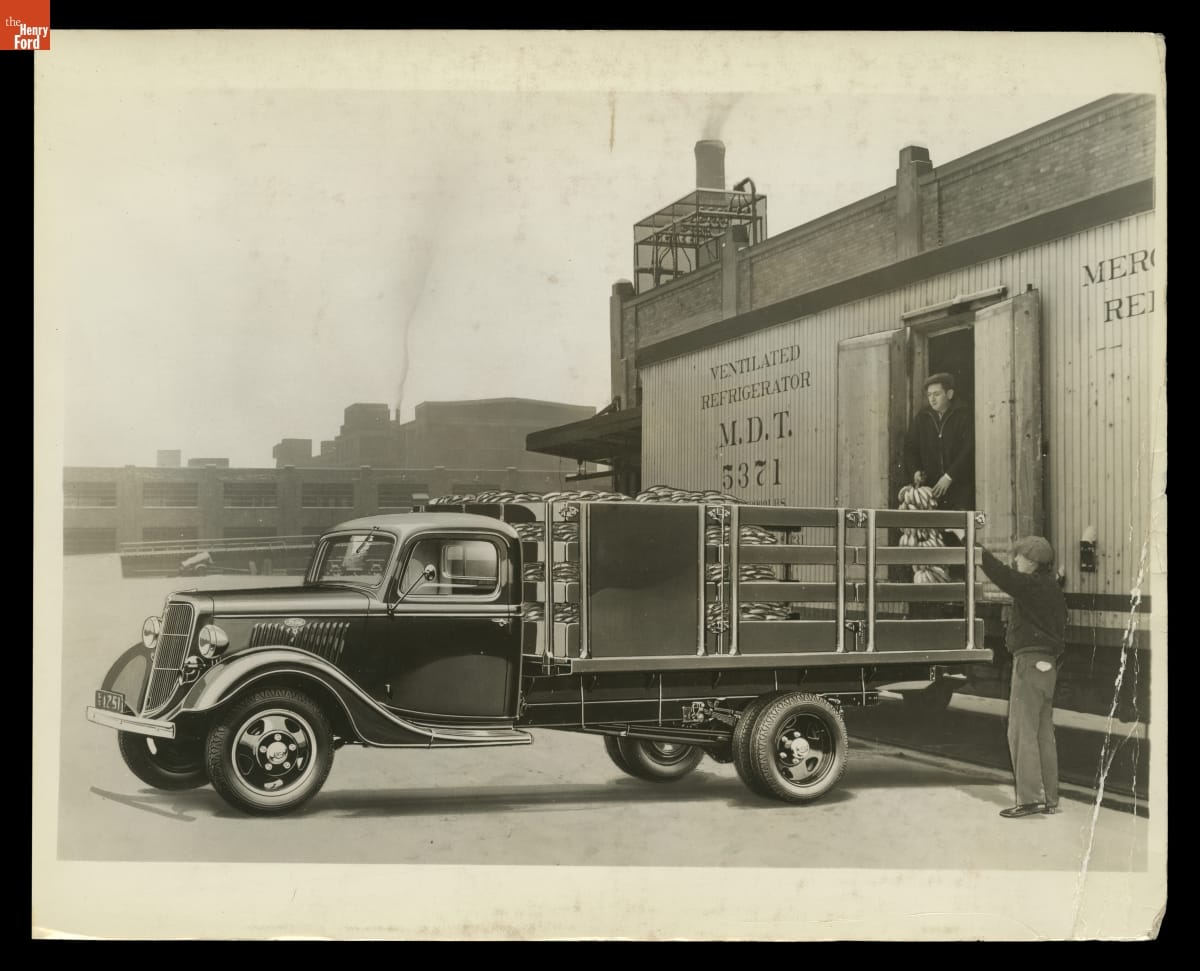
- Loading Bananas from Refrigerated Railcar M.D.T. 5371 to a Ford V-8 Stake Truck, 1934 - Ford's 1934 trucks were only slightly changed in appearance from the previous model year, though the blue oval logo was added to the side of the hood. The stake body version was particularly versatile. The racks were removable to ease loading or accommodate oversized cargo. The boxcar pictured here belonged to Merchants Despatch Transportation Company, which operated some 12,000 refrigerated railcars.
- December 08, 1934
- Collections - Artifact
Loading Bananas from Refrigerated Railcar M.D.T. 5371 to a Ford V-8 Stake Truck, 1934
Ford's 1934 trucks were only slightly changed in appearance from the previous model year, though the blue oval logo was added to the side of the hood. The stake body version was particularly versatile. The racks were removable to ease loading or accommodate oversized cargo. The boxcar pictured here belonged to Merchants Despatch Transportation Company, which operated some 12,000 refrigerated railcars.